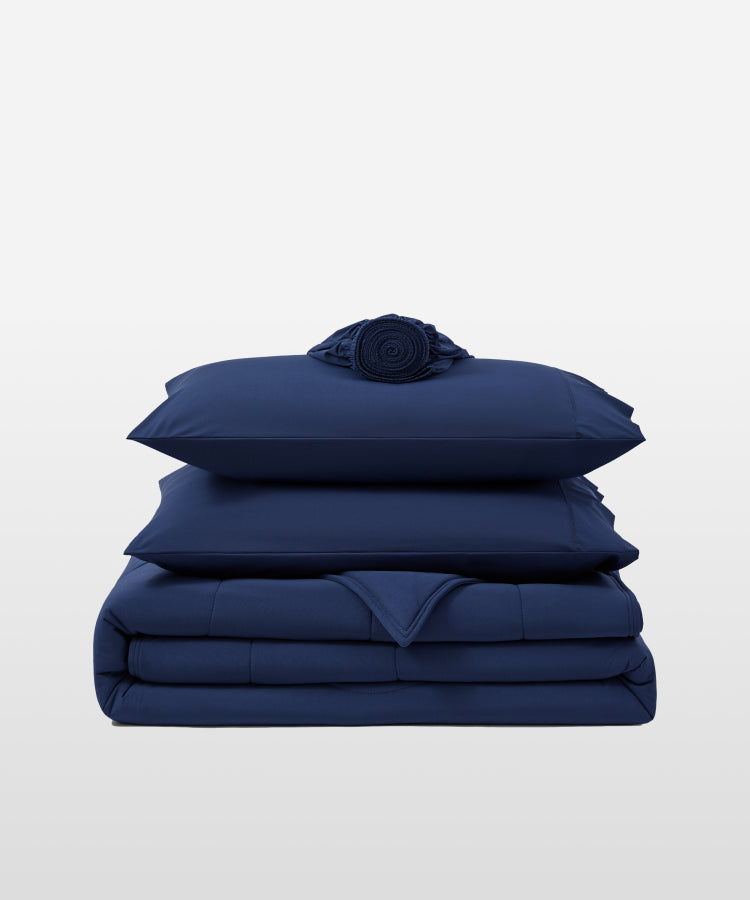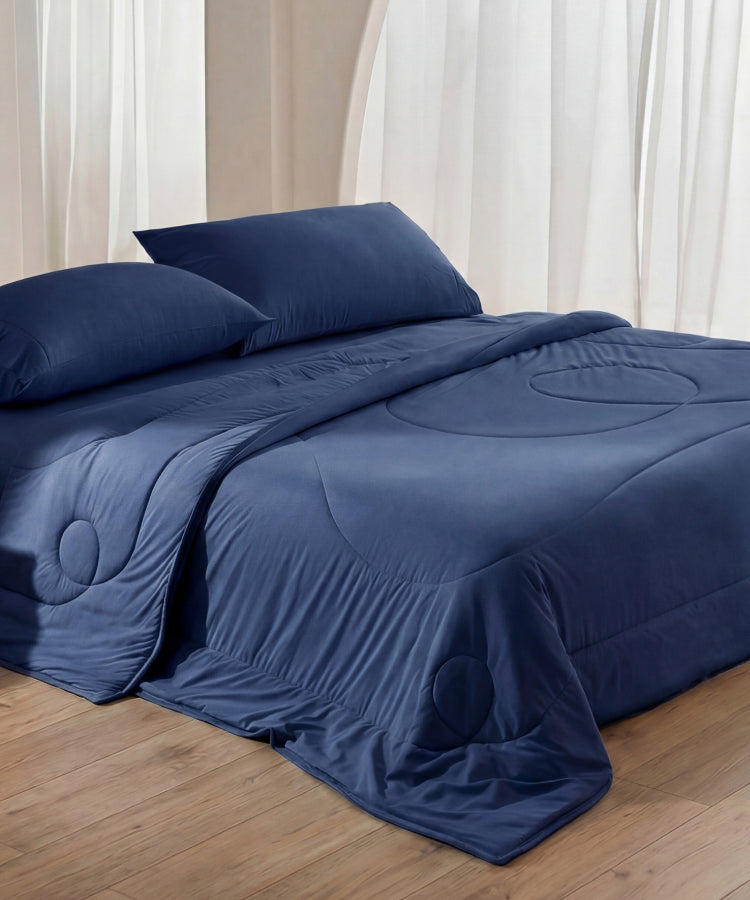

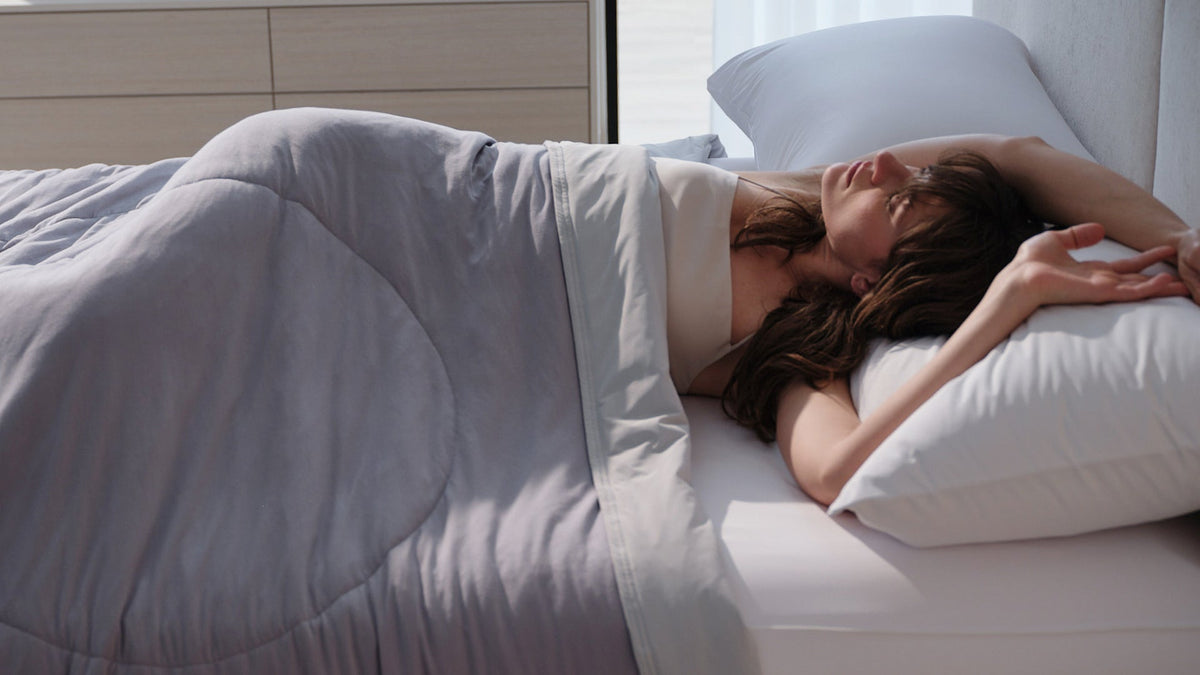
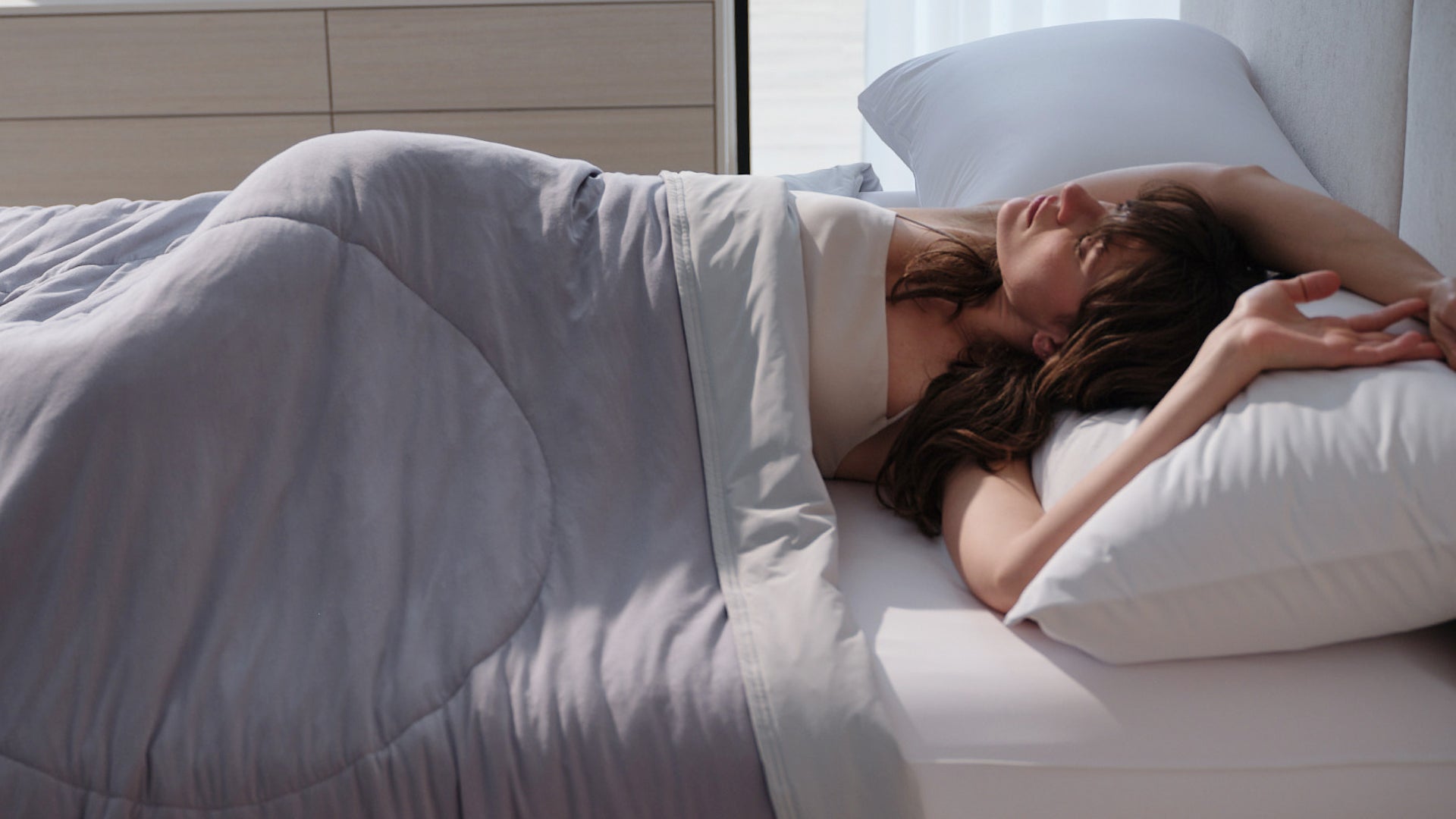
If you sleep hot, the answer is rarely one magic sheet or one colder blanket. Heat usually builds at several contact points: the mattress underneath you, the sheet against your skin, the layer on top of you, and the pillow area around your face and neck. A useful cooling setup fixes those layers in order instead of asking one product to solve the whole bed.
The goal is simple: reduce trapped heat, move moisture away from the body, and avoid adding heavy layers that block airflow. Breescape's stack is built around BlendTek cooling fabric, which Breescape reports at Q-Max > 0.46 for cool-touch performance, plus product-specific construction such as anti-slip sheets, breathable topper channels, and lightweight comforters.[1]
Start With the Real Heat Source
Before buying a full set, identify where the heat is coming from. If your back and hips feel warm first, the mattress surface is probably trapping heat. If your torso overheats under the blanket, the top layer is the problem. If you wake up damp, fabric breathability and moisture movement matter more than a stronger fan.
Room temperature still matters. Sleep Foundation notes that cooler bedrooms support sleep because body temperature naturally drops during the night.[2] Bedding cannot turn a hot room into an air-conditioned one, but it can reduce the heat held directly against your body.

Layer 1: Cooling Mattress Topper
A topper is the right first layer when the mattress itself feels warm or dense. Many foam mattresses are comfortable but slow to release heat. The Breescape Cooling Mattress Topper uses a breathable cover, a ventilated foam design, mesh side panels, and a removable washable cover.[3] That makes it useful when the problem is heat collecting below the fitted sheet.
It is not the right fix for a sagging mattress. If the mattress has lost support, a topper may soften the feel but will not rebuild the mattress structure. For a hot sleeper on a supportive but heat-retaining mattress, the topper is the highest-impact starting point.
Layer 2: Cooling Sheet Set
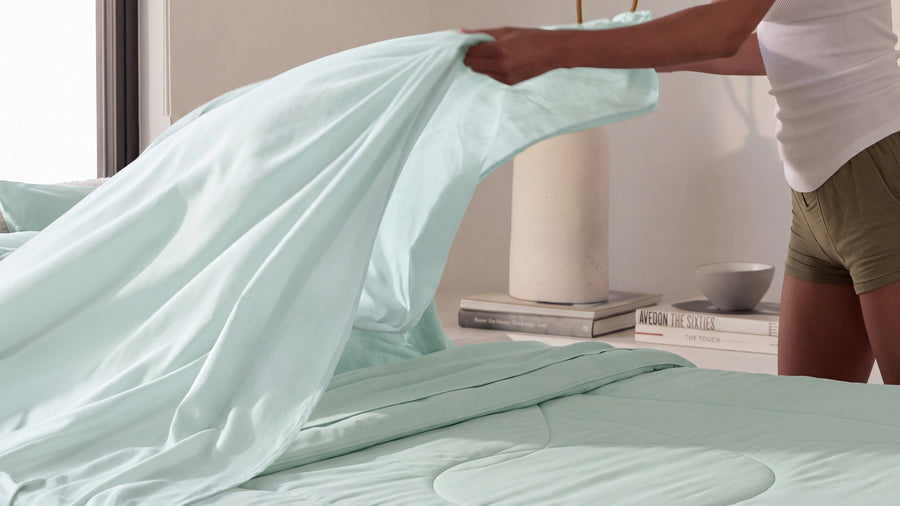
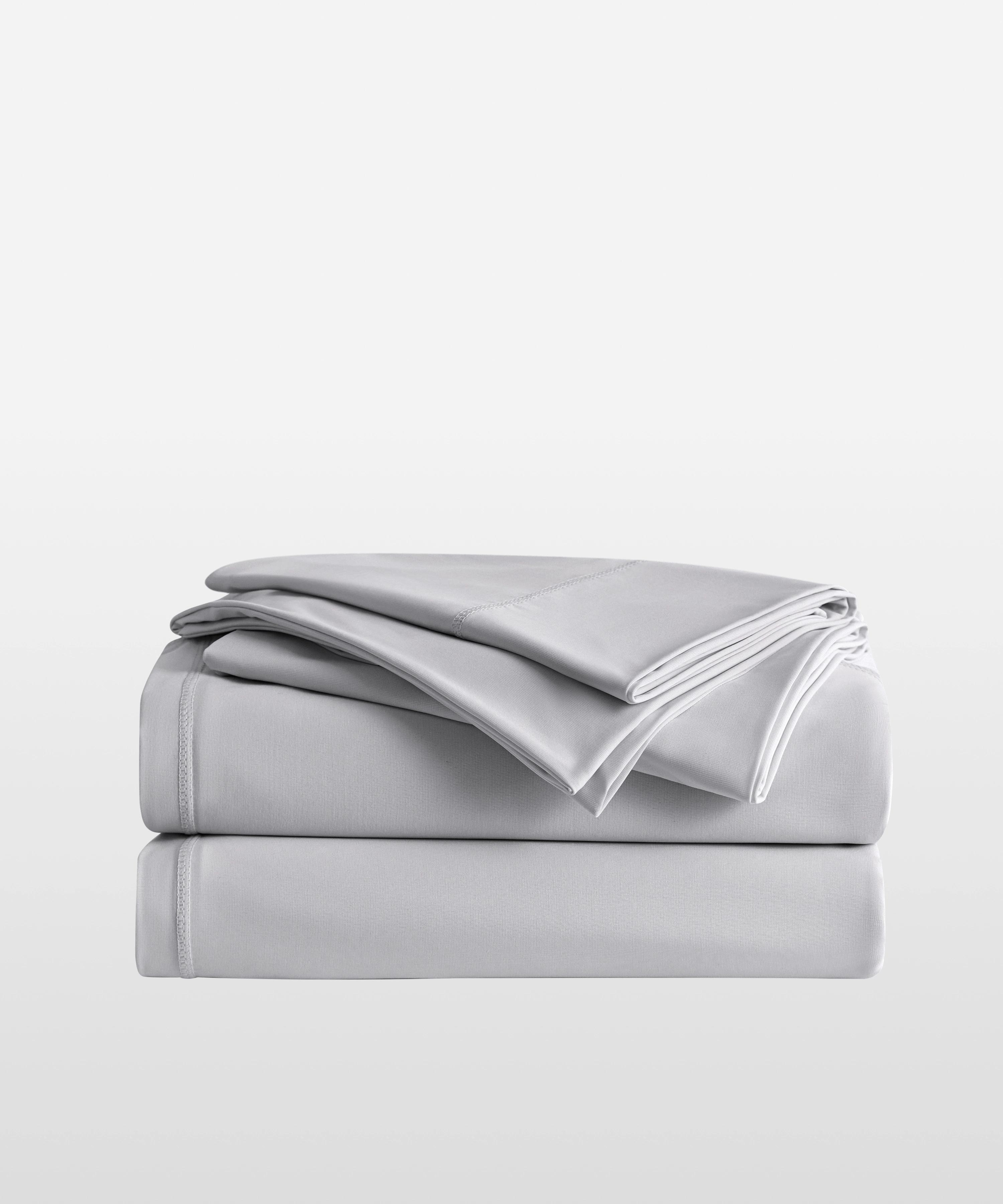
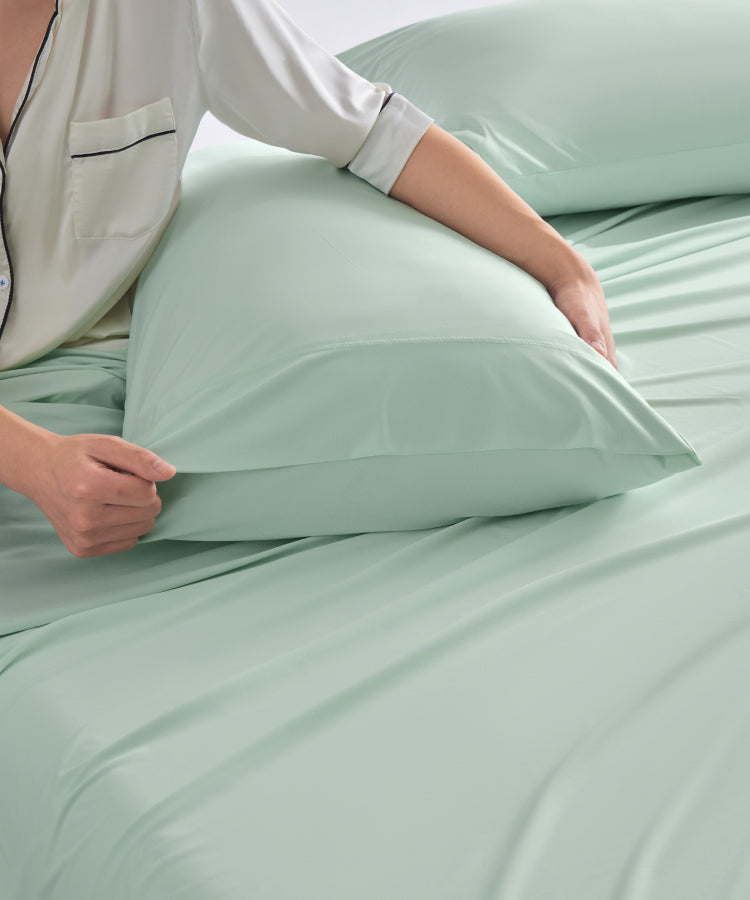
The sheet is the layer you feel first and longest. Breescape Cooling Sheets 2.0 use BlendTek fabric with Q-Max > 0.46, moisture-wicking performance, and anti-slip grip designed to help the fitted sheet stay in place on deep or smooth mattresses.[1][4]
This matters in practical terms. A cooling topper can help air move below you, but a warm cotton sheet can still feel heavy at skin level. A cooling sheet works most effectively when it is used directly over the topper or mattress, washed without heavy softener buildup, and not buried under a thick mattress protector.
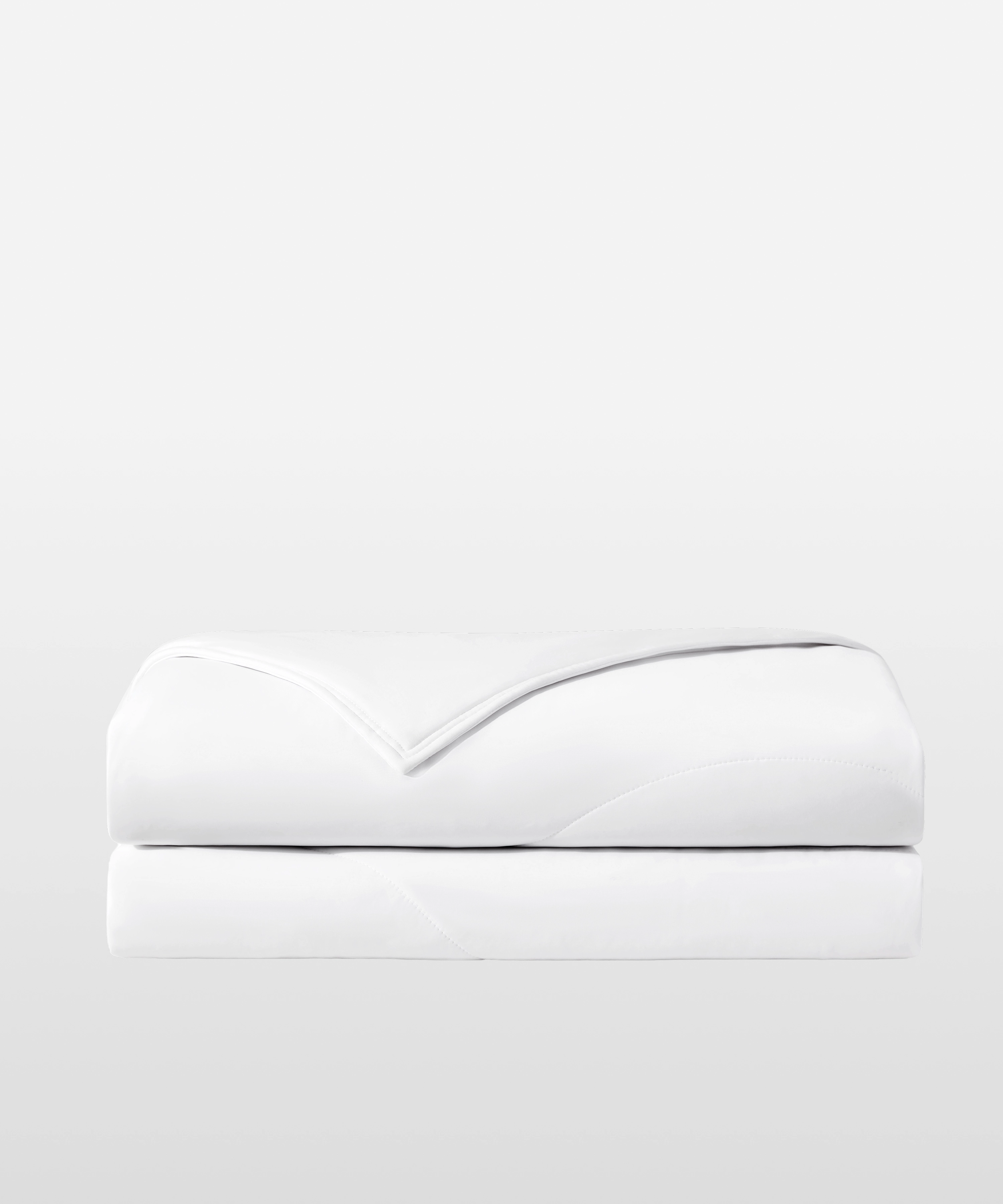
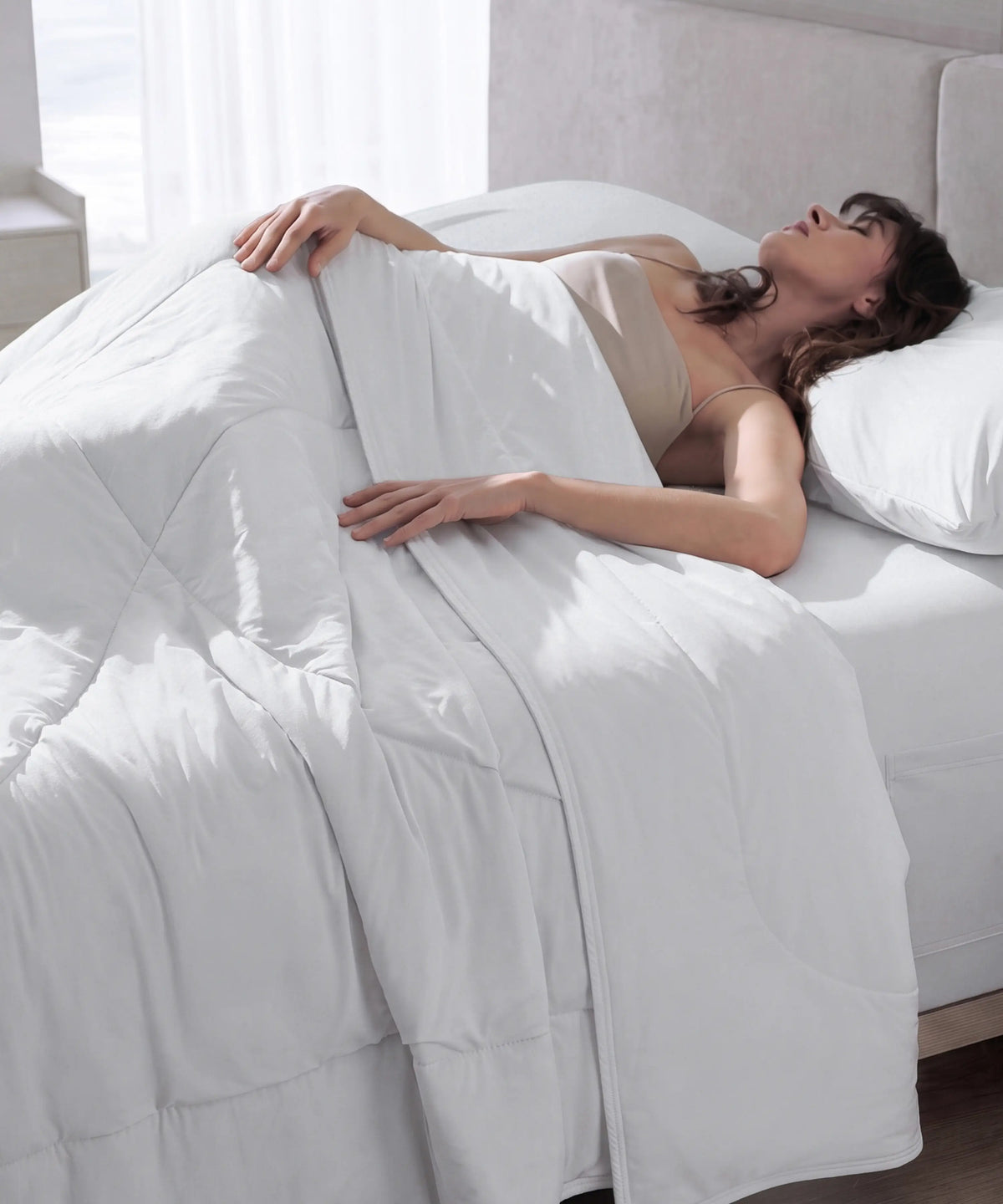
Layer 3: Cooling Comforter
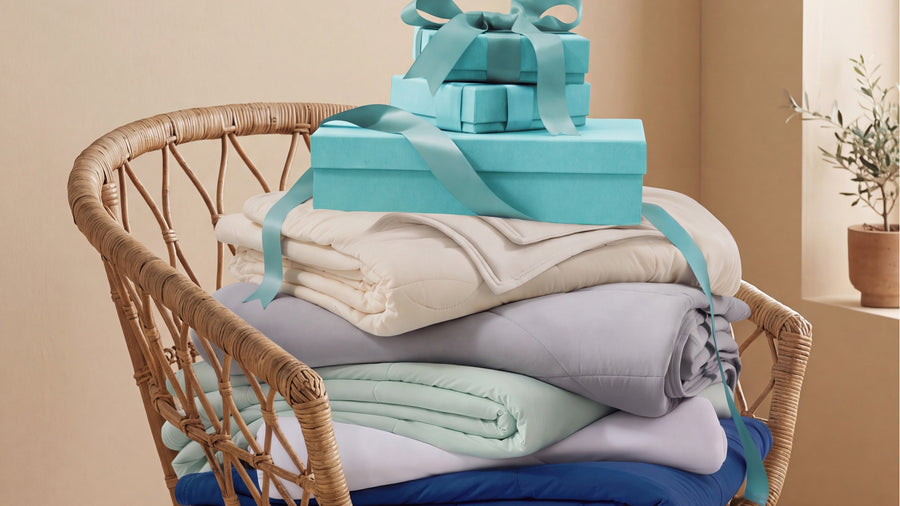
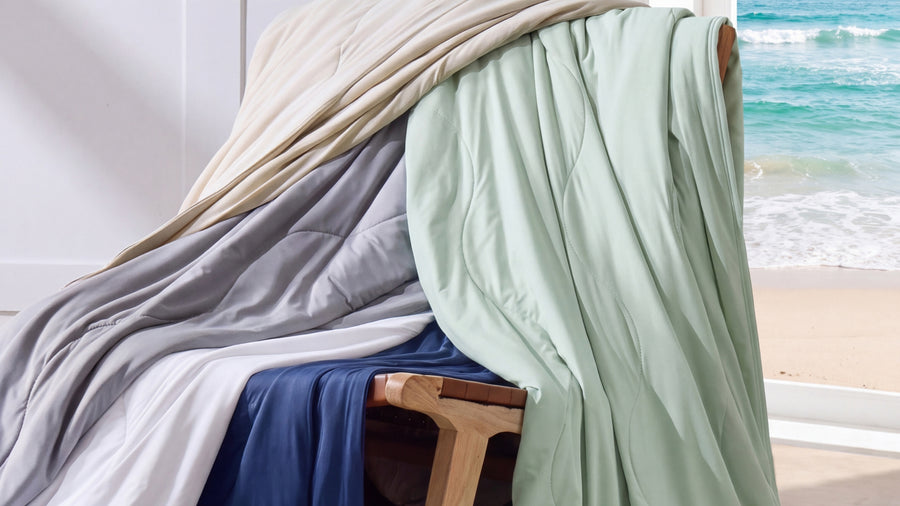
The top layer should add comfort without trapping too much warmth. Breescape's Cooling Comforter Blanket 2.0 is listed with Q-Max above 0.5 and is positioned for hot sleepers who still want a covered, cozy feel.[5]
The common mistake is putting a cooling comforter inside a standard cotton duvet cover. That extra cover can block the cool-touch fabric and add insulation. If you want the comforter to perform as a cooling layer, use it directly or choose a very breathable cover only when protection matters more than maximum cooling.

Layer 4: Pillowcase and Eye Mask
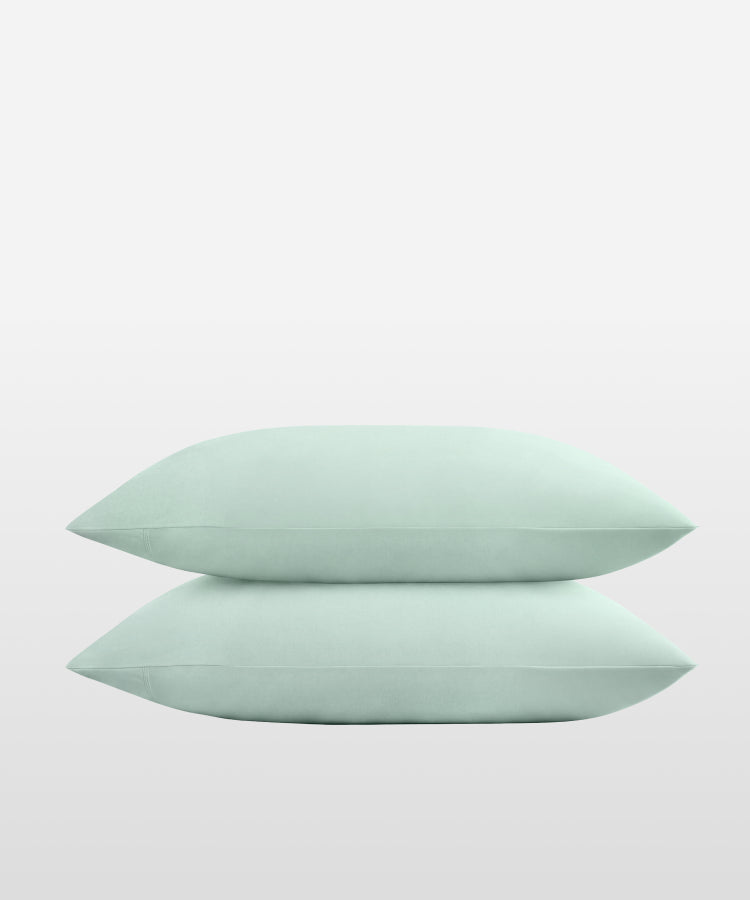
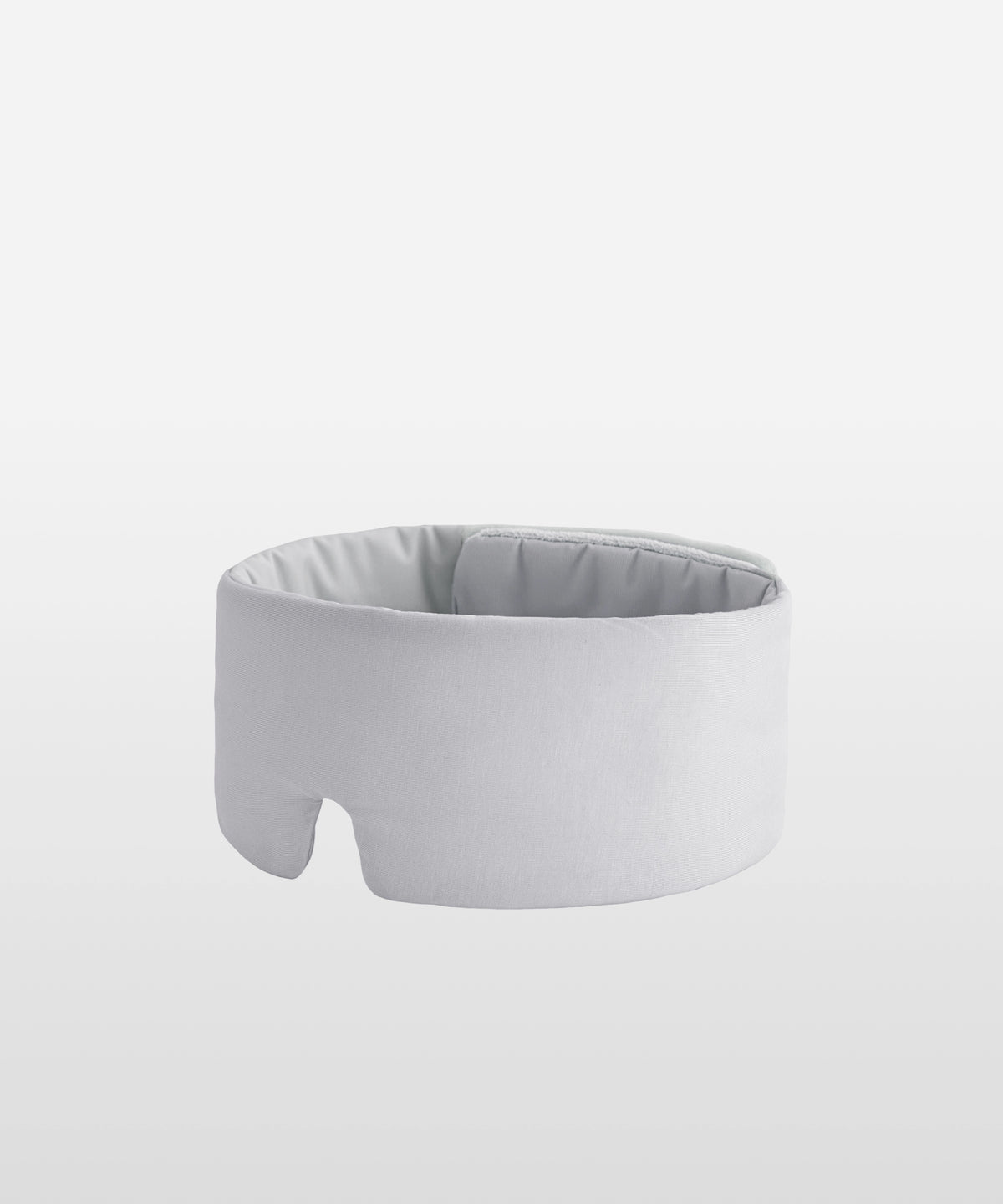
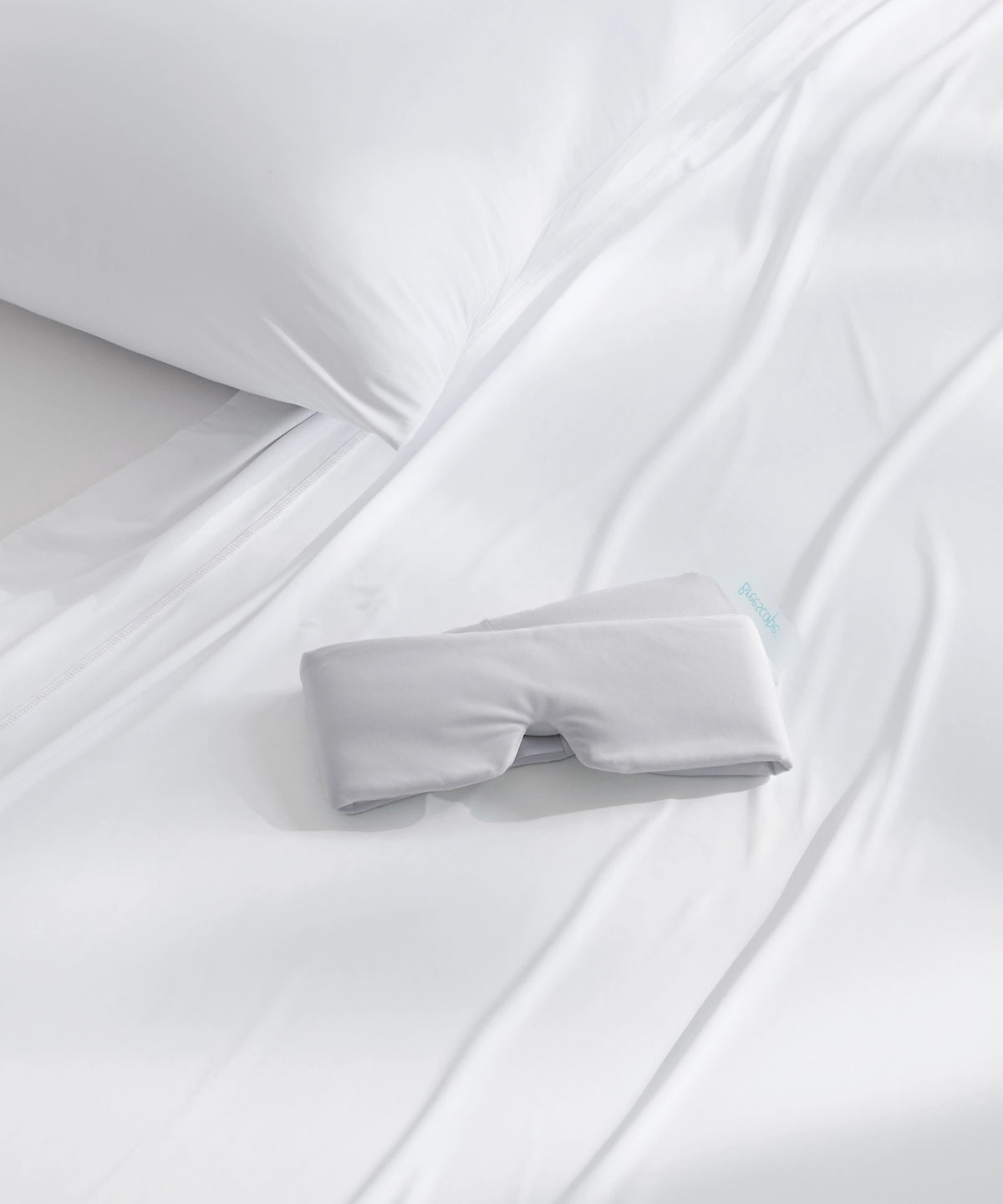
The face and neck area can make the whole bed feel hotter than it is. Cooling pillowcases help because they stay in direct contact with the skin. A cooling eye mask is more specific: it is useful when light, facial warmth, or travel discomfort keeps you from settling down. Breescape's Cooling Eye Mask is described with an ergonomic shape, soft strap, light-blocking fit, and OEKO-TEX certified fabric.[6]
Do not treat an eye mask as a medical device for headaches or night sweats. Its job is comfort and light control. For many hot sleepers, that is enough to make the pillow area feel calmer.
Which Layer Should You Buy First?
Problem you notice first |
Start here |
Why |
Back or hips feel hot on the mattress |
Cooling mattress topper |
Targets heat held below the fitted sheet |
Sheets feel sticky or warm against skin |
Cooling sheet set |
Changes the main skin-contact layer |
You overheat under the blanket |
Cooling comforter |
Reduces warmth trapped from the top layer |
Face and neck feel warm |
Cooling pillowcase or eye mask |
Improves the head-and-neck contact zone |
Everything feels hot by 3 a.m. |
Topper + sheets + lighter top layer |
Addresses heat from both below and above |
What Not to Expect
A cooling bedding stack does not replace air conditioning during dangerous heat, and it should not be used to ignore severe night sweats. If heat symptoms are sudden, soaking, or paired with fever, weight loss, chest symptoms, or medication changes, bedding is not the main issue.
For ordinary hot sleeping, the stack works as a system: breathable lower layer, cool-touch sheet, light top cover, and fewer insulating extras. That is the difference between buying cooling products and actually building a cooler bed.
Frequently Asked Questions
What is the most important layer in a cooling bedding stack?
For most hot sleepers, start with the layer closest to the problem: a topper if the mattress traps heat, sheets if the skin-contact layer feels warm, and a comforter if the top cover causes overheating.
Can I mix Breescape products with bedding from other brands?
Yes. The main rule is to avoid adding heavy, non-breathable layers that block the cooling fabric, especially over a cooling comforter or under a cooling sheet.
Do cooling sheets and comforters stay cool all night?
They do not stay refrigerator-cold. Good cooling bedding reduces heat buildup and moisture against the body so the bed feels less stuffy over time.
Is it worth buying the full cooling bedding stack?
Buy the full stack if heat builds from both the mattress and the top cover. If you have one clear problem area, start with that layer first.
Are Breescape cooling bedding products safe for sensitive skin?
Breescape states that key bedding products use OEKO-TEX certified fabrics. OEKO-TEX STANDARD 100 means textile components are tested for harmful substances.[7]
How should I care for a cooling bedding stack?
Wash according to each product label, avoid heavy fabric softeners, and keep cooling surfaces free of thick covers that reduce breathability.
What is the Breescape Cooling Comforter Set?
It is Breescape's cooling comforter bundle for sleepers who want a coordinated top layer rather than only sheets or a topper.[8]
References
[1] Breescape Third-Party Tested, Globally Certified — https://breescape.com/pages/third-party-tested
[2] Sleep Foundation: Best Temperature for Sleep — https://www.sleepfoundation.org/bedroom-environment/best-temperature-for-sleep
[3] Breescape Cooling Mattress Topper — https://breescape.com/products/cooling-mattress-topper
[4] Breescape Cooling Sheets 2.0 — https://breescape.com/products/antislip-cooling-sheet-set
[5] Breescape Cooling Comforter Blanket 2.0 — https://breescape.com/products/blendtek-cooling-comforter
[6] Breescape Cooling Eye Mask — https://breescape.com/products/cooling-eye-mask
[7] OEKO-TEX STANDARD 100 — https://www.oeko-tex.com/en/our-standards/oeko-tex-standard-100/
[8] Breescape FAQ — https://breescape.com/pages/faqs