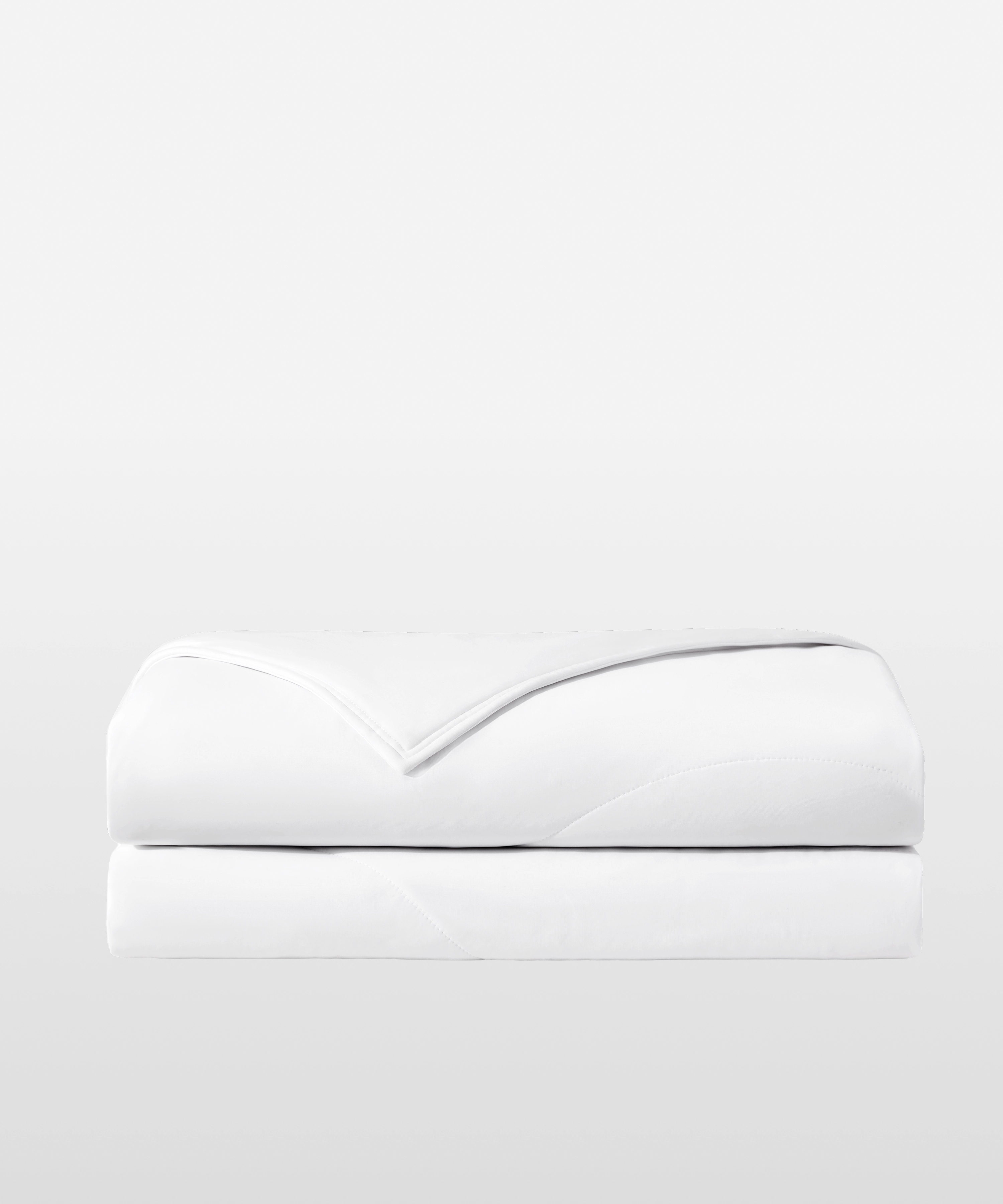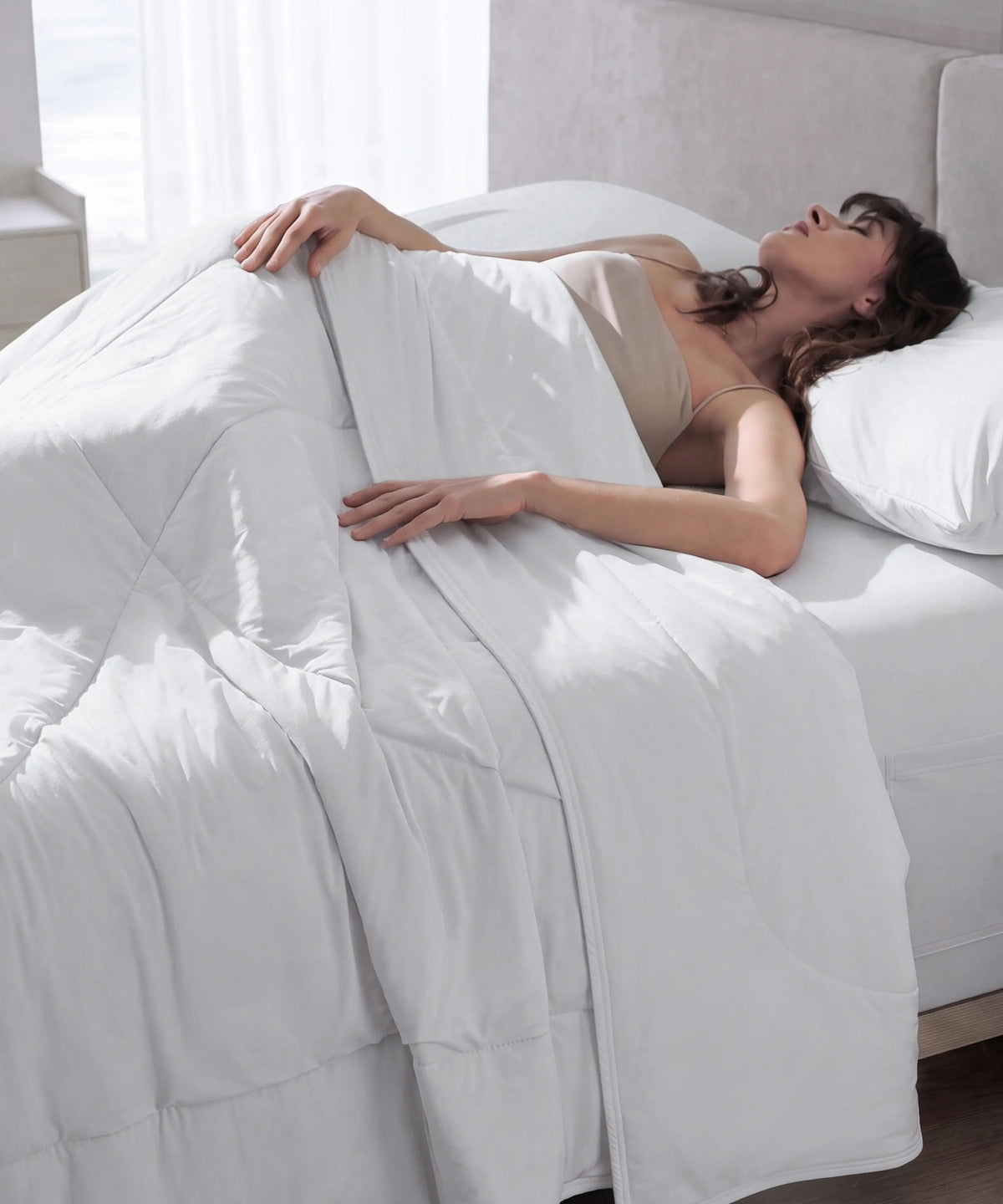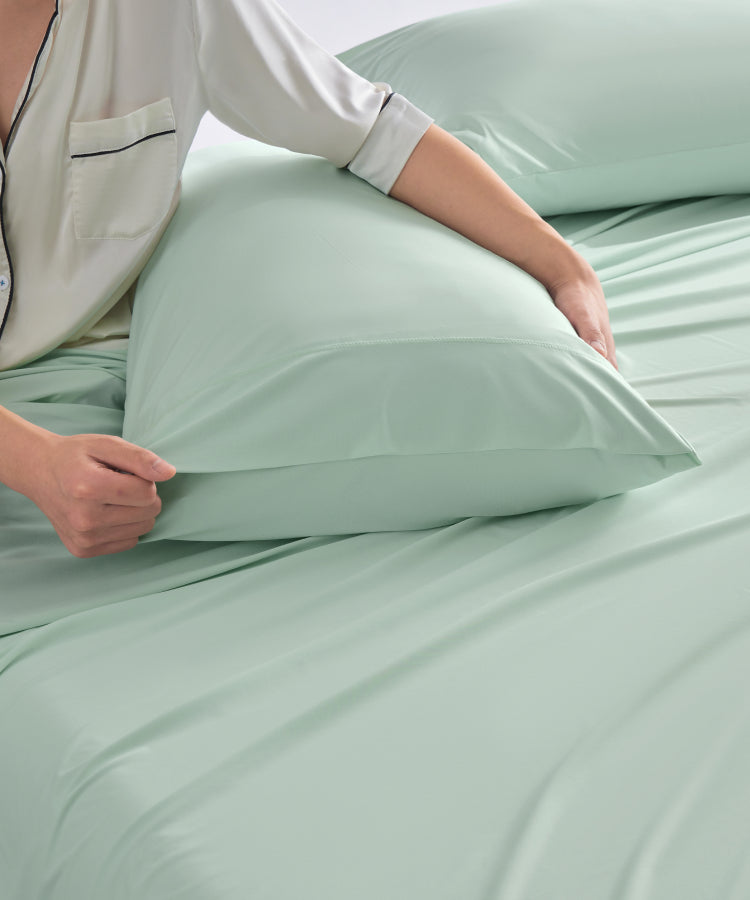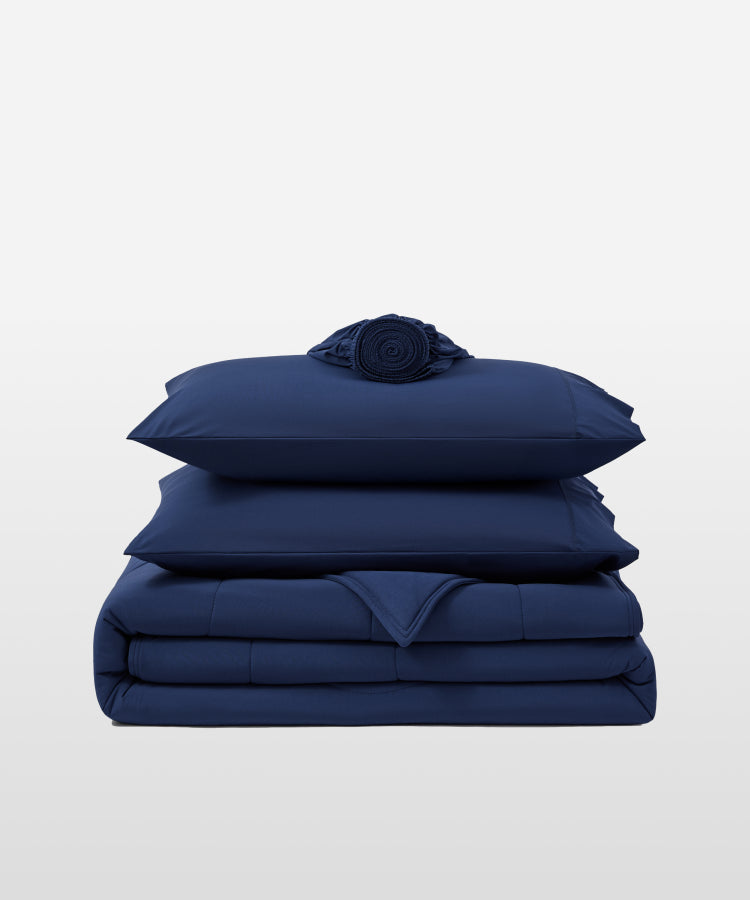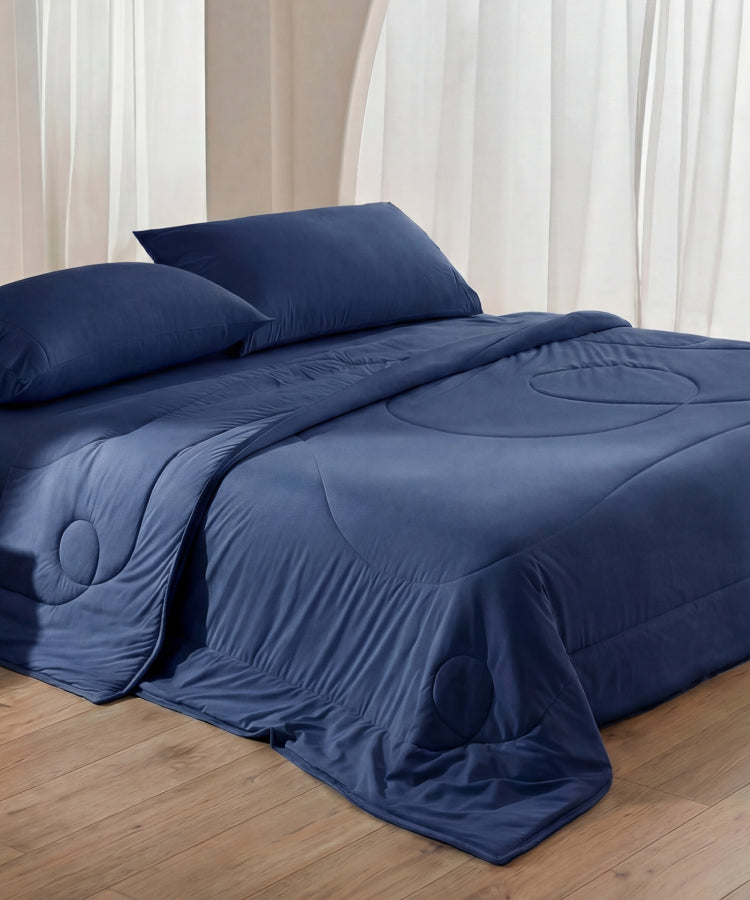

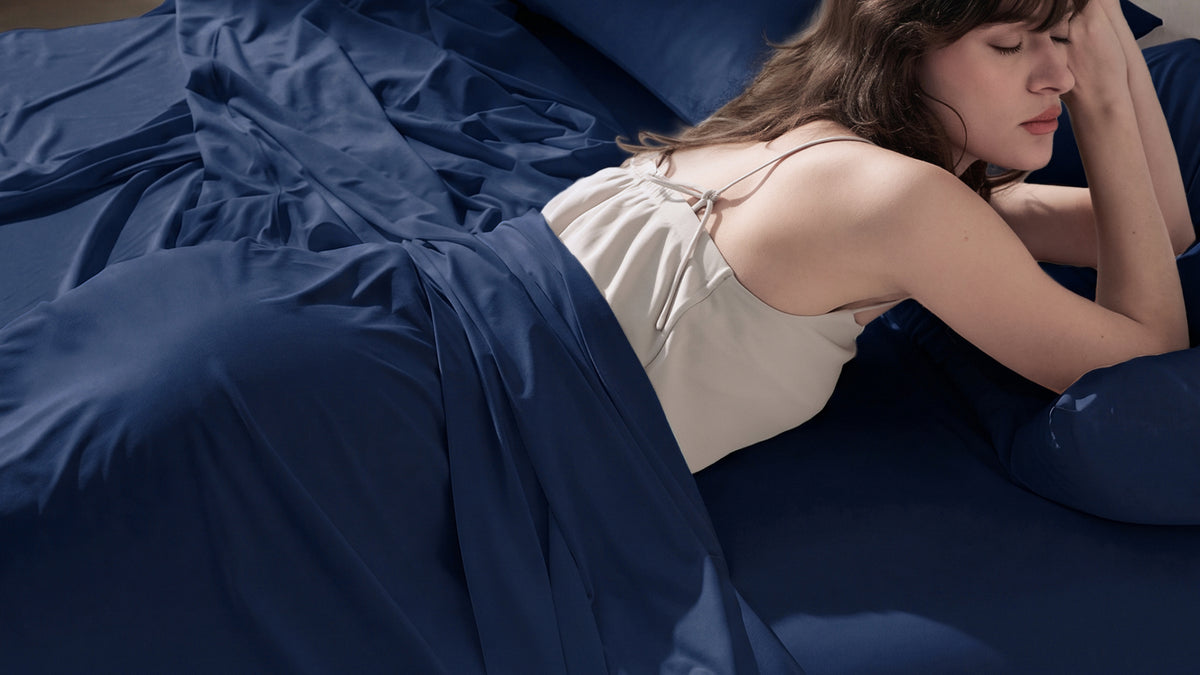
A sheet that feels ice-cold for the first thirty seconds can still leave you damp and tangled by 3 a.m. The gap between sheets that genuinely help with night sweating and ones that only market the idea comes down to a handful of measurable fabric traits, not the word "cooling" printed on the tag.
First touch versus all-night performance
Q-Max is the number most cooling-sheet brands lead with, and it measures exactly one thing: how cold a fabric feels in the first few seconds of contact with skin [1][5]. It says nothing about what happens two hours later once body heat has warmed the fabric and sweat has started to build.
A sheet can score well on Q-Max and still trap moisture if the weave is dense or the fiber doesn't move sweat away from the body. That's the split between sheets that help with sweating and sheets that just feel nice when you first lie down — the second property, sustained airflow and moisture management, is what actually matters at 3 a.m. [2][3].
Three fabric traits that decide the outcome
| Property | What It Controls | Why It Matters for Sweat |
| Fabric weight (GSM) | Insulation level | Lighter weight traps less body heat overnight [2][3] |
| Weave openness | Airflow through the fabric | Open weaves release heat and vapor faster [2][6] |
| Fiber composition | Moisture absorption vs. wicking | Wicking fibers move sweat to the surface instead of holding it [3][6] |
Fabric weight, given in grams per square meter (GSM), is a rough stand-in for how much material sits between skin and open air — heavier weaves like flannel or dense sateen insulate more than a lightweight percale or engineered blend [2][3]. Weave openness works alongside weight: a tightly woven sateen can still trap heat even at a moderate GSM, while an open percale or knit lets more air pass through regardless of weight [2][6].
Fiber composition decides what happens to sweat once it reaches the fabric. Cotton can absorb a comparatively large share of its own weight in water and, depending on the weave and room conditions, may dry more slowly than fabrics designed for active wicking. Fibers engineered specifically for wicking are built to pull moisture to the fabric's outer surface, where airflow can carry it away and let it evaporate [3][6].
Not every night sweat has the same trigger
A person who sweats because the bedroom traps heat is dealing with a different problem than someone whose sweating is tied to menopause, a medication, or an underlying medical condition [7]. The fabric fix helps more in the first case than the second.
For heat-driven and general warm sleeping, breathable, moisture-wicking sheets can reduce how much heat and dampness stays trapped against the body [3][6]. For hormonal or medical causes, the sheet won't touch the underlying trigger — it can only make the discomfort more bearable while a doctor addresses what's actually causing the sweat, which is worth doing if episodes are frequent or heavy [7].
What actually shows up on a sheet that works
- A disclosed fiber blend on the product page, not just an adjective like "cooling fabric"
- A stated fabric weight that sits in a lightweight-to-moderate GSM range rather than a dense, insulating weave
- A published airflow or breathability figure instead of the unquoted word "breathable"
- Some indication the wicking property comes from the fiber itself, not a surface coating that can rinse away in the wash
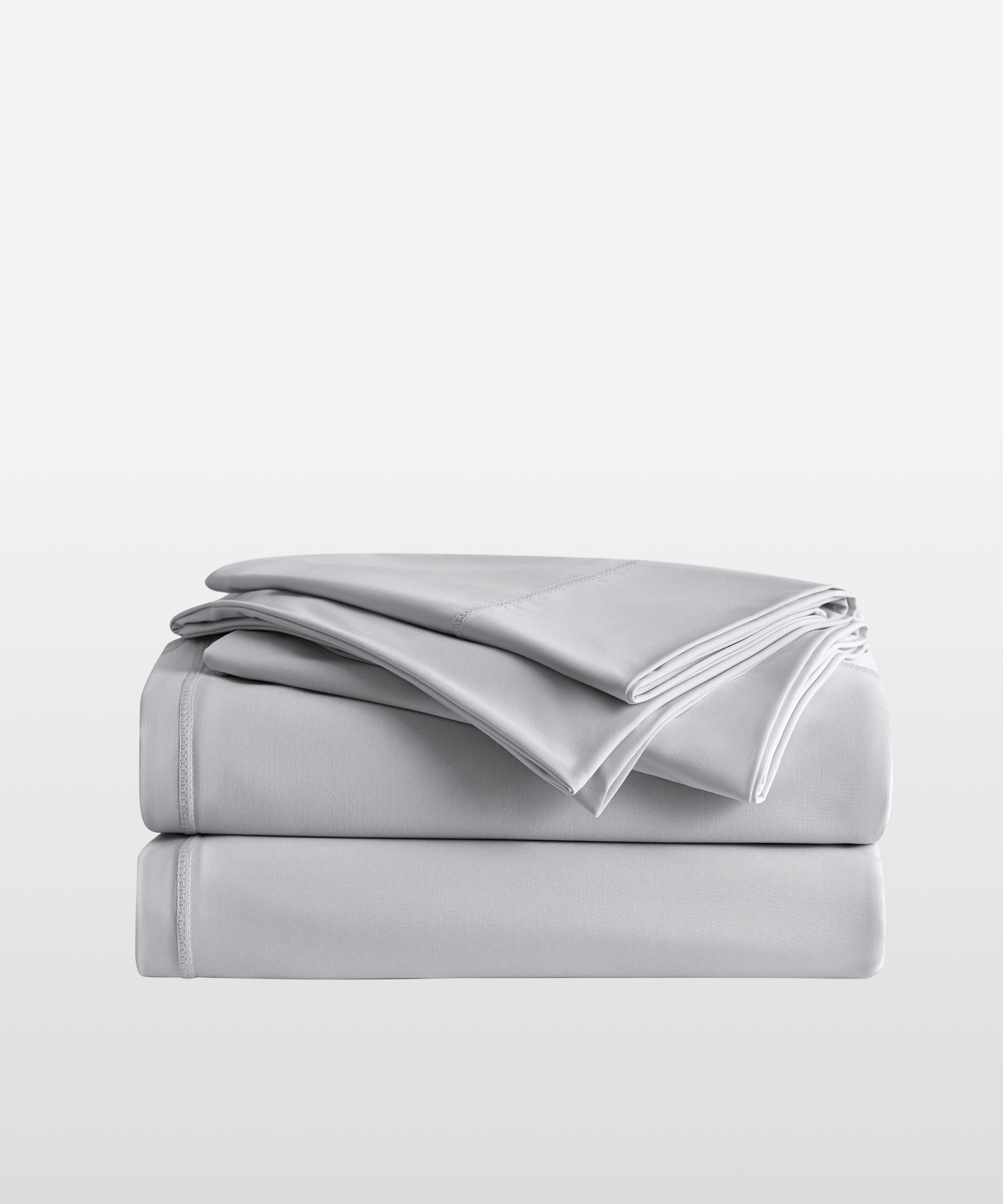
Breescape's cooling sheet set discloses a BlendTek™ composition of 69% nylon, 20% polyester, and 11% spandex, alongside a Q-Max above 0.46 for initial touch and an SGS-tested air-permeability figure of 1,320 mm/s [4][5]. Those are the kind of specific numbers worth comparing across brands rather than taking a marketing claim at face value.
A quick side-by-side of common sheet options
| Sheet Type | Sweat Management | Best Fit |
| Standard cotton sateen | Absorbs moisture, releases it slowly | Sleepers who rarely run hot |
| Cotton percale | Breathable, moderate wicking | Warm sleepers in dry climates |
| Engineered cooling blend (e.g., BlendTek™) | Built for airflow and active wicking [4][5] | Warm sleepers, humid bedrooms, or anyone looking for more active moisture management |
| Linen | Highly breathable, decent wicking | Dry-heat sleepers who don’t mind texture and wrinkling |
How to tell if a sheet is actually pulling its weight
Forget how the sheet feels at bedtime — check how it feels two or three hours in. A sheet doing its job should feel noticeably drier and less clingy than a plain cotton sateen under the same conditions, and it should dry faster after washing, a useful practical check on how readily it releases moisture [3][6].
Wash durability matters just as much. Check whether the manufacturer discloses the cooling mechanism and care instructions; published fiber composition, airflow data, and wash guidance are more useful than an unsupported “cooling” label [1][4][8].
A washing habit that quietly undermines cooling sheets
Overloading the washer or drying on high heat is a common reason a cooling sheet set stops performing well within a few months. Dense fiber packing during a crowded wash cycle can compress the weave slightly, and high heat in the dryer can degrade the elasticity of engineered blends like BlendTek™, which relies on a balanced fiber structure to maintain airflow [4]. Washing on a gentle cycle in cold water and tumble drying on low, as most cooling sheet brands recommend on their care labels, preserves the weave structure that the cooling performance actually depends on.
This is a small habit, but it explains a common complaint in reviews — that a set felt great for the first month and less impressive after repeated washing. In most cases the fabric hasn't changed; the washing routine has.
Who this actually matters for
People who consistently wake up damp, share a bed with a partner who runs hot, live somewhere warm or humid, or are navigating menopause-related night sweats may benefit most from bedding that releases heat and moisture efficiently [3][7][8]. The same goes for anyone stacking a heavier comforter or mattress topper on top, since those layers add to the heat problem the sheet is trying to solve.
If night sweats are rare, or the bedroom already stays cool, a well-made cotton percale is likely enough, and the added cost of an engineered blend isn't doing much extra work.
Frequently Asked Questions
What actually makes a sheet good for night sweats?
A light fabric weight, an open or engineered weave for airflow, and a fiber built to wick moisture away from skin instead of absorbing and holding it [2][3][4].
Does a cold-to-the-touch sheet mean it will keep me dry all night?
Not necessarily — that sensation is Q-Max, a first-touch measurement. It doesn't predict how the fabric handles sweat over several hours [1][5].
Can sheets fix night sweats from menopause or a medical condition?
No. They can reduce clinginess and dry faster, but they don't address the underlying cause — frequent or heavy sweating is worth discussing with a doctor [7].
How can I tell if a cooling claim is backed by real fabric engineering?
Look for a disclosed fiber blend, published airflow data, and clear care instructions rather than a generic cooling label [1][4][5].
References
[1] Breescape® Cooling Sheet Set — Official Product Page: https://breescape.com/products/cooling-sheet-set
[2] Sleep Foundation — Best Cooling Sheets of 2026: https://www.sleepfoundation.org/best-sheets/best-cooling-sheets
[3] Breescape Blog — How to Choose Moisture-Wicking Bed Sheets to Relieve Night Sweats: https://breescape.com/blogs/blogs/best-sheets-for-night-sweats
[4] Breescape® Antislip Cooling Sheet Set 2.0 — Official Product Page: https://breescape.com/products/antislip-cooling-sheet-set
[5] The New York Times Wirecutter — The Best Sheets for Hot Sleepers: https://www.nytimes.com/wirecutter/reviews/best-sheets-for-hot-sleepers/
[6] ACS inChemistry — Don't Sweat It: How Moisture-Wicking Fabrics Keep You Cool and Dry: https://inchemistry.acs.org/atomic-news/dont-sweat-it.html
[7] Mayo Clinic — Night Sweats: Causes and When to Seek Care: https://www.mayoclinic.org/symptoms/night-sweats/basics/causes/SYM-20050768
[8] INTEGRIS Health — Do Cooling Bed Sheets Really Work?: https://integrishealth.org/resources/on-your-health/2025/march/do-cooling-bed-sheets-really-work