


Sleep position doesn't change what a cooling comforter is made of, but it does change how much of that fabric stays pressed against your body — and that has a real effect on how hot or cool it actually feels overnight. Back sleepers interact with bedding differently than side or stomach sleepers, and understanding that difference changes what's worth prioritizing when shopping.
Why Back Sleepers Feel Bedding Differently
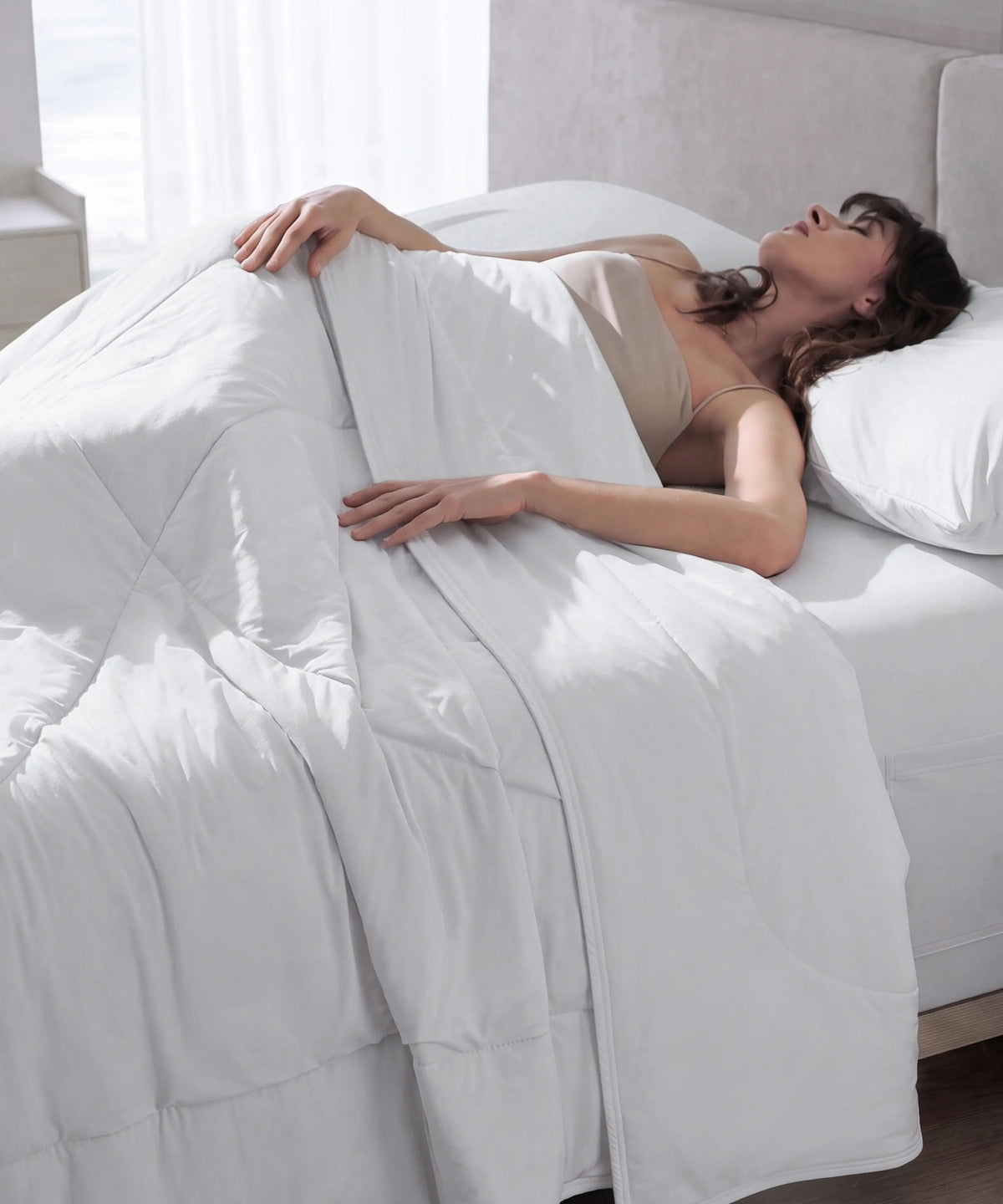
Lying flat distributes body weight across a wider, flatter surface than side or stomach sleeping does, which means more of the comforter stays in direct, sustained contact with skin for longer stretches. Side sleepers often have one hip and shoulder pressing into the mattress while the rest of the comforter drapes more loosely. That flatter, more consistent contact for back sleepers is why fabric breathability and moisture-wicking matter slightly more here than for positions where the comforter has more room to breathe around the body.
How a Dual-Sided Cooling Comforter Plays Into This
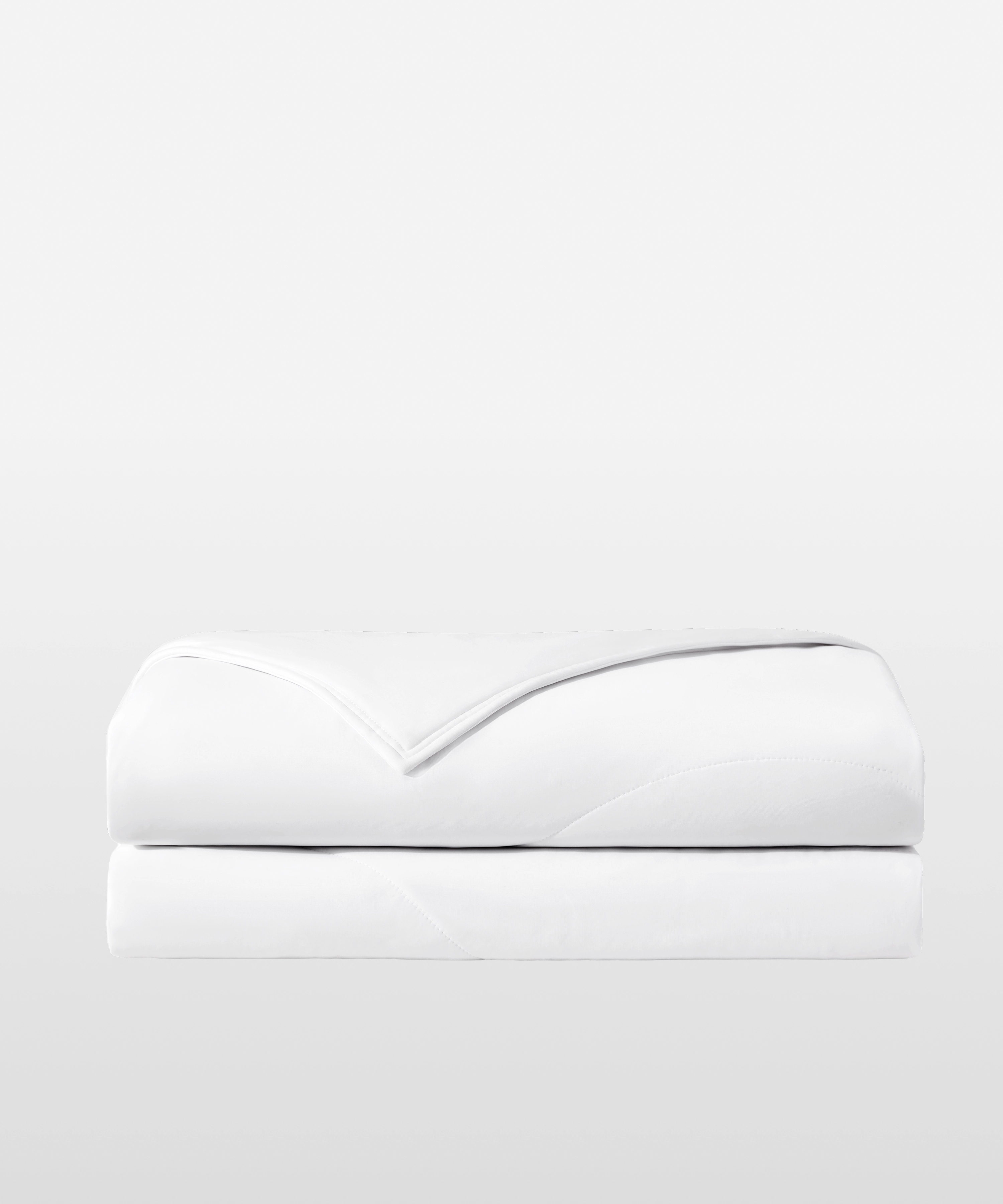
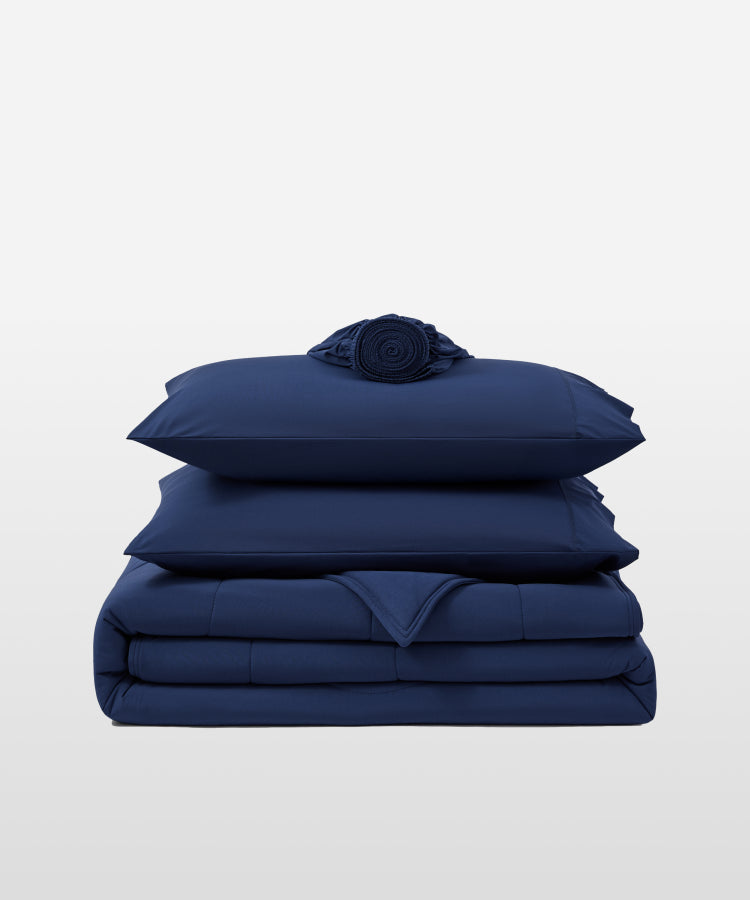
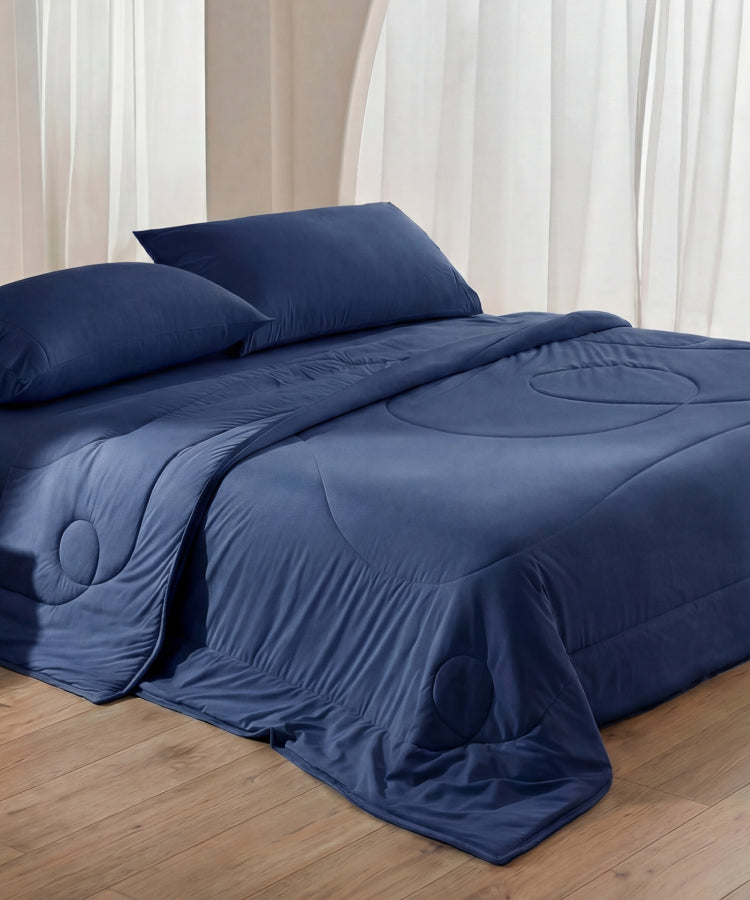
Breescape’s Cooling Comforter Blanket uses a nylon-polyester-spandex blend on its cool-touch side, with a Q-Max above 0.46, and a viscose-nylon blend on the reverse for steadier airflow.[1][2] For a back sleeper, the cool-touch side’s moisture-wicking gets more consistent use through the night simply because more of the fabric surface stays pressed against the body for longer, compared to a side sleeper who shifts position and redistributes contact points more often.[5][7]

What Actually Changes by Position
| Sleep Position | Contact Pattern | What Matters Most |
| Back | Wide, even, sustained contact across torso and legs | Consistent breathability and moisture-wicking across the full comforter surface |
| Side | Concentrated at hip and shoulder, looser drape elsewhere | Overall weight and how well the comforter conforms without bunching |
| Stomach | Contact concentrated on the front of the body | Lighter weight to avoid overheating on the pressed side |
Do Back Sleepers Need an Entirely Different Comforter?
Not a different comforter necessarily — more a different priority around weight and breathability. Back sleepers who run warm may benefit from keeping the cooling side of a dual-sided comforter facing up consistently, rather than switching sides seasonally out of habit, since sustained contact amplifies whatever the fabric is doing, good or bad. A back sleeper using a heat-trapping fabric will notice overheating faster than a side sleeper using the same material, simply because more surface area stays in contact for longer.
Airflow Around a Back Sleeper Specifically
Sleeping flat on your back tends to trap a layer of warm air between the body and the comforter more than side sleeping does, since there's less natural gap or movement to let it escape. That's another reason active moisture-wicking matters more here — the fabric needs to move heat and moisture away actively rather than relying on gaps in body position to do that work passively.
A Common Misconception Worth Correcting
It's tempting to assume back sleepers simply need a lighter comforter than other positions, but weight isn't the deciding factor — breathability is. A lightweight comforter with a tight, non-wicking weave can still leave a back sleeper overheated, since the issue is trapped air and moisture, not overall heft. Conflating "lighter" with "cooler" leads people to pick a thin but poorly engineered comforter over a slightly heavier one that actually moves heat and moisture away more effectively.
What to Prioritize as a Back Sleeper
- Check the disclosed Q-Max rating rather than assuming any cooling comforter performs the same regardless of how it's used.
- Favor active moisture-wicking fabric over one relying mainly on lighter weight, since sustained contact benefits more from active heat transfer.
- If using a dual-sided comforter, keep the cooling side facing up consistently if overheating is a frequent issue, rather than flipping seasonally by default.
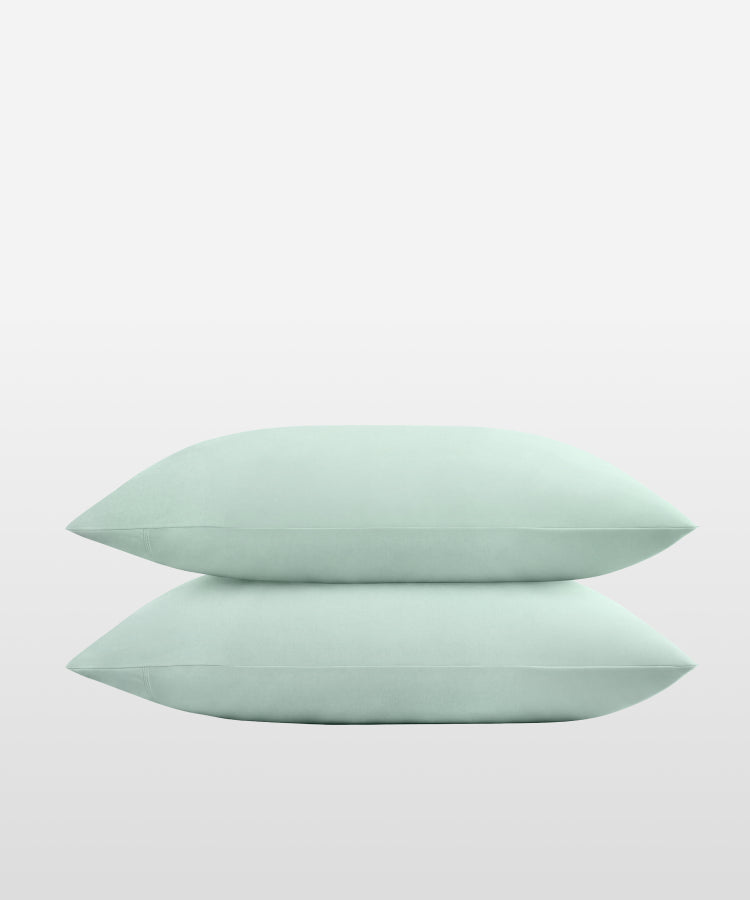
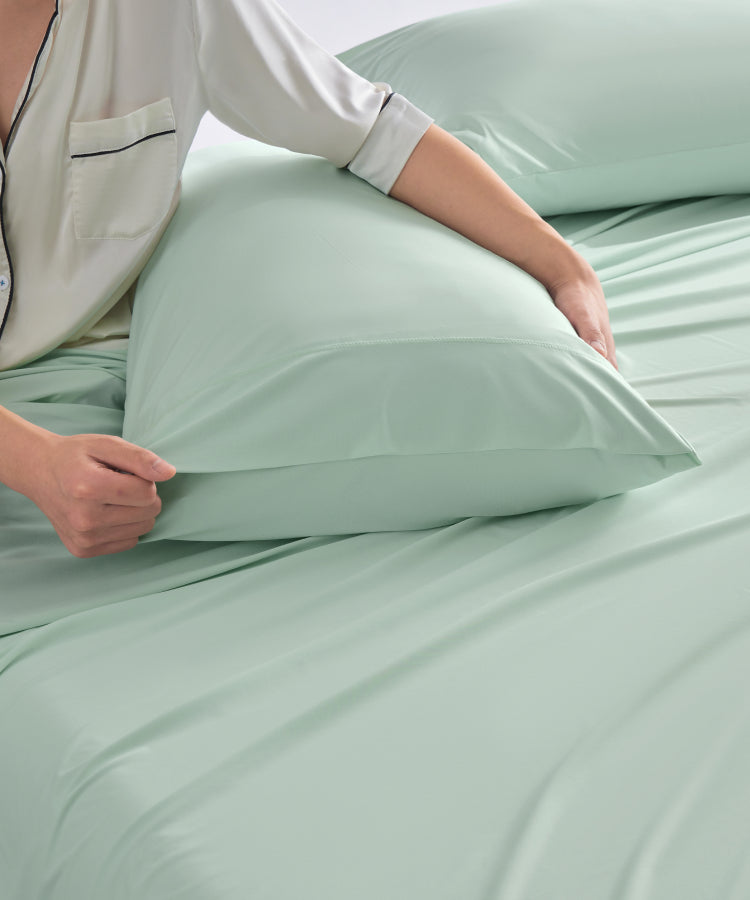
- Pair with breathable sheets underneath, since back sleepers have equally sustained contact with the bottom sheet, not just the comforter on top.
What Side and Stomach Sleepers Should Take From This
This doesn't mean side or stomach sleepers can ignore breathability entirely — a poorly ventilated fabric still causes discomfort regardless of position. It's a difference of degree, not kind: side and stomach sleepers get slightly more natural airflow due to uneven weight distribution, so fabric quality issues may take a bit longer to become noticeable. That doesn't lower the bar for what to look for; it just explains why overheating complaints sometimes show up faster for back sleepers using the exact same product.
What Stays the Same Regardless of Position
Certification, care instructions, and sizing don’t change based on how someone sleeps. OEKO-TEX certification, machine-washability, and coverage dimensions are properties of the product itself, not the sleep position using it.[3][6] Sleep position affects how noticeably the fabric’s performance shows up night to night — not the underlying specs of the comforter.
Testing Comfort Before Buying
If you’re deciding between two similarly rated cooling comforters and know you’re primarily a back sleeper, prioritize whichever discloses more specific moisture-wicking data, rather than defaulting to whichever feels softer in a showroom or product photo.[4] A comforter that feels pleasant to the touch for thirty seconds in a store doesn’t tell you much about how it performs after six hours of sustained, flat contact — which is the actual condition a back sleeper experiences every night.
A Practical Test for Your Own Setup
If you're not sure whether temperature is actually the issue with your current comforter, or whether it's specific to sleeping on your back, try switching positions for a few nights if that's realistic for you, or simply track how quickly you feel warm after lying down flat versus on your side. If overheating shows up faster or more consistently while on your back specifically, that's a reasonable sign the fabric's breathability, not the comforter's overall weight, is the thing worth upgrading first.
Frequently Asked Questions
Do back sleepers need a different type of cooling comforter than side sleepers?
Not a different comforter, but back sleepers may benefit more from prioritizing active moisture-wicking fabric, since sustained contact amplifies both good and poor breathability.
Why does sleep position affect how hot a comforter feels?
Back sleeping creates wider, more sustained contact between skin and fabric than side or stomach sleeping, which traps more warm air if the fabric isn't actively breathable.
Should a back sleeper keep the cooling side of a dual-sided comforter facing up all the time?
If overheating is a frequent issue, yes — consistent use of the cooling side is likely more effective than switching seasonally out of habit.
Does sleep position change which certifications or sizing to look for?
No. Certification, washability, and sizing are properties of the product itself and don't vary based on how someone sleeps.
References
1. Breescape — Cooling Comforter Product Page: https://breescape.com/products/cooling-comforter
2. Textile World — Breescape Unveils Game Changing Reversible Cooling Comforter: https://www.textileworld.com/textile-world/2025/03/breescape-unveils-game-changing-reversible-cooling-comforter-with-blendtek-technology/
3. Breescape — What Is OEKO-TEX Certified Bedding and Why It Matters for Sleep: https://breescape.com/blogs/blogs/what-is-oeko-tex-certified-bedding
4. Sleep Foundation — Best Cooling Comforters of 2026: https://www.sleepfoundation.org/best-bedding/best-cooling-comforter
5. Breescape — Cooling Comforter Set Product Page: https://breescape.com/products/cooling-comforter-set
6. Breescape — Frequently Asked Questions: https://breescape.com/pages/faqs
7. Breescape — Best Cooling Comforter: A Guide for Hot Sleepers: https://breescape.com/blogs/blogs/best-cooling-comforter-for-hot-sleepers