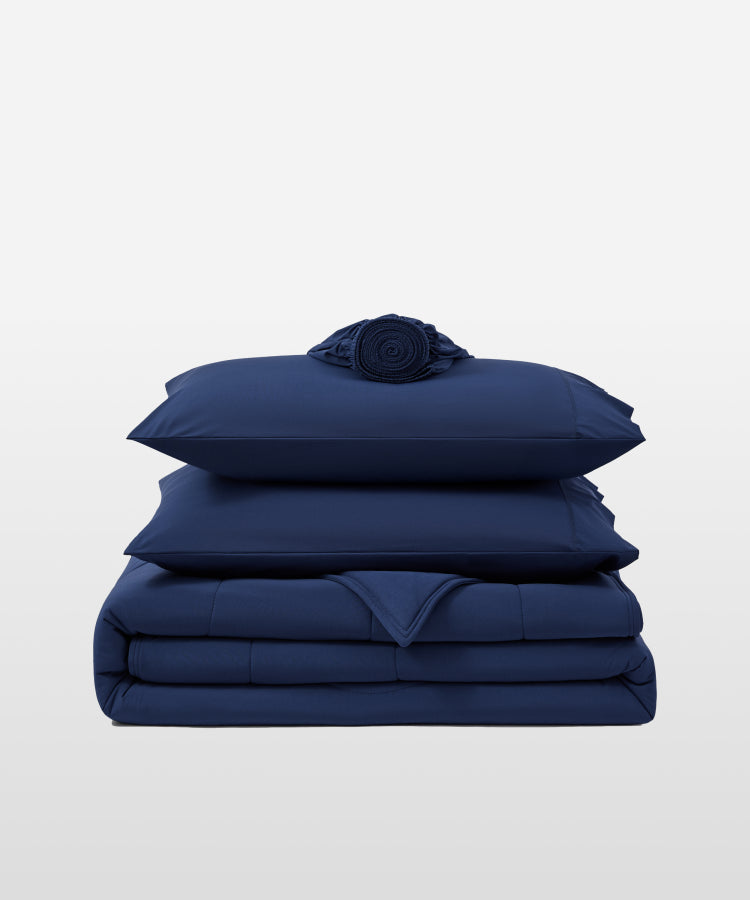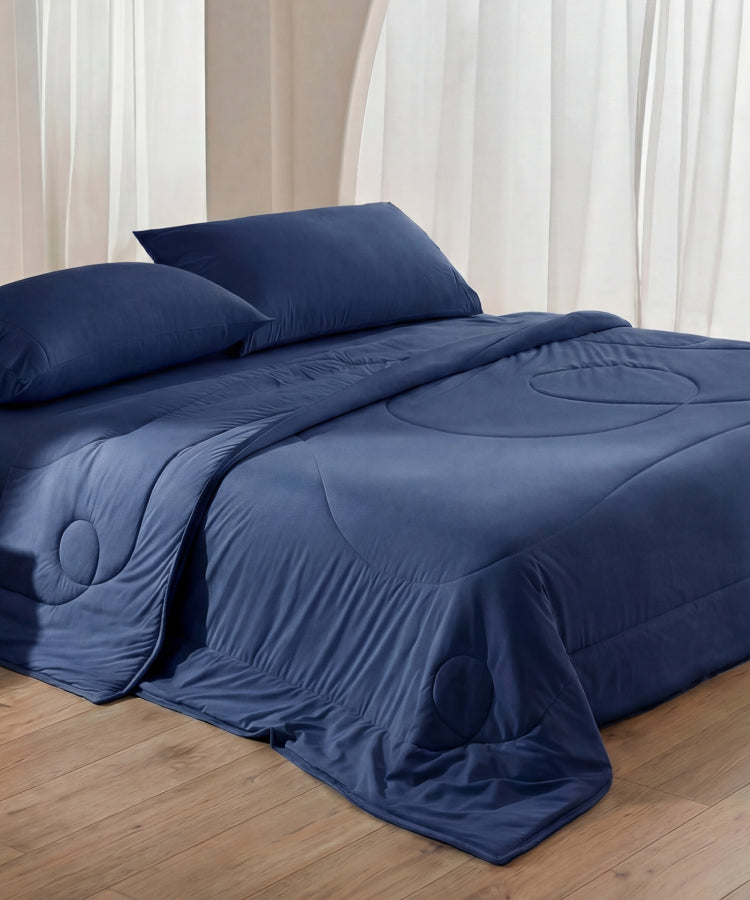



Cooling sheets can feel very different from one product page to another, and photos alone rarely show how a fabric will feel after several hours in bed. A useful comparison starts with the material, the test values and conditions a brand actually publishes, fitted-sheet dimensions, care instructions, and the current policy pages. This framework is meant to help you compare those details rather than rely on broad cooling language. [1][3]
Start With What Is Making You Hot at Night
Thread count alone does not describe how a sheet will feel. When comparing options, look for the fabric composition, weave or knit information, and any published air-permeability or moisture-management test results. These details are more useful than a product photo for understanding what the brand is actually claiming. [1][2]
This distinction helps separate a listed material or measured performance claim from a vague marketing adjective. It does not predict every sleeper experience, so compare the published test method, care directions, return terms, and texture preference before deciding. [1][3]
Three Numbers Worth Checking on Any Product Page
Words such as breathable and moisture-wicking become more useful when a product page also identifies the metric, test condition, and comparison baseline. Three details are especially useful when they are clearly published:
Q-Max: a cool-touch measurement. Compare values only when the pages identify a comparable test basis; a higher value is presented by Breescape as a cooler initial touch.
Air permeability: a published airflow measurement, often shown in mm/s. It is more specific than a standalone breathable claim.
Moisture-management result: check the defined metric and baseline, rather than assuming that every material behaves the same way.
For its Cooling Sheet Set, Breescape publishes Q-Max greater than 0.46, air permeability of 1320 mm/s, and a water-absorption rate of 226%. The same product page lists its comparison figures, so readers can see the brand stated baseline rather than infer a universal multiplier. [1]
Material Comparison: What You Are Actually Buying
Sheet materials sold as "cooling" fall into a few broad categories, and each one trades off differently between cost, feel, and how long the cooling effect lasts.
| Material Type | What to Check | Typical Trade-off | Good Fit For |
|---|---|---|---|
| Standard cotton (percale/sateen) | Weave, feel, and listed care | Cooling feel varies by weave and bedroom conditions | People who prefer a classic cotton feel |
| Bamboo rayon or bamboo viscose | Exact fiber label and care instructions | Soft drape; compare the product-specific construction rather than treating all bamboo labels as equivalent | Shoppers seeking a cellulose-based option |
| Engineered synthetic blends (for example, BlendTek™) | Composition and published performance figures | Texture differs from cotton or linen | Shoppers prioritizing the listed cool-touch, airflow, or moisture-management metrics |
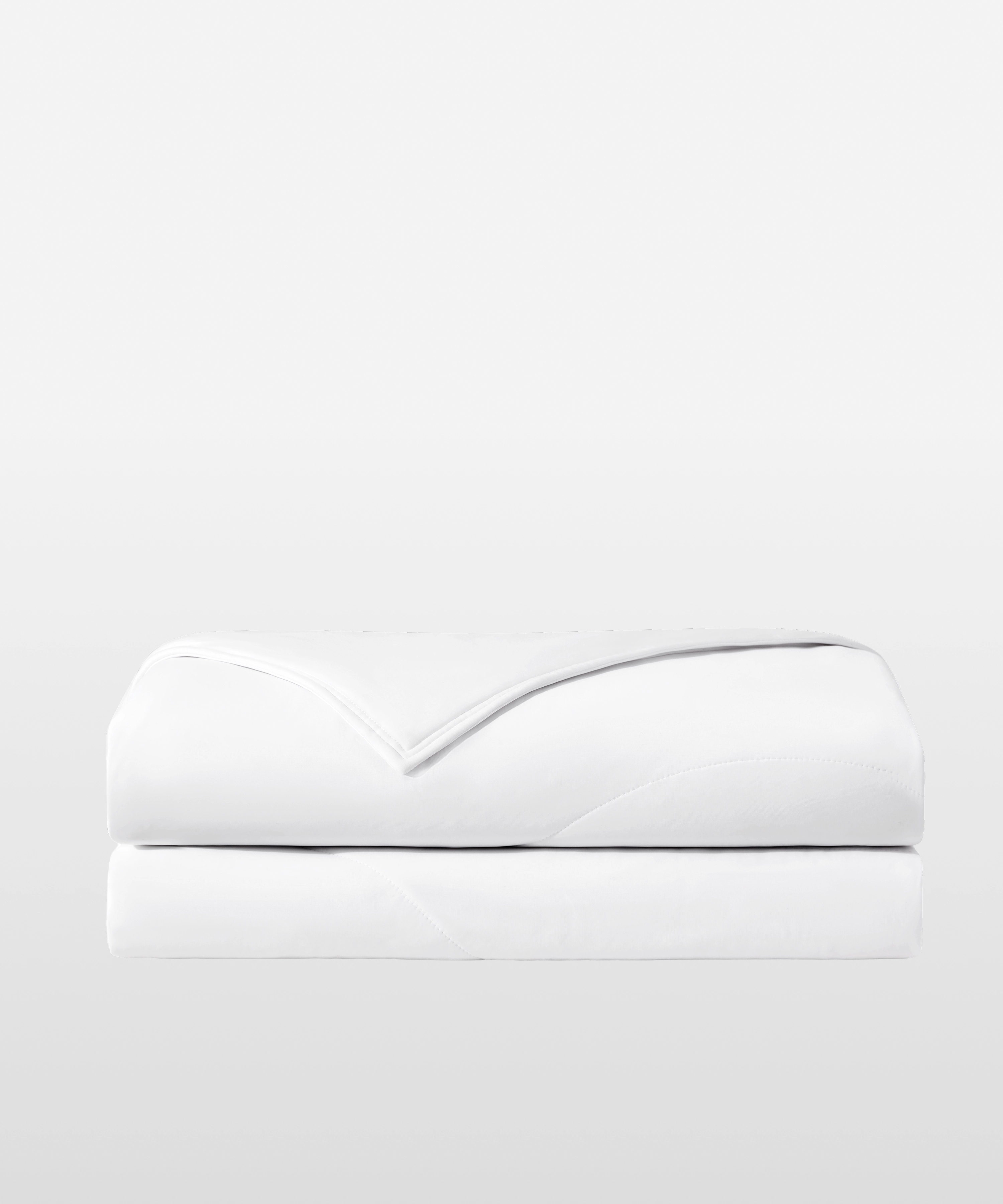
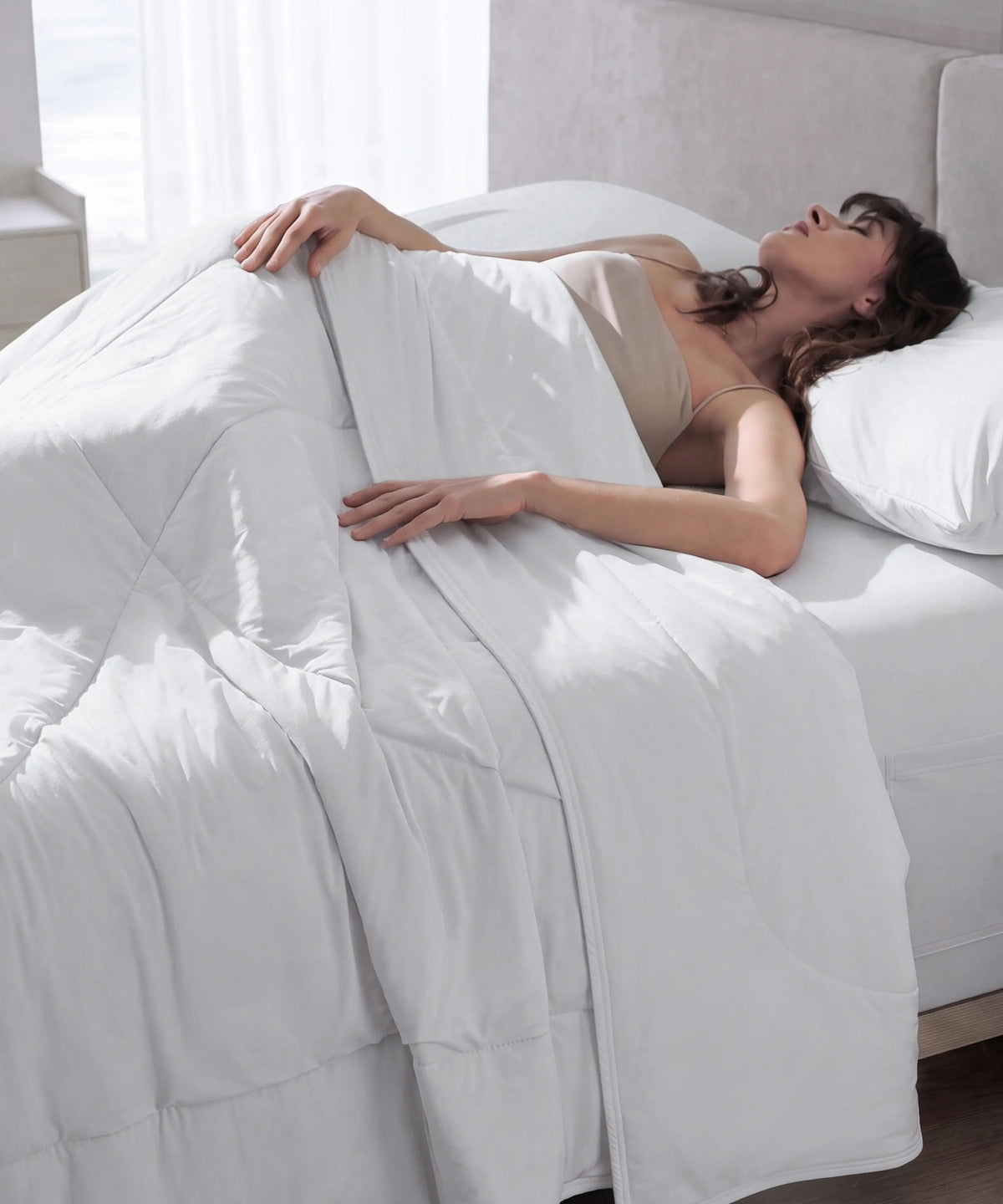
Breescape lists its Cooling Sheet Set as 69% nylon, 20% polyester, and 11% spandex. Its product page describes high-thermal-conductivity fibers, a polygonal fiber structure, and high-porosity fibers as parts of the BlendTek™ design. This is a synthetic blend, so it is sensible to compare its feel with a preferred cotton or linen sheet before buying. [1][2]
Who Should Skip Cooling Sheets Altogether
Cooling sheets aren't the right fix for everyone. If your bedroom is already cool, or you sleep under a fan or air conditioning most nights, a standard cotton sheet at a reasonable thread count will likely feel just as comfortable without the added cost. People who specifically want a natural-fiber feel, such as linen or long-staple cotton, may also find engineered synthetic blends feel different against the skin, even if the temperature performance is stronger. Cooling sheets are most worth the investment for people dealing with recurring night sweats, hot flashes during menopause, or bedrooms that consistently run warm regardless of the season.
Fit Problems That Undercut Cooling Performance
A cooling sheet that slides off the mattress or bunches up loses its benefit fast, since wrinkled fabric creates pockets where heat gets trapped against skin instead of dissipating. Before buying, check two things most people overlook:
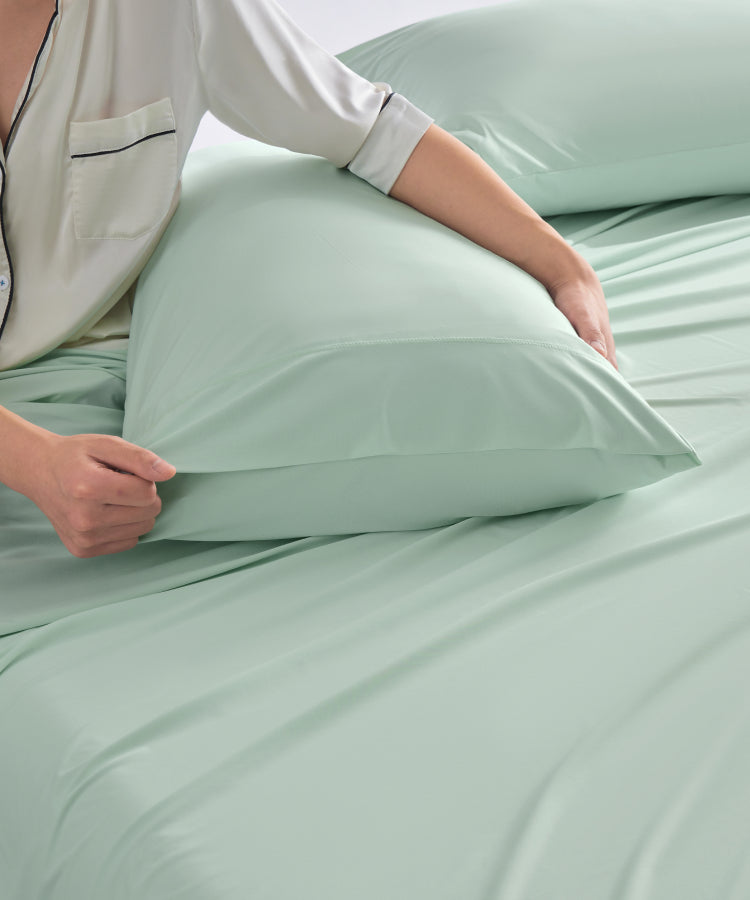
Pocket depth: confirm the fitted-sheet depth against your mattress height and topper. The current Breescape product page states that the sheet set is designed for mattresses up to 18 inches thick, with elastic all around and pockets on both sides. [1]
- Flat sheet coverage: undersized flat sheets ride up during the night. Breescape's sheet set offers roughly 15.3% more coverage than a standard-size flat sheet, which helps it stay tucked in through normal movement.
Care Habits That Preserve Cooling Performance
Care directions should be part of the comparison because they affect what you can realistically maintain. Breescape directs buyers to machine wash its Cooling Sheet Set in cold water on a gentle cycle and tumble dry on low. Follow the product-specific label and avoid treating any general care advice as a performance guarantee. [1][4]
Certifications and What They Actually Cover
Certification labels cover specific scopes, so read the label rather than assuming they prove every product claim. Breescape states that its Cooling Sheet Set carries OEKO-TEX® STANDARD 100 and identifies the fabric as suitable for direct skin contact. The product page also states that the set is backed by the Good Housekeeping Seal; the current third-party-testing page provides the related test and certification context. [1][6]

What Happens If It Does Not Work Out
Return, refund, warranty, and shipping terms can change, so check the current direct-purchase pages before you buy and retain the applicable order details. In a comparison, a clearly stated current policy is more useful than assuming that one retailer or manufacturer provides the same coverage as another. [3][5][7][8]
A Quick Decision Checklist
Before adding a cooling sheet set to your cart, run through this short list:
- Does the listing publish a Q-Max, breathability, or moisture-wicking number, or just use the word "cooling" without data?
- Is the fabric a natural fiber or an engineered synthetic blend, and does that match your texture preference?
- Does the fitted sheet's pocket depth match your mattress thickness, including any topper you use?
- What's the wash and dry instruction, and does it match how often you're realistically willing to wash sheets?
- Is there a stated return window and warranty, and who backs it — the retailer, the manufacturer, or a third party like Good Housekeeping?
When two brands use different tests, do not turn the figures into a single league table. First check whether each page identifies the metric, unit, and comparison material. Then separate an initial cool-touch number from airflow and moisture-management information, because they answer different questions. A higher cool-touch result can be useful for someone who dislikes a warm first contact, while the listed airflow and care details may matter more to someone choosing sheets for a warm room. Finally, check the size guide against the mattress and topper already on the bed. This sequence keeps a comparison grounded in published information without suggesting that one number guarantees the same sleep experience for everyone. [1][2]
Frequently Asked Questions
Do cooling sheets actually stay cool all night, or just at first touch?
It depends on the material and construction. Cool-touch measurements describe the initial contact sensation, while airflow and moisture-management information can help you compare the claims a brand makes for overnight comfort. No product page can predict the same result for every sleeper. [1]
What Q-Max number should I look for when comparing sheets?
Compare Q-Max figures only alongside the stated test basis and the other published metrics. Breescape lists Q-Max greater than 0.46 for its Cooling Sheet Set; on the same page it shows 0.11 for cotton, 0.15 for bamboo rayon, and 0.19 for silk. [1]
Are cooling sheets made from natural fiber like cotton or bamboo?
Not always. Many engineered cooling fabrics, including Breescape's BlendTek™, are synthetic blends of nylon, polyester, and spandex, chosen specifically for their fiber shape and moisture-wicking properties rather than being a natural fiber.
How often should I wash cooling sheets to keep them working well?
Follow the care directions on the product you buy. For Breescape Cooling Sheets, the current product page says to machine wash cold on a gentle cycle and tumble dry on low; it does not prescribe one universal weekly washing schedule. [1]
What protection do I have if a cooling sheet set does not work for me?
Check the current return, refund, warranty, and shipping terms for the seller and purchase channel before ordering. Breescape states that its Cooling Sheet Set is backed by the Good Housekeeping Seal; review the current direct-purchase policies and test information for the coverage and terms that apply to your order. [1][5][6][7][8]
References
1. Breescape — Cooling Sheet Set Product Page: https://breescape.com/products/cooling-sheet-set
2. Breescape — BlendTek™ Technology Page: https://breescape.com/pages/blendtek
3. Breescape — Frequently Asked Questions: https://breescape.com/pages/faqs
4. Breescape — How to Properly Care for and Wash Cooling Sheets: https://breescape.com/blogs/blogs/how-to-wash-cooling-sheets
5. Breescape — Returns & Exchanges: https://breescape.com/pages/returns-exchanges
6. Breescape — Third-Party Tested, Globally Certified: https://breescape.com/pages/third-party-tested
7. Breescape — Shipping Policy: https://breescape.com/policies/shipping-policy
8. Breescape — Refund Policy: https://breescape.com/policies/refund-policy