


On a 90°F day, most people assume the problem is air conditioning — it's not cold enough, the bedroom faces west, the unit is undersized. Those are real factors, but they're often not the primary reason you wake up in the second half of the night. What's happening in your body, and in the microclimate between you and your sheet, is the more direct cause.
How Your Body Uses Sleep to Cool Down
Core body temperature follows a predictable daily cycle. It peaks in the late afternoon and begins dropping several hours before sleep onset — a deliberate physiological preparation. The body redirects blood flow to the skin surface, increasing heat dissipation. You feel warm in your hands and feet before bed because blood is being sent to the periphery to radiate heat. When the bedroom or bedding environment is too warm, this heat-dumping process is impaired, and sleep onset is delayed or fragmented.¹
The Sleep Stage Sensitivity Map
| Sleep Stage | Physical Function | Thermal Sensitivity | Effect of Heat Disruption |
| Light Sleep (N1/N2) | Transition, early memory consolidation | Moderate | Easier to return to; less damaging if disrupted once |
| Deep Sleep (N3/Slow-Wave) | Physical repair, immune function, tissue recovery | High | Causes fatigue, reduced immune response; hard to re-enter |
| REM Sleep | Memory consolidation, emotional regulation, cognitive restoration | Very high | Body's own thermoregulation effectively shuts off; fully dependent on bedding environment |
REM sleep is the most thermally vulnerable stage because the body's temperature regulation becomes irregular during it — the sleeper is entirely dependent on the bedding microclimate to maintain stable thermal conditions. This is why heat-related sleep disruptions produce the most noticeable next-day cognitive effects.²
Why the Second Half of the Night Is Worse
REM cycles lengthen as the night progresses. The first REM period runs roughly 10–20 minutes; by the final one before natural waking, it extends to 45–60 minutes. At the same time, if you're sleeping hot, thermal saturation of the bedding accumulates. A cotton sheet that started the night cool is now warm and damp at 3 AM. Longer REM periods combined with a fully saturated thermal environment explains why most heat-related disruptions happen in the second half of the night, not immediately.¹
What 90°F Outside Actually Does to Your Bedroom
- Thermal mass: walls, floors, and furniture absorb daytime heat and release it slowly overnight. A bedroom at 72°F at 7 PM may be 76°F at midnight even with AC running.
- Humidity: at high outdoor temperatures, absolute humidity rises. A humid bedroom makes the body's own evaporative cooling less effective because ambient air is already moisture-saturated.³
- AC limitations: most residential units are sized for average conditions, not peak summer days. On 90°F days, they often run continuously and still allow bedroom temperatures to drift above the optimal 65–68°F.³
- West-facing and upper-floor rooms: absorb significantly more radiant heat from afternoon sun and can run 3–5°F warmer than north-facing or ground-floor rooms in the same building.
The Bedding Layer's Role
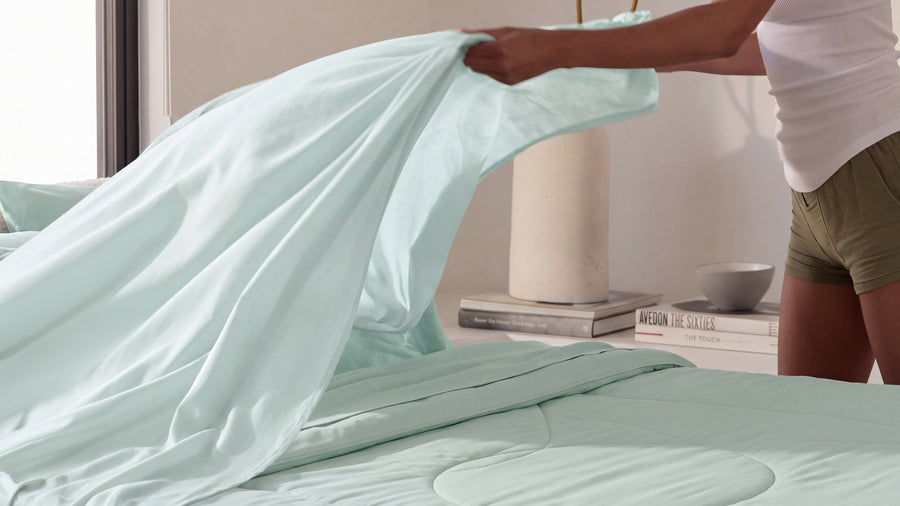
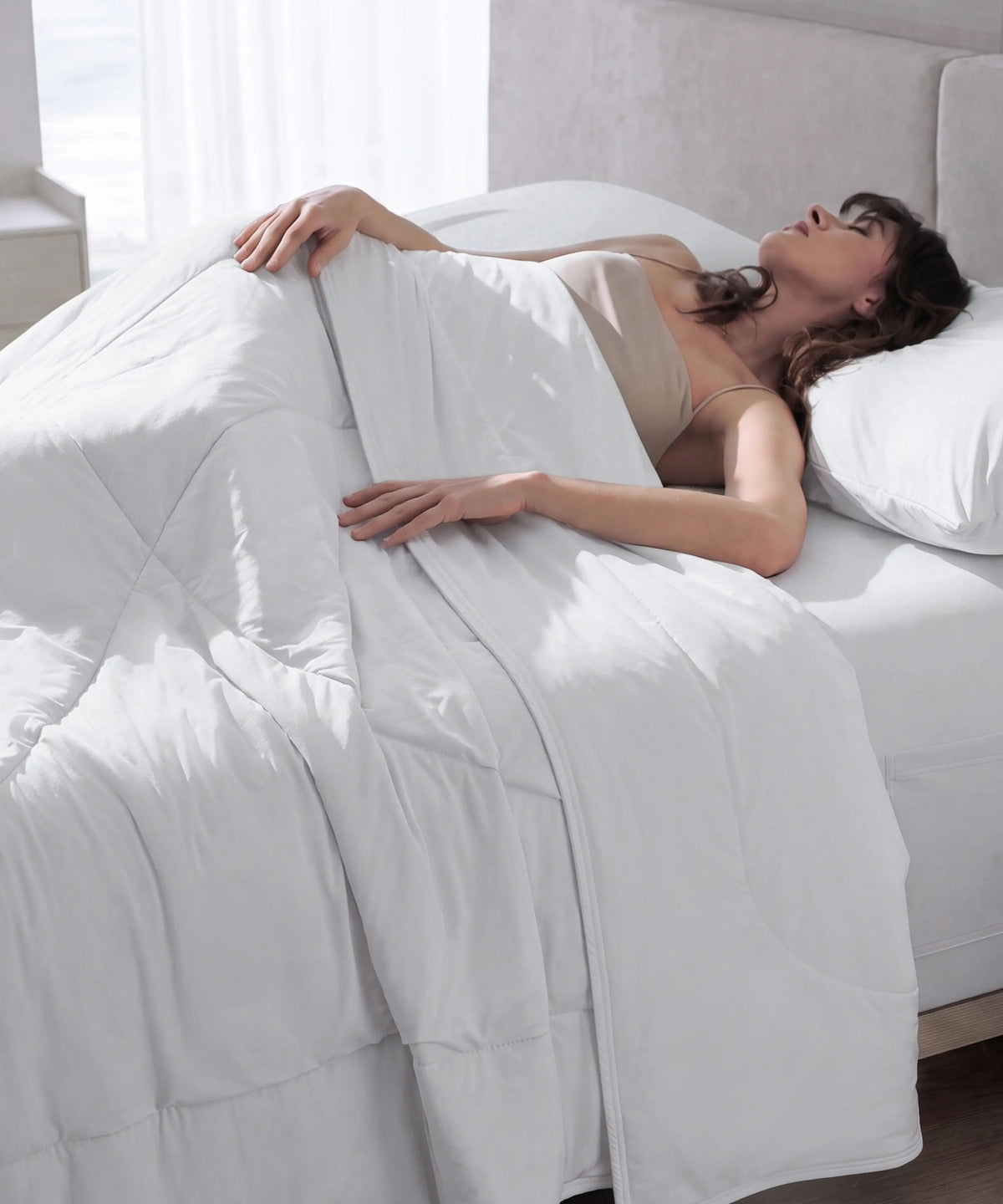
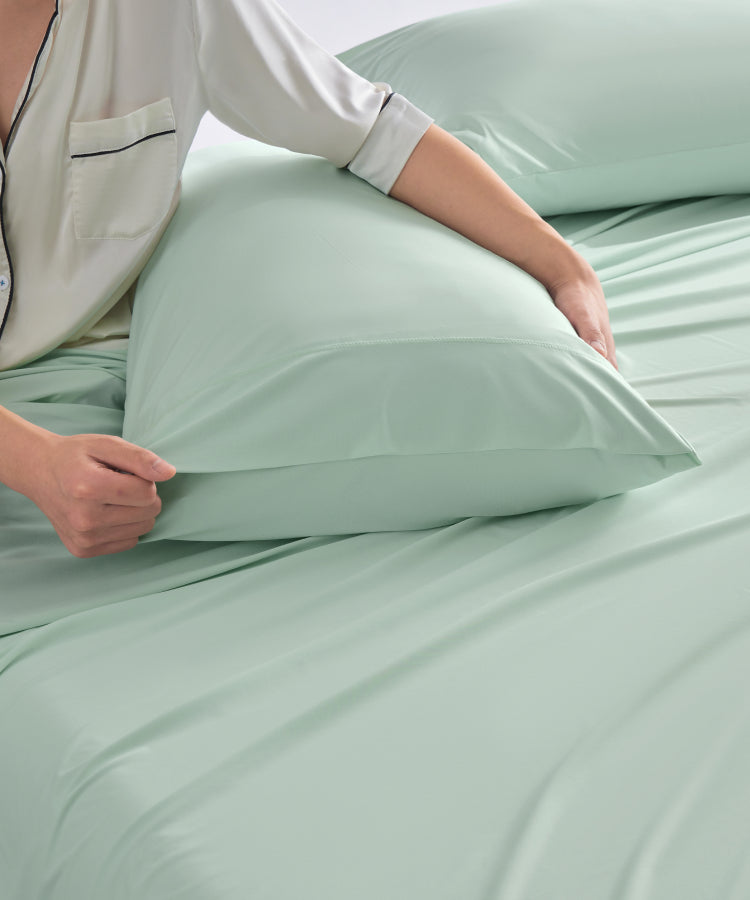
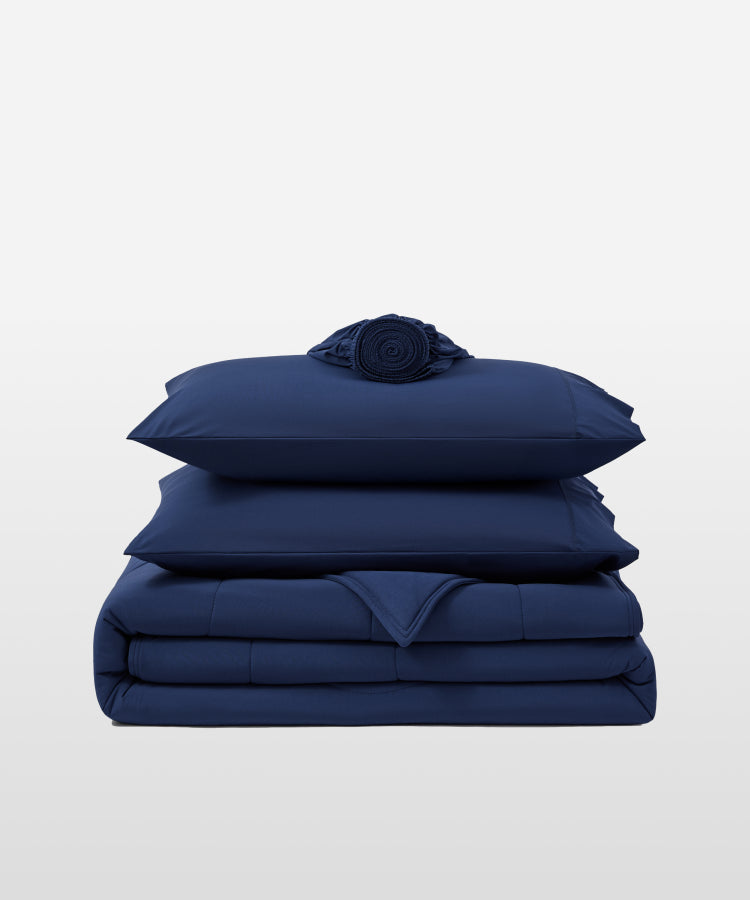
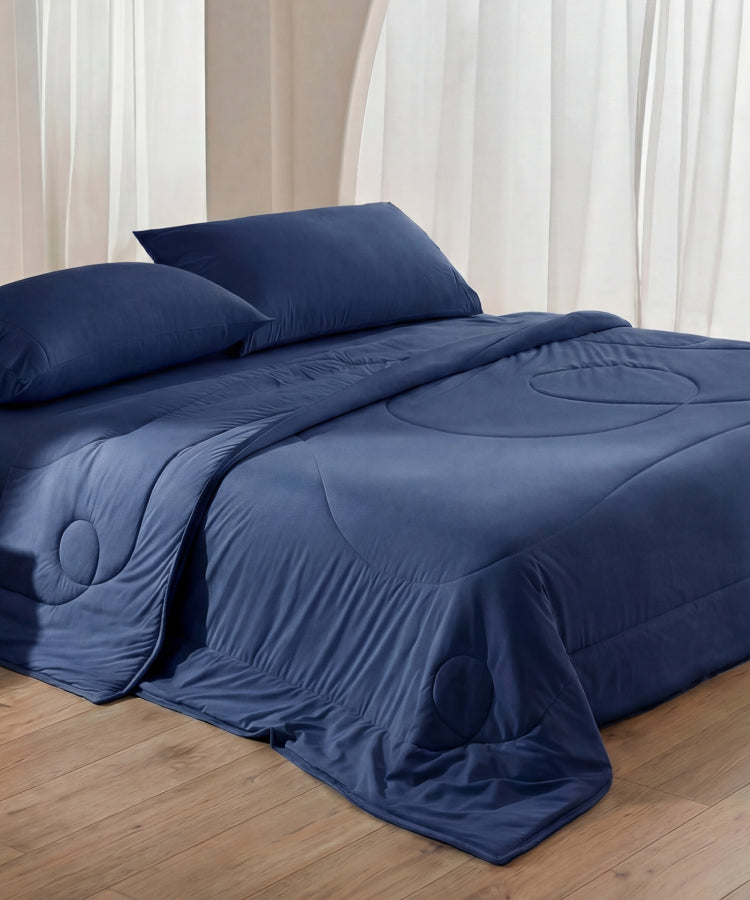
Bedding creates a microclimate — a small pocket between you and the sheet that's warmer than the ambient room because your body continuously generates heat. The difference between a cooling and a conventional sheet is whether this microclimate accumulates heat or dissipates it.
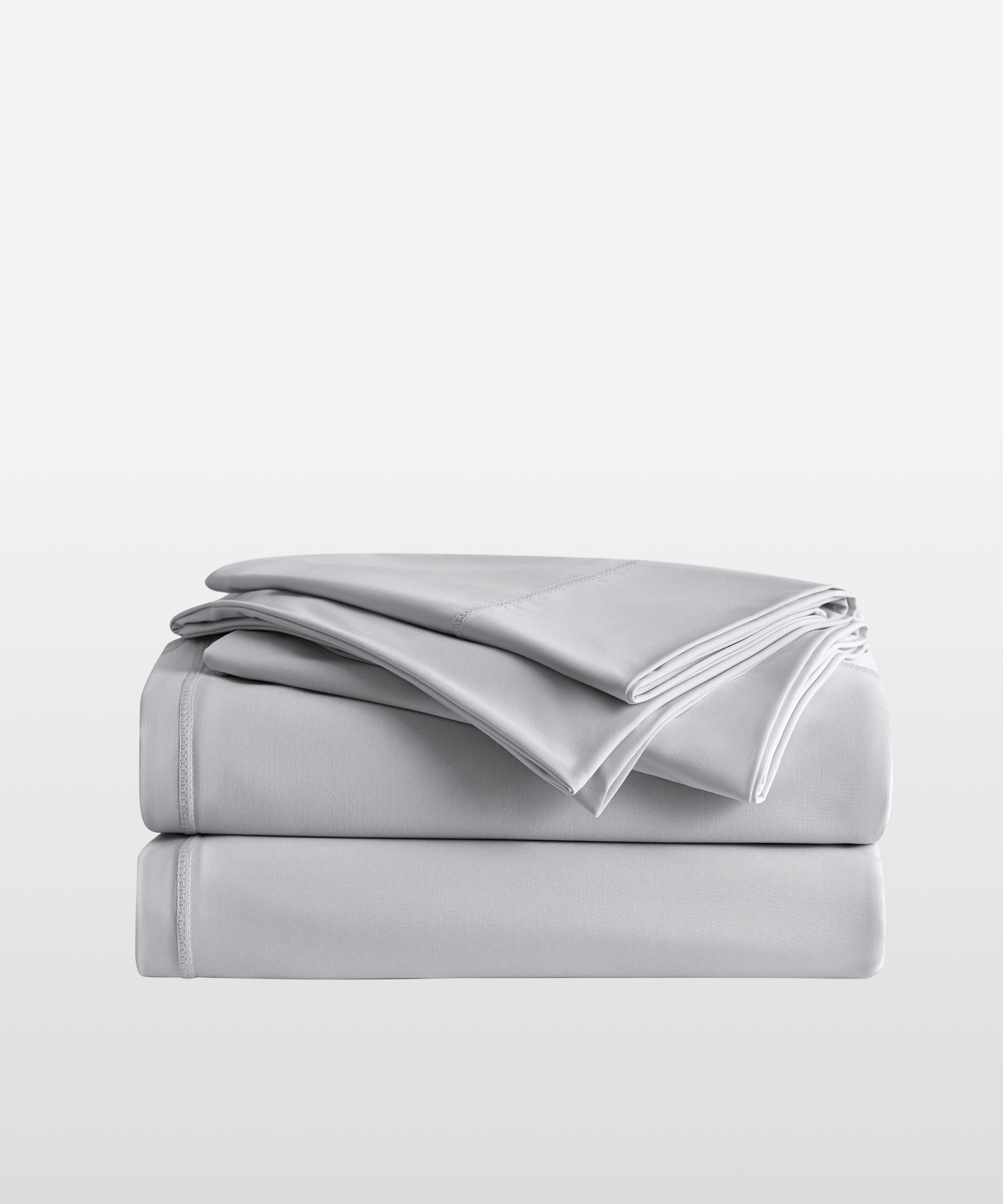
BlendTek™ (used in Breescape cooling sheets) is 4.5× more breathable than cotton — meaning significantly more heat escapes the bedding microclimate rather than building.⁴ Q-Max 0.46 (SGS validated) maintains a higher thermal conductivity at the skin surface, and the polygonal fiber capillary structure wicks moisture outward before it saturates the sheet. On a 90°F summer night, these aren't incremental improvements — they change the thermal conditions of the sleep environment in a way you feel.⁴ NBC Today included Breescape in its 100 Best Sleep Products list in March 2026.⁵

Practical Adjustments for Summer Sleep
- Set the thermostat to 65–68°F for sleep — Sleep Foundation guidance based on sleep architecture research.³ If unreachable, a fan directed across the bed surface amplifies the sheet's breathability effect.
- Use blackout curtains to block afternoon solar gain — reduces the thermal mass load the room needs to shed overnight.
- Switch to a cooling sheet set before summer peak, not in reaction to disrupted sleep — your body needs several nights of adjustment even after the environment improves.
- Keep cold water on the nightstand — rehydrating after a sweat event helps the body normalize temperature faster.
- Avoid alcohol within 3 hours of bedtime — it raises core temperature and disrupts the second half of the cycle where thermal vulnerability is highest.

Frequently Asked Questions
Why do I sleep worse when it's hot outside even with AC on?
Thermal mass in walls and furniture absorbs daytime heat and releases it overnight, raising bedroom temperature even while AC runs. High humidity also impairs the body's evaporative cooling. On 90°F days, most residential AC can't fully neutralize this combined load.
What is the best bedroom temperature for sleep?
Sleep Foundation recommends 65–68°F. Core body temperature naturally drops before and during sleep — a warm room impairs this process, delaying sleep onset and increasing nighttime awakenings.
Why do I wake up hot in the middle of the night rather than at the start?
REM cycles lengthen through the night, and REM is the most thermally vulnerable stage. Bedding thermal saturation also accumulates — a cotton sheet is warmer and damper at 3 AM than at 11 PM. Both effects peak in the second half of the night.
Do cooling sheets work on very hot nights?
Yes — they address the bedding microclimate directly. BlendTek™ (Q-Max 0.46, 4.5× more breathable than cotton) maintains active heat dissipation and moisture wicking throughout the night regardless of outdoor temperature.
What sleep stage is most affected by heat?
REM sleep, because the body's own thermoregulation shuts off during it. Deep sleep (N3) is also significantly affected. Both contribute to next-day fatigue and cognitive impairment when disrupted by heat.
References
- 1. NIH PMC. "Sleep and Thermoregulation." https://pmc.ncbi.nlm.nih.gov/articles/PMC7323637/
- 2. Sleep Foundation. "Best Temperature for Sleep." https://www.sleepfoundation.org/bedroom-environment/best-temperature-for-sleep
- 3. Sleep Foundation. "Humidity and Sleep." https://www.sleepfoundation.org/bedroom-environment/humidity-and-sleep
- 4. Breescape. Cooling Sheet Set Product Page. https://breescape.com/products/cooling-sheet-set
- 5. NBC Today. "100 Best Sleep Products." https://www.today.com/shop/100-best-sleep-products-rcna262950
- 6. Reviewed.com. "The Best Bed Sheets." https://www.reviewed.com/sleep/best-right-now/the-best-bed-sheets
- 7. Breescape. FAQ — BlendTek™ and sleep environment. https://breescape.com/pages/faqs
- 8. Good Housekeeping. "2026 Bedding Awards." https://www.goodhousekeeping.com/home-products/a70328937/bedding-awards-2026/
- 9. NIH PubMed. "Thermoregulation during sleep." https://pubmed.ncbi.nlm.nih.gov/18929312/
- 10. PR Newswire. "Breescape Earns Good Housekeeping Seal." https://www.prnewswire.com/news-releases/breescape-cooling-products-earn-prestigious-good-housekeeping-seal-302755670.html