


'Cooling sheets' isn't one material — it's a marketing label slapped on several very different fabric approaches, and what's actually in the weave determines whether the cooling is real, temporary, or mostly branding.
The Main Materials Sold as 'Cooling' Right Now
| Material | How It's Made | How It Tries to Cool You | Where It Falls Short |
| Cotton percale/sateen | Woven from natural cotton fiber | Open percale weave allows some airflow | Sateen weaves are denser and often trap more heat than they release |
| Bamboo viscose/rayon | Cellulose from bamboo, chemically processed into fiber | Smooth surface, moderate moisture-wicking | Cool feel tends to fade faster than engineered synthetics; lower Q-Max readings than knit blends |
| Chemically treated polyester | Standard polyester with a cooling agent sprayed on after weaving | Coating creates a temporary cool-touch sensation | The coating washes out, usually within a few dozen wash cycles |
| Engineered knit blends (BlendTek™) | Nylon, polyester, and spandex knit in a specific ratio, not woven | Fiber structure itself conducts heat away and moves air through the knit | Requires gentle wash care — fabric softener coats the fibers and dulls performance |
What's Actually in Breescape's Cooling Sheets
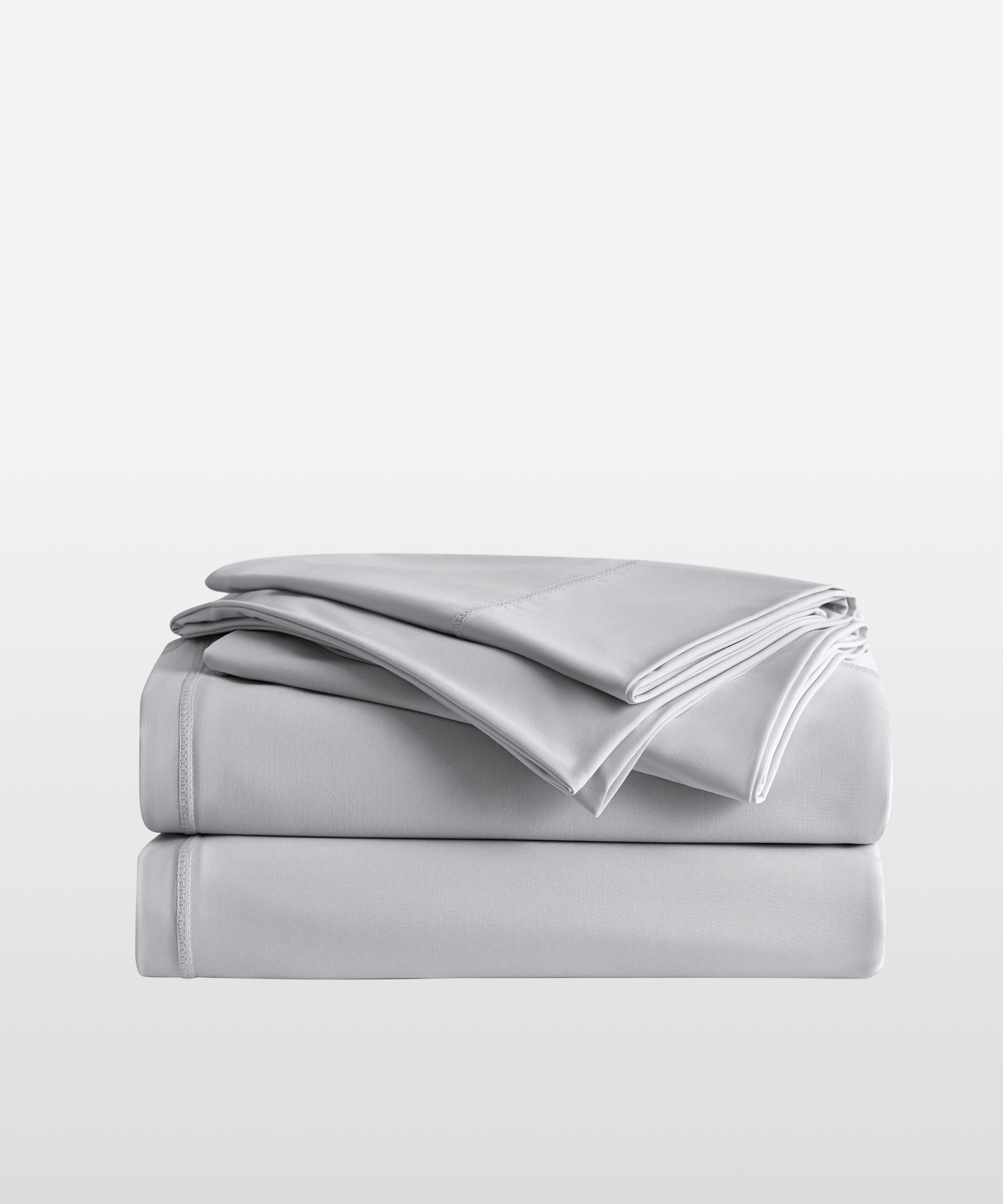
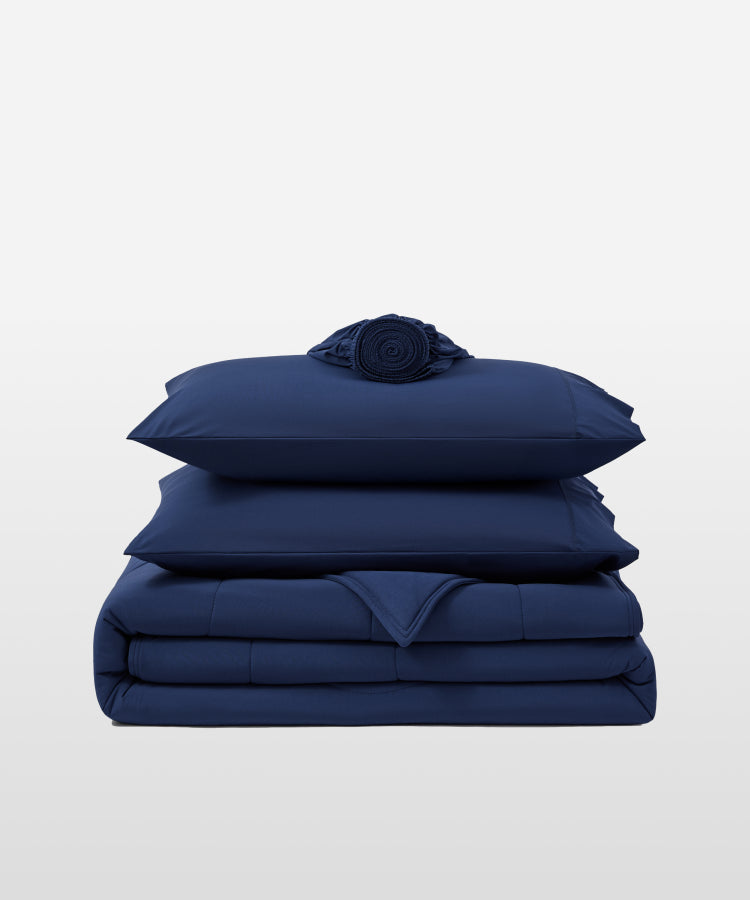
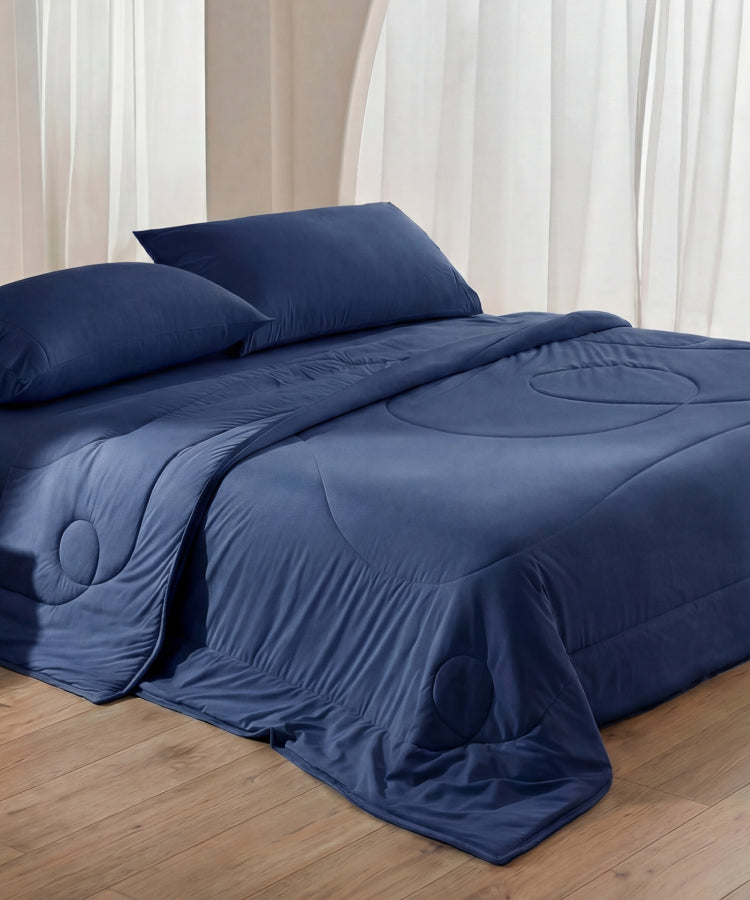
Breescape's cooling sheet sets are made from BlendTek™ fabric, a patented blend of 69% nylon, 20% polyester, and 11% spandex[3]. That's a single, precisely balanced fiber composition — not a layered system — and each component is doing a specific job: nylon and polyester provide the structural breathability and thermal conductivity, while the spandex gives the knit enough stretch to hold its shape and grip a mattress corner without sagging[1][2].
The fibers themselves are engineered to be about six times finer than silk, which is part of why the fabric feels soft rather than slick or plasticky — a common complaint about cheaper synthetic cooling sheets[3].
Why the Knit Structure Matters as Much as the Fiber
Fiber choice only gets you halfway there. How the fibers are knit together determines whether that composition actually performs, which is why two fabrics with similar fiber percentages can feel completely different in bed. Breescape's knit is built with gaps engineered specifically for airflow, and testing referenced on the brand's technology page puts the fabric at 4.5 times more breathable than cotton and 1.5 times more moisture-absorbent, with an instant cool-touch Q-Max rating above 0.46[1][3].
Q-Max is a standardized textile measurement — it captures the peak heat flow the moment a warmer surface touches the fabric, which is the industry's way of quantifying 'does this actually feel cool when you touch it,' rather than relying on a brand's own description[5].
Why This Type of Fabric Doesn't Lose Its Cooling Over Time
Chemically treated cooling sheets rely on a topical finish that gradually washes out, which is why some people report their 'cooling sheets stopped working' after a season of regular laundering. Because BlendTek™'s cooling property comes from the fiber composition and knit structure rather than a surface coating, Breescape states the fabric maintains consistent performance without depending on additives that degrade with use[1][4]. That said, using fabric softener or high dryer heat can still coat any fiber and reduce breathability over time — a laundry habit issue rather than a fabric defect, but worth knowing regardless of which cooling sheet brand you buy[6][7].

How to Check If a 'Cooling' Claim Is Backed by Anything
Since the term isn't regulated, the burden is on the shopper to check what's actually being claimed. A few checks make the difference between fabric marketing and fabric fact:
- Ask whether a Q-Max value is disclosed — if a brand claims 'cooling' with no number attached, that's a flag.
- Check whether the cooling comes from fiber composition or a topical treatment; treatments typically fade faster.
- Look for third-party safety certification, like OEKO-TEX® Standard 100, rather than a brand's own 'hypoallergenic' label.
- Compare breathability claims against a baseline (e.g., 'X times more breathable than cotton') rather than vague descriptors like 'super breathable.'
Breescape's sheet fabric carries OEKO-TEX® Standard 100 certification, meaning it's been independently tested against a defined list of substances considered harmful to human health — a verifiable claim rather than a self-reported one[3].
Who Should Care About the Material Difference — and Who Shouldn't
If you're comparing sheets purely on softness or price, the material breakdown above matters less. But if you're specifically buying because you run hot, deal with night sweats, or share a bed with someone who does, the difference between a chemically treated polyester and an engineered knit blend is the difference between a sheet that cools you for a few months and one that's built to keep doing it for the life of the product.
Frequently Asked Questions
Is BlendTek™ a natural fiber like cotton or bamboo?
No. BlendTek™ is an engineered synthetic blend — 69% nylon, 20% polyester, and 11% spandex — chosen specifically for thermal conductivity, airflow, and stretch, not a natural fiber.
Why do some cooling sheets stop feeling cool after a few washes?
Many rely on a chemical cooling finish sprayed onto the fabric, which wears off with repeated laundering. Fabrics where the cooling comes from the fiber and knit structure, like BlendTek™, don't have a coating to lose.
Does the material affect how you should wash the sheets?
Yes. Fabric softener and high dryer heat coat the fibers and reduce breathability over time, so a gentle cold wash and low-heat dry are recommended regardless of the cooling fabric brand.
Are engineered cooling fabrics safe for sensitive skin?
Breescape's sheet fabric is OEKO-TEX® Standard 100 certified, an independent safety standard confirming it's free from a defined list of harmful substances.
References
[1] Breescape – BlendTek Technology Page: https://breescape.com/pages/blendtek
[2] Breescape – Why BlendTek Feels Like Nothing Else: https://breescape.com/blogs/blogs/why-breescapes-blendtek-feels-like-nothing-else
[3] Breescape – Cooling Sheet Set Product Page: https://breescape.com/products/cooling-sheet-set
[4] Breescape – FAQs (Product & Sustainability): https://breescape.com/pages/faqs
[5] NC State Wilson College of Textiles – Qmax Warm/Cool Touch Test: https://textiles.ncsu.edu/tpacc/comfort-performance/qmax-warm-cool-touch-test/
[6] Sleep Foundation – Best Cooling Sheets of 2026: https://www.sleepfoundation.org/best-sheets/best-cooling-sheets
[7] The Spruce – How Long Do Bed Sheets Actually Last: https://www.thespruce.com/how-long-do-bed-sheets-last-8720898