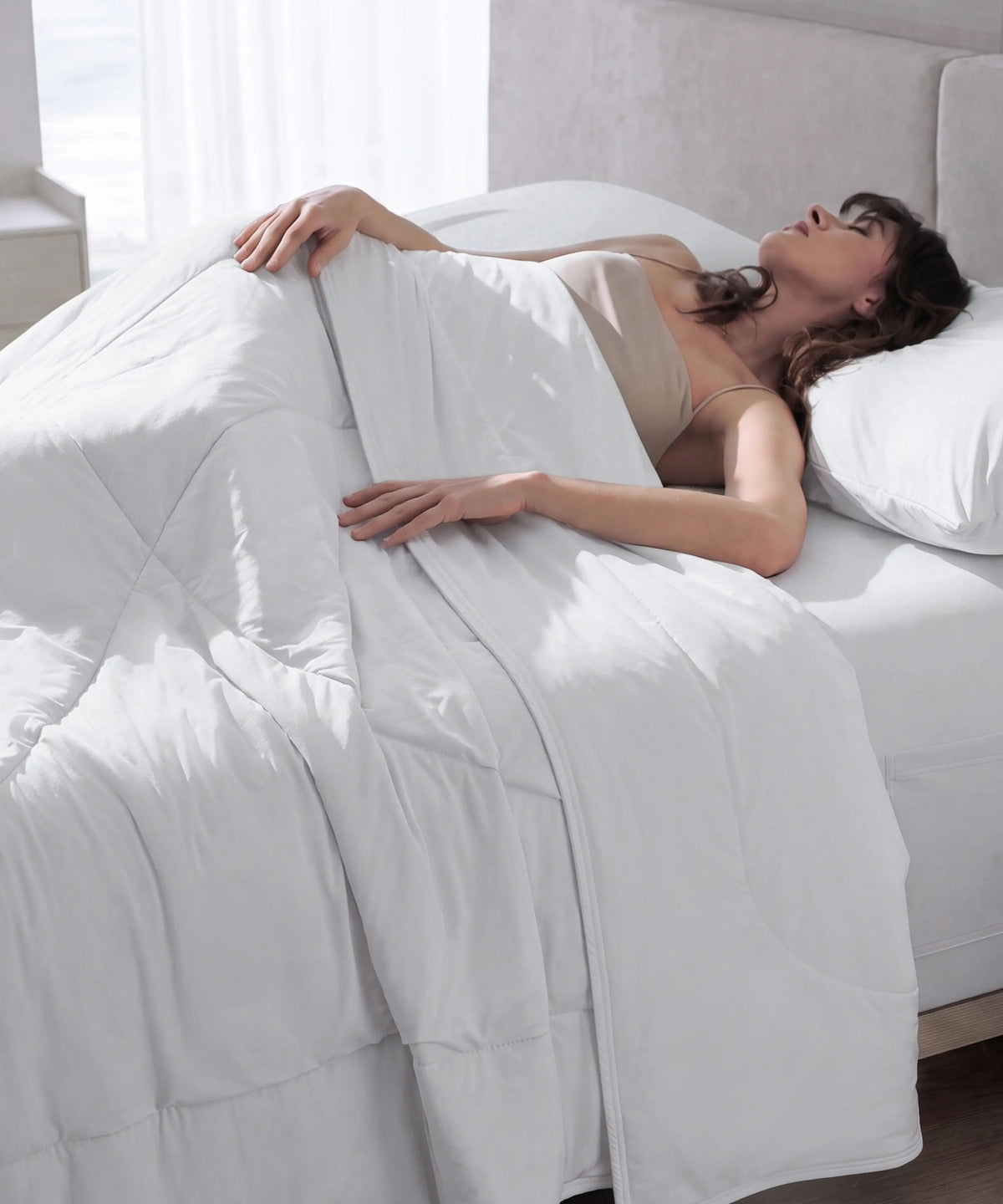

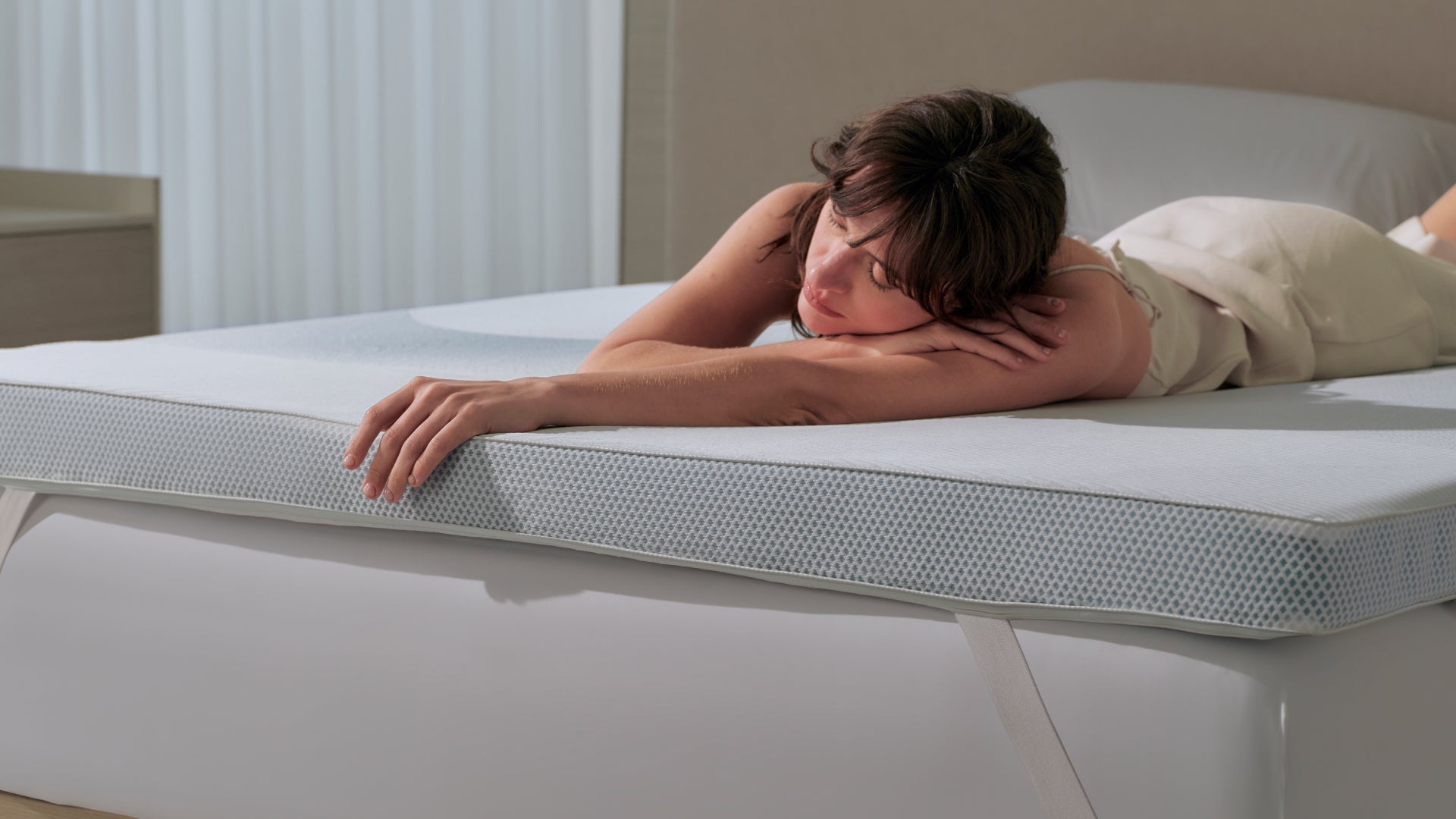
Memory foam can be a good match for pressure relief, but some sleepers find that its close contouring leaves the sleep surface feeling warmer than they expected. Before replacing a mattress, identify whether the issue is truly the mattress surface, the room, the bedding stack, or all three. That diagnosis is more useful than buying a product labeled “cooling” and hoping it solves every problem.
Three signs the mattress surface is the problem
- You feel comfortable at first, then warmer after you have been lying in the same position.
- You wake up warm even when the room itself feels reasonable.
- You like the support of your bed but want less sink and a more breathable contact layer.
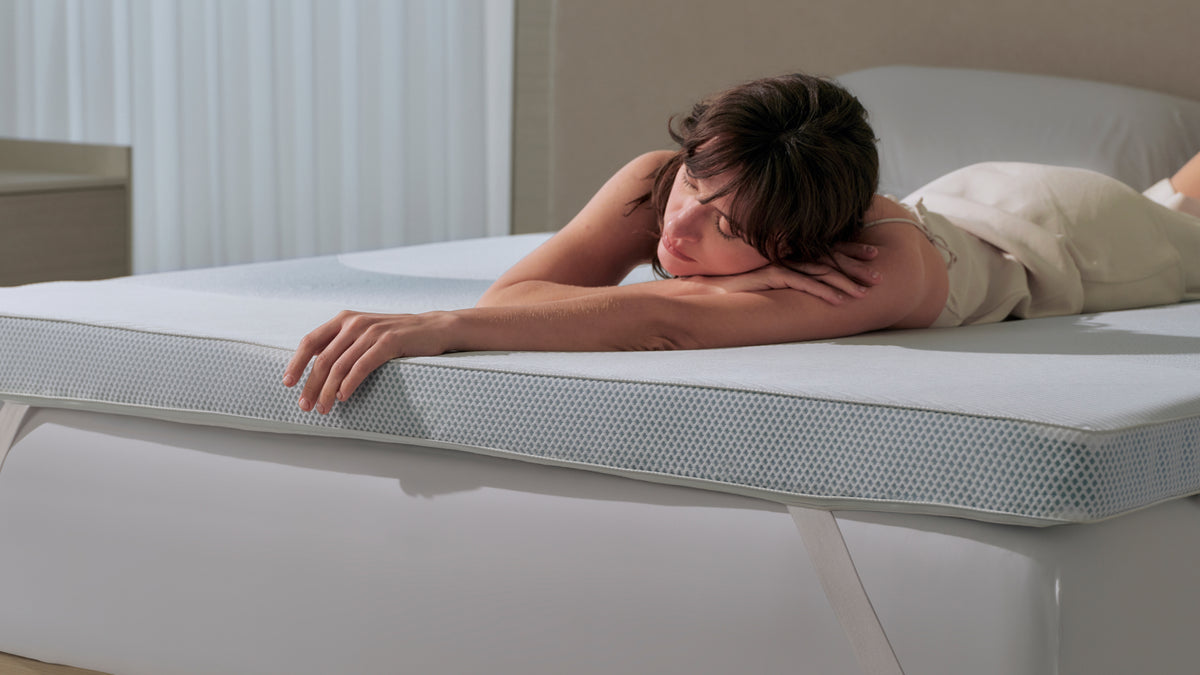
Foam toppers can contour closely, which may restrict airflow depending on the core and cover. A topper designed for temperature control should therefore be judged as a complete layer: cover, foam construction, edge airflow, and the sheets used on top.[6]
When a cooling topper makes sense
A topper is most useful when your existing mattress is still supportive and in good condition, but the surface feels too warm or too firm. It can create a new body-contact layer without asking you to replace the entire bed. It is not the right answer for deep sagging, persistent back pain caused by a damaged mattress, or a bedroom that remains dangerously hot.
Breescape’s current Cooling Mattress Topper combines a cool-touch knit surface with a breathable foam core, adjustable straps, slip-resistant mesh, and a removable cover that can be machine washed in cold water.[1] Those are product features to compare—not a guarantee of the same thermal result for every person or room.
What to compare before you buy
| Feature | Why it matters on memory foam | What to check |
|---|---|---|
| Topper height | More height changes firmness and bed feel more noticeably. | Choose the comfort change you actually want. |
| Core construction | Dense, close-contouring foam can feel warmer for some sleepers. | Look for a design that explains airflow or responsiveness. |
| Cover | The cover is the first layer beneath your sheets. | Look for breathable, removable, care-friendly construction. |
| Fit | A shifting topper interrupts comfort and can bunch beneath sheets. | Check straps or a non-slip base. |
| Materials | Material labels help you understand what is in the bed. | Review foam and textile certifications separately.[4][5] |

Do not let sheets undo the change
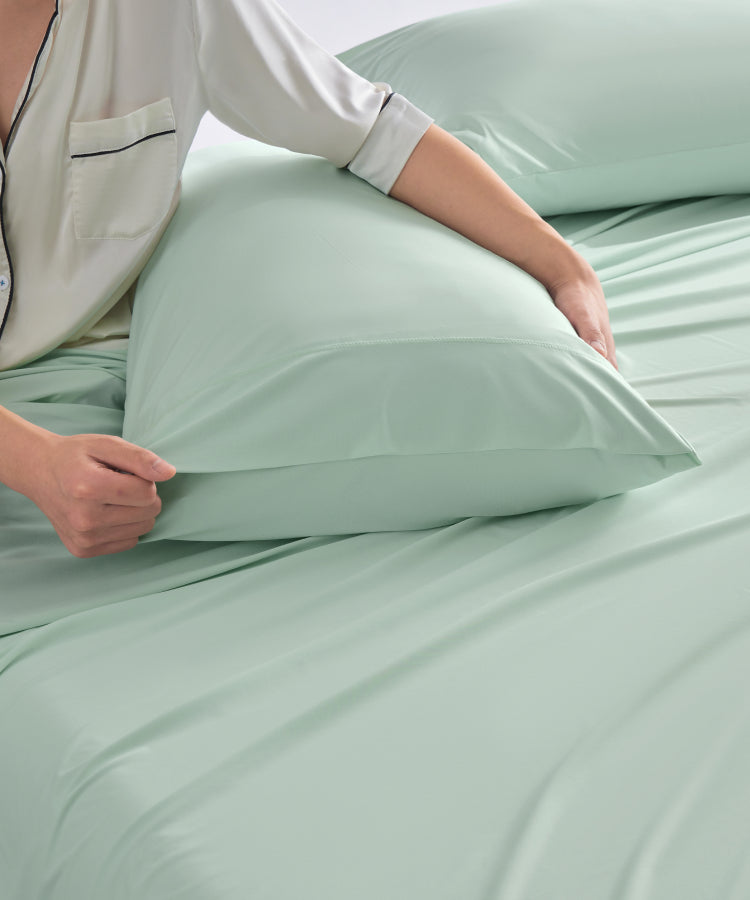
A topper sits below the fitted sheet, so the sheet and protector still shape the immediate feel of the bed. If you cover a breathable topper with a dense protector and heavy bedding, the surface may still feel warm. Use a breathable fitted sheet and keep the top layers appropriate for the room. Breescape’s cooling-topper guide makes the same practical distinction: a topper can improve the mattress interface, but it cannot cool the whole room.[2]
What the evidence can—and cannot—say
Cooling sleep products are not interchangeable. Research and product testing commonly evaluate temperature neutrality through both the cover and core, and a result from one construction cannot simply be applied to another.[6] Breescape publishes Q-Max and air-permeability information for its BlendTek fabric, while OEKO-TEX STANDARD 100 addresses testing for harmful substances rather than a cooling-performance score.[3][4] Read each claim for what it actually measures.
For ongoing sleep difficulty, start with the sleep environment as well. CDC guidance includes a cool, quiet, relaxing bedroom among healthy sleep habits. If your room is very hot, a topper is a comfort layer, not a substitute for safe heat management.[7]
A practical setup for a memory-foam bed
- Check whether the mattress has deep impressions or lost support. If it has, solve that problem first.
- Choose a topper only if you want both a new comfort layer and a cooler-feeling surface.
- Use the topper’s stated care instructions; a washable cover can make seasonal upkeep easier.[1]
- Keep the fitted sheet and protector breathable, and avoid piling on unnecessary insulation.
- Give the setup several nights in your normal room conditions before deciding whether the issue is the bed, the bedding, or the room.
FAQ
Why does my memory-foam mattress feel hot?
Close contouring can limit airflow around the body for some sleepers. The room, protector, sheets, and top bedding also affect how warm the bed feels.
What is the best cooling topper for a memory-foam mattress?
The best fit is one that matches your actual need: a supportive mattress that feels too warm or too firm may benefit from a breathable topper with clear cover, core, fit, and care details.
Will a cooling topper make a hot bedroom cool?
No. A topper changes the sleep surface, not the room temperature. Use safe room-cooling measures when the bedroom is hot.
Can I put a cooling topper on any memory-foam mattress?
Usually, if the mattress is supportive and the topper fits securely. Do not rely on a topper to correct deep sagging or major structural wear.
Are foam certifications the same as textile certifications?
No. They cover different materials and criteria. Review each certification for what it applies to rather than treating it as a general performance promise.
References
- https://breescape.com/products/cooling-mattress-topper
- https://breescape.com/blogs/blogs/cooling-mattress-topper-what-it-does-what-it-doesnt-and-how-to-choose-the-right-one
- https://breescape.com/pages/third-party-tested
- https://www.oeko-tex.com/en/our-standards/oeko-tex-standard-100/
- https://certipur.us/
- https://www.sleepfoundation.org/research-methodology/mattress-topper
- https://www.cdc.gov/sleep/about/index.html