
Cooling bedding is one of the more heavily marketed categories in sleep products, and a healthy amount of skepticism toward it is fair. This piece sets the marketing language aside and looks at what published sleep and textile research actually says about whether bedding changes how cool a person sleeps.
Why the skepticism is fair
Cooling claims in bedding deserve scrutiny for concrete reasons. FTC guidance says objective performance and health-related claims should match the evidence used to support them [1]. Textile performance also depends on fiber chemistry and construction: a marketing label alone does not show how efficiently a fabric transports liquid, permits airflow, or releases moisture for evaporation [2].
None of that means bedding has zero effect on sleep temperature. It means the claim has to be checked against actual physiology and actual textile measurements, not just accepted or dismissed on the strength of packaging language alone.
What sleep science says about temperature and sleep quality
The link between temperature and sleep quality is well documented in peer-reviewed research. An analysis of more than 3.75 million recorded nights across 34,096 people found that for each 1°F rise in bedroom temperature between 60°F and 85°F, sleep efficiency measurably dropped, alongside reduced total sleep time and more time spent awake after falling asleep [3]. Heat exposure during sleep is also consistently linked to more nighttime wakefulness and less time in slow-wave and REM sleep [4].
Human sleep depends on a natural drop in core body temperature — generally 1 to 2 degrees Fahrenheit — that starts a few hours before typical bedtime and continues through the night as part of what initiates and sustains sleep [5]. Anything that helps the body sustain that drop, including a cooler skin microclimate, is working with a real physiological mechanism rather than an imagined one [6].
What bedding-specific research shows
A 2024 systematic review in the Journal of Sleep Research examined nine eligible studies comparing sleep quality across bedding and sleepwear fiber types — cotton, polyester, wool, and blended materials [7]. It found that fiber type does measurably affect sleep quality outcomes: linen bedsheets were associated with improved sleep quality under warm conditions in young adults in at least one included study, and wool sleepwear showed sleep-onset benefits in both cool and warm conditions depending on the age group studied [7].
The review is also candid about its limits — the pool of eligible studies was small, and comparing fiber types across different study designs is genuinely hard, which is why it calls for more standardized methodology going forward [7]. That's a useful, evidence-based middle ground: bedding fiber type has a measurable effect, but it isn't a single universal effect that plays out identically for every sleeper.
What active temperature-regulation research adds
| Study Type | Key Finding | Source |
| Large-scale sleep tracking (34,096 people) | Each 1°F rise in bedroom temp (60–85°F) reduced sleep efficiency | [3] |
| Systematic review, 9 studies (2024) | Bedding fiber type measurably affects sleep quality in specific conditions | [7] |
| Temperature-controlled mattress cover study | Cooler first-half-of-night sleep increased deep sleep by 14 min, REM by 9 min | [8] |
| Good Housekeeping Institute Textiles Lab | Independent lab testing of cooling performance, fabric strength, washability | [10] |
Research on active temperature-controlled mattress technology adds a related data point. A study on a temperature-regulated mattress cover found that participants sleeping cooler during the first half of the night got significantly more deep sleep — 14 more minutes on average — and more REM sleep, at 9 additional minutes, along with better subjective ratings of thermal comfort [8]. That study used continuously active cooling equipment rather than static fabric, but it reinforces the same underlying principle documented elsewhere in this body of research: skin temperature during sleep genuinely affects measurable sleep stages, not just how comfortable someone feels while drifting off [8][6].
Where the evidence backs bedding claims — and where it stops
Taken together, the research supports a specific, bounded claim: bedding materials that manage heat and moisture more effectively can measurably improve comfort and, in some studied cases, sleep quality outcomes, particularly for people who run hot or sleep in warm conditions [3][4][7]. That's a real, evidence-backed effect, not pure marketing.
What the research doesn't support is the idea that bedding alone can override a genuinely hot room, substitute for air conditioning, or guarantee identical results for every sleeper regardless of body type, climate, or existing conditions. Independent health guidance on cooling sheets specifically notes that they can enhance comfort by reducing overheating and managing moisture, but won't replace the need for climate control in a truly hot room, and that effectiveness varies by individual [9].
Where Breescape's own testing fits into this
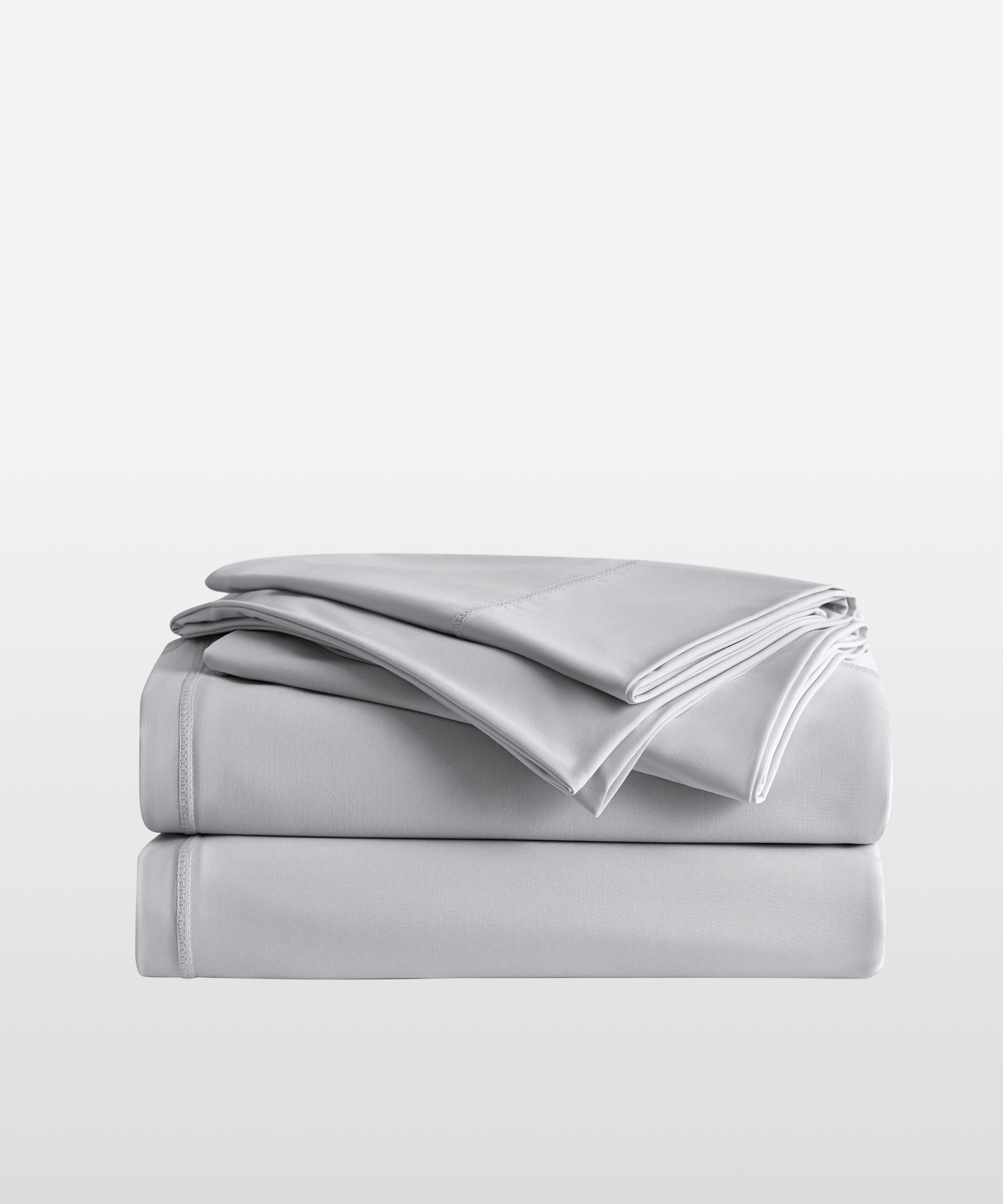
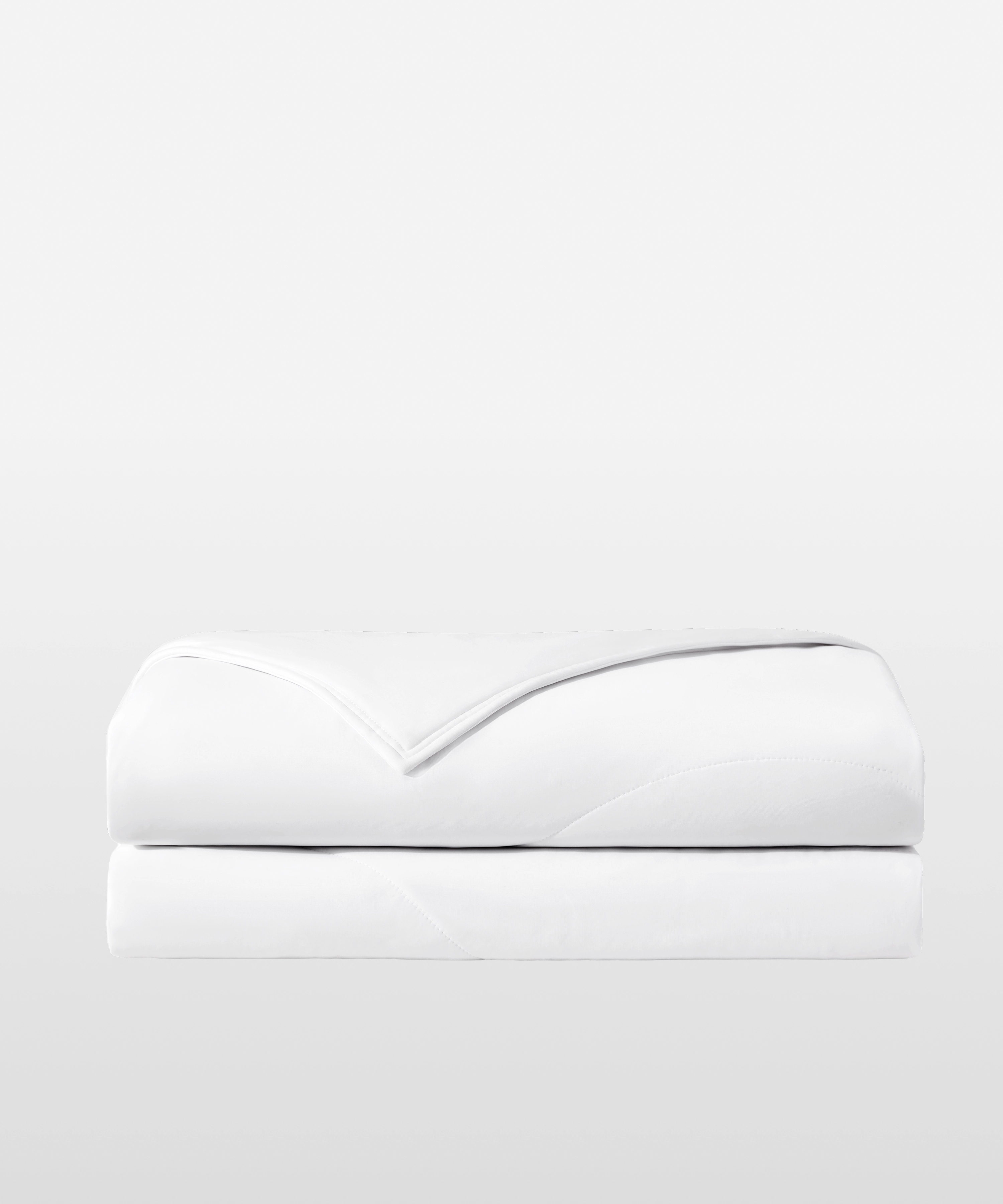
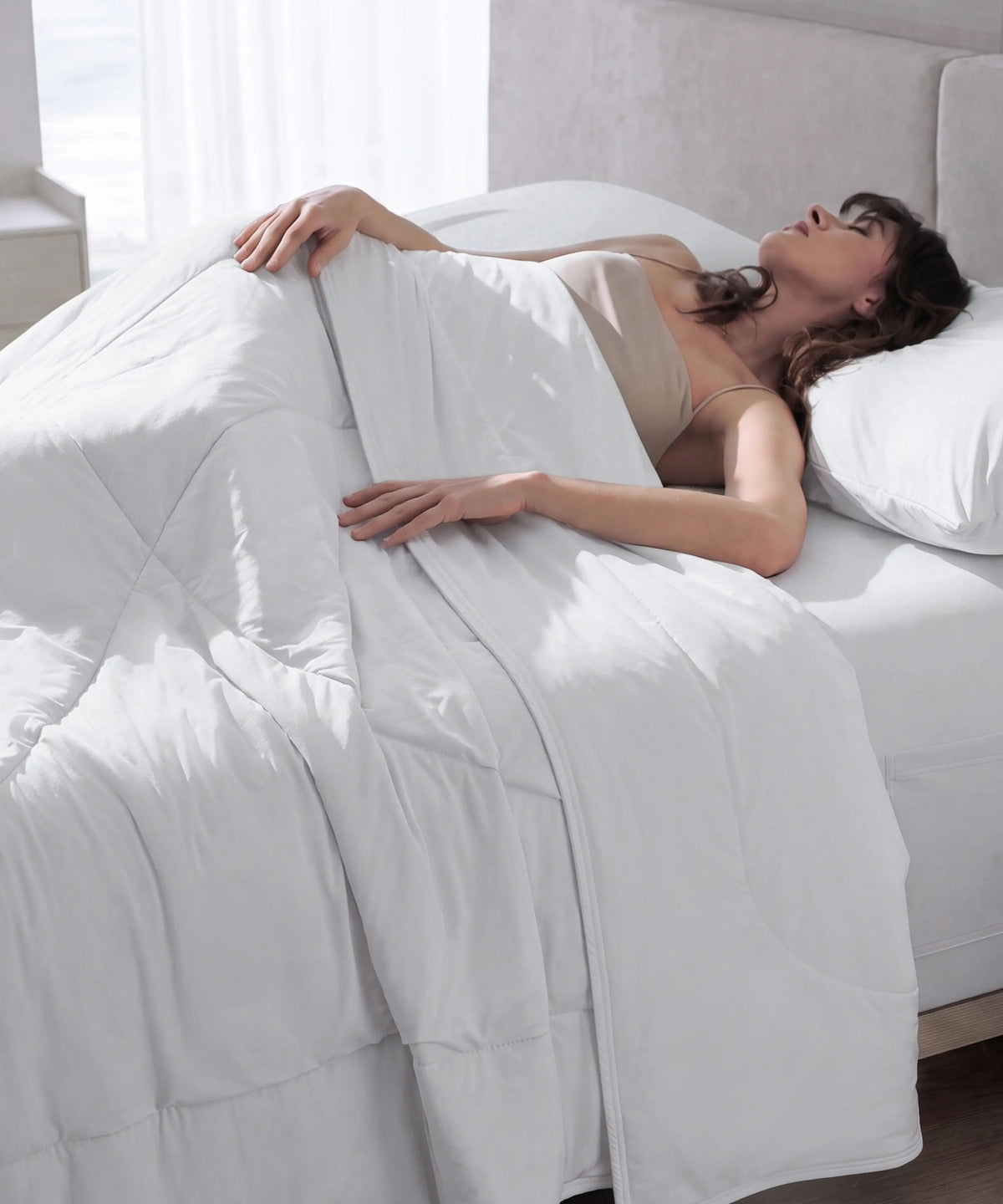
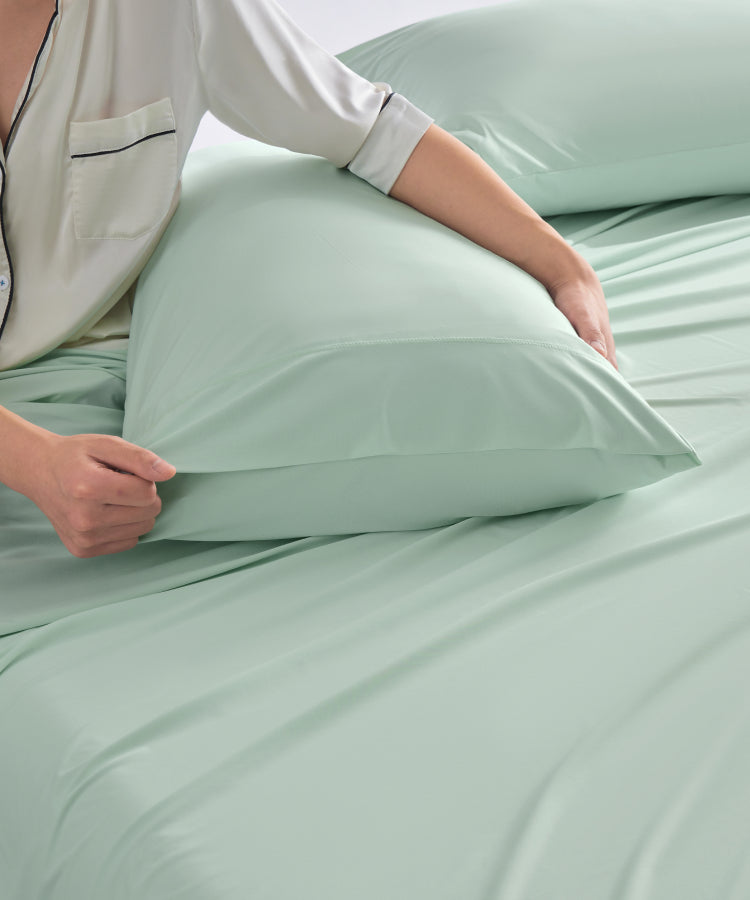
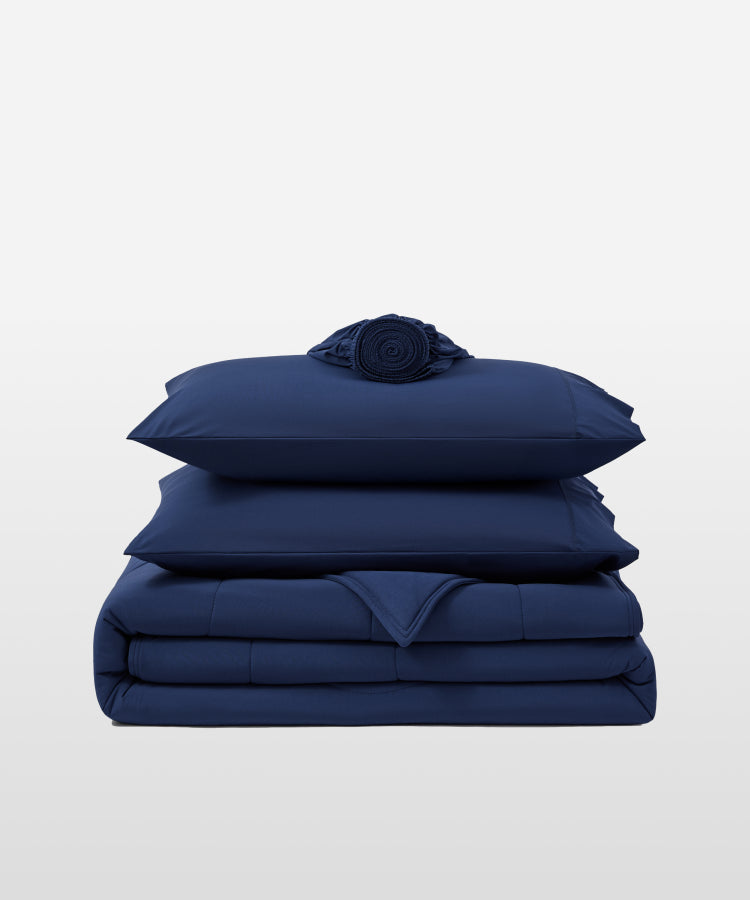
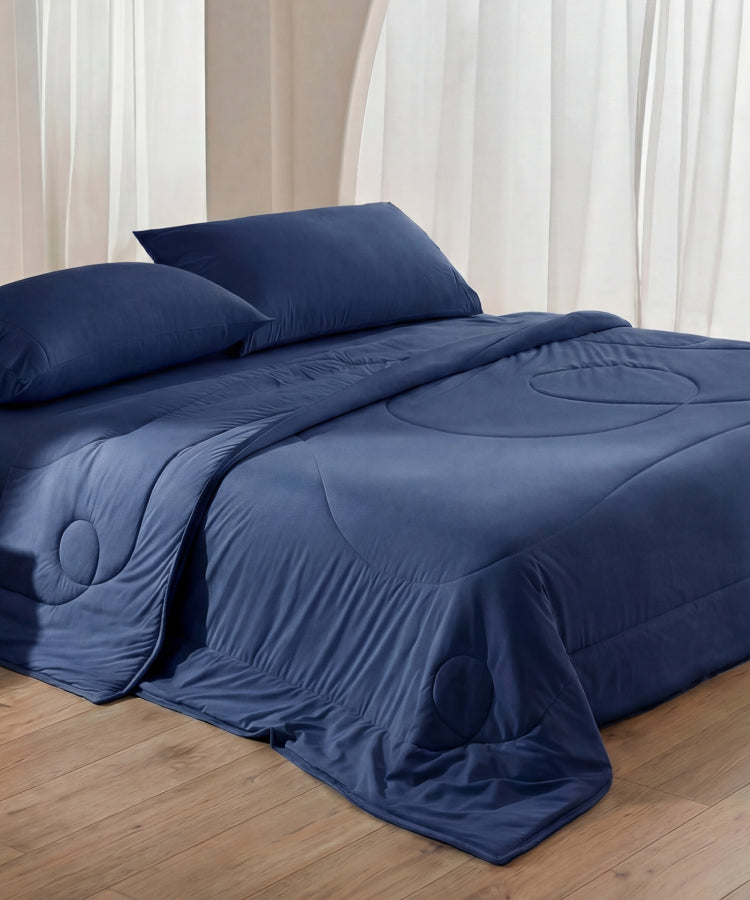
Breescape's cooling products — its sheet set, cooling comforter, and mattress topper among them — went through third-party evaluation at the Good Housekeeping Institute's Textiles Lab, assessed for fabric strength, cooling performance, washability, comfort, and fit before earning the Good Housekeeping Seal [10]. That kind of lab-based evaluation is a meaningfully different validation step than a brand simply describing its own products as cooling, since it involves outside measurement against defined criteria instead of self-reported claims [10].
The company also publishes specific figures for its BlendTek™ fabric — a Q-Max above 0.46 for initial cool-touch feel and an air-permeability figure of roughly 1,320 mm/s — rather than resting the claim on the word "cooling" alone [11]. Publishing testable numbers, and submitting products to independent lab evaluation, is the kind of evidence that separates a defensible performance claim from an unverifiable one.
A reasonable way to hold this claim
The honest answer to "can bedding really make you sleep cooler" is yes, with real physiological mechanisms behind it, but with limits no single product can fully erase. Bedding materials measurably affect heat retention, moisture management, and in some studied cases specific sleep-stage outcomes [3][4][7][8]. At the same time, bedding is one piece of a larger sleep environment that includes room temperature, humidity, sleepwear, and mattress material — no single sheet or comforter changes all of those variables at once [9].
The most useful approach for a skeptical buyer is to apply the same standard this research relies on: look for published, testable performance figures, evidence of independent lab or academic evaluation rather than self-reported claims alone, and language that's honest about limits rather than absolute. That standard filters out overstated marketing without writing off a category that does have real science behind it.
Frequently Asked Questions
Is it scientifically true that bedding can affect sleep temperature?
Yes. Peer-reviewed research links warmer sleep temperatures to reduced sleep efficiency and less deep and REM sleep, and a 2024 systematic review found that bedding fiber type measurably affects sleep quality in several studied conditions [3][4][7].
Can cooling sheets replace air conditioning?
No. Independent health guidance notes that cooling sheets can reduce overheating and manage moisture, but they don't replace the need for climate control in a genuinely hot room [9].
Why are people skeptical of cooling bedding marketing?
Because objective performance claims need evidence that matches the specific product and benefit, while a label such as "moisture-wicking" does not by itself disclose airflow, liquid-transport, or evaporation performance [1][2].
What's the strongest evidence that cooling bedding works?
A 2024 systematic review in the Journal of Sleep Research and large-scale sleep-temperature studies provide the clearest peer-reviewed support, alongside independent lab testing such as the Good Housekeeping Institute's evaluation of specific cooling products [3][7][10].
What should a skeptical buyer look for before trusting a cooling claim?
Published, testable performance figures like air permeability or Q-Max, evidence of independent lab or academic evaluation, and realistic language about limits rather than absolute promises [10][11].
References
[1] Federal Trade Commission — Health Products Compliance Guidance: https://www.ftc.gov/business-guidance/resources/health-products-compliance-guidance
[2] ACS inChemistry — Don't Sweat It: How Moisture-Wicking Fabrics Work: https://inchemistry.acs.org/atomic-news/dont-sweat-it.html
[3] Oxford Academic — Higher Bedroom Temperature Associated With Poorer Sleep: Data From Over 3.75 Million Nights: https://academic.oup.com/sleep/article-abstract/43/Supplement_1/A464/5847198
[4] PMC — Effects of Thermal Environment on Sleep and Circadian Rhythm: https://pmc.ncbi.nlm.nih.gov/articles/PMC3427038/
[5] PMC — Sleep and Thermoregulation: https://pmc.ncbi.nlm.nih.gov/articles/PMC7323637/
[6] PubMed — Thermoregulatory Changes Around the Time of Sleep Onset: https://pubmed.ncbi.nlm.nih.gov/17197000/
[7] PMC — How Do Sleepwear and Bedding Fibre Types Affect Sleep Quality: A Systematic Review: https://pmc.ncbi.nlm.nih.gov/articles/PMC11596996/
[8] PMC — Sleeping for One Week on a Temperature-Controlled Mattress Cover: https://pmc.ncbi.nlm.nih.gov/articles/PMC11048088/
[9] INTEGRIS Health — Do Cooling Bed Sheets Really Work?: https://integrishealth.org/resources/on-your-health/2025/march/do-cooling-bed-sheets-really-work
[10] PR Newswire — Breescape® Cooling Products Earn Prestigious Good Housekeeping Seal: https://www.prnewswire.com/news-releases/breescape-cooling-products-earn-prestigious-good-housekeeping-seal-302755670.html
[11] Breescape® Cooling Fitted Sheet — Official Product Page: https://breescape.com/products/cooling-fitted-sheet