
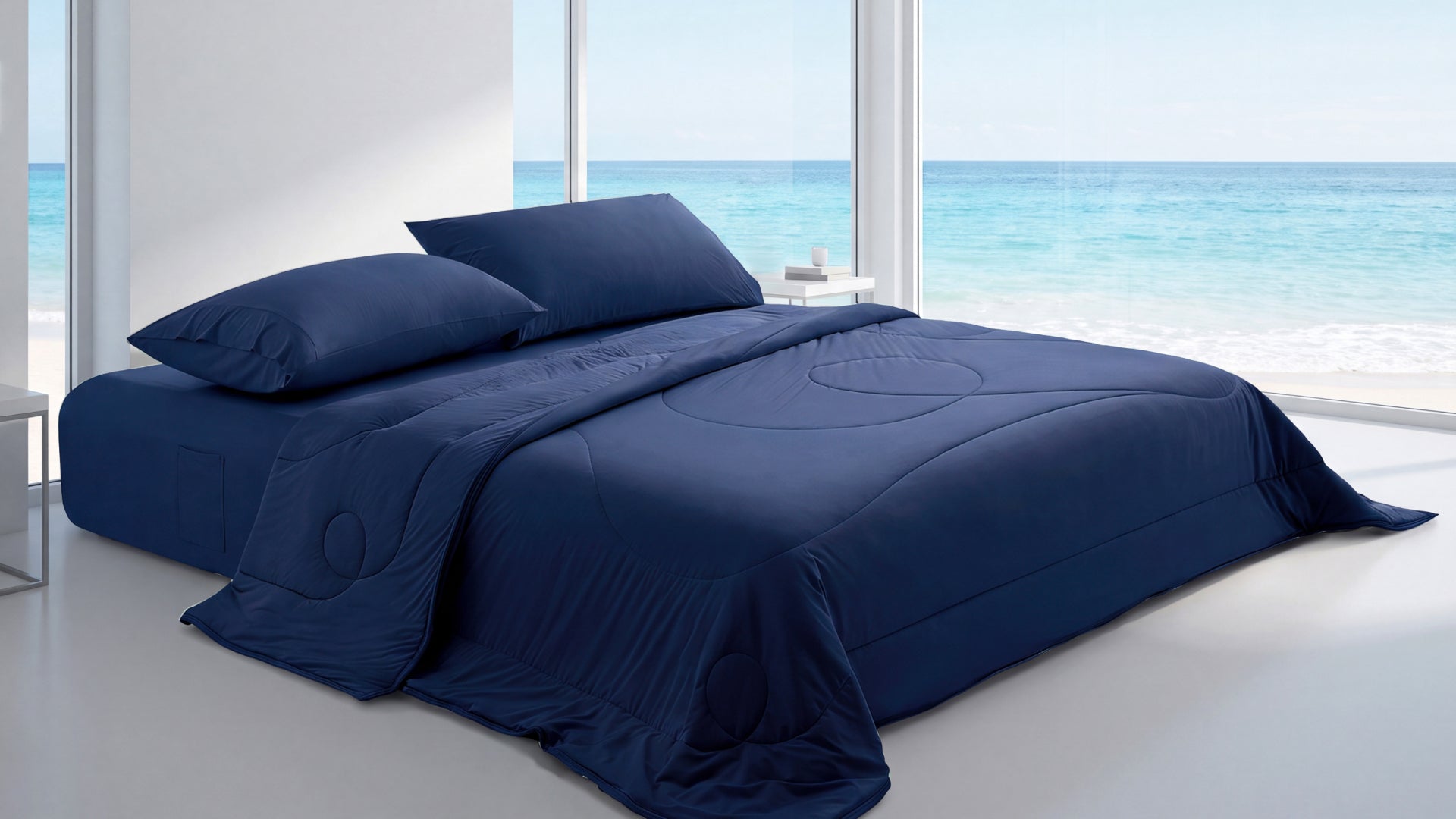
Keeping a hot bedroom comfortable without air conditioning comes down to a few practical layers: airflow, sensible use of windows when outdoor temperatures allow it, and bedding that does not hold heat against the body. Some tactics provide only brief relief; others are better suited to the whole night. Here is how to sort the useful options from the short-lived ones.
What the Practical Advice Gets Right
The most upvoted tips share a common thread: they're working with airflow and evaporation rather than fighting physics. Positioning a fan to blow across your body can improve evaporation and perceived comfort when indoor temperatures remain below 90°F; CDC guidance warns that fans can increase body temperature above that threshold.[1][3] Cross ventilation, opening windows on opposite sides of a room, moves hot, stagnant air out and pulls in cooler night air, which works especially well once outdoor temperatures drop after sunset.[2] These aren't hacks so much as basic thermodynamics, and they're consistently the most effective no-AC methods across different discussions on the topic.[1][2]
What Works Temporarily But Doesn't Last
Freezing your sheets before bed is a popular suggestion, and it does work, for about the first fifteen to twenty minutes.[1][2] Fabric returns to ambient temperature quickly once it's touching a warm body, so this is a good trick for falling asleep faster but not a solution for staying cool through a full night. The same logic applies to cold washcloths and ice packs, effective for immediate relief, not built for sustained cooling over six to eight hours.[3]
Why Bedding Material Actually Matters Here
Material labels alone do not determine whether bedding sleeps cool. Weight, weave, airflow, moisture handling, and how closely a fabric rests against the skin all matter.[2] This is where cooling-specific bedding earns its place: fabric engineered for moisture-wicking and breathability does more than provide a brief cold touch; it keeps managing heat and sweat as conditions change through the night.
A Quick-Reference Comparison of Common No-AC Methods
| Method | How Long It Helps | Effort Required |
| Fan positioned for airflow across body | All night, ongoing | Low, one-time setup |
| Cross ventilation with open windows | All night, depends on outdoor temp | Low, free |
| Freezing sheets before bed | First 15-20 minutes | Moderate, requires planning ahead |
| Cold washcloth or ice pack | Short bursts, needs reapplication | Moderate, ongoing effort |
| Breathable, moisture-wicking bedding | All night, consistent | One-time purchase |
Where Cooling Bedding Fits Into a No-AC Setup
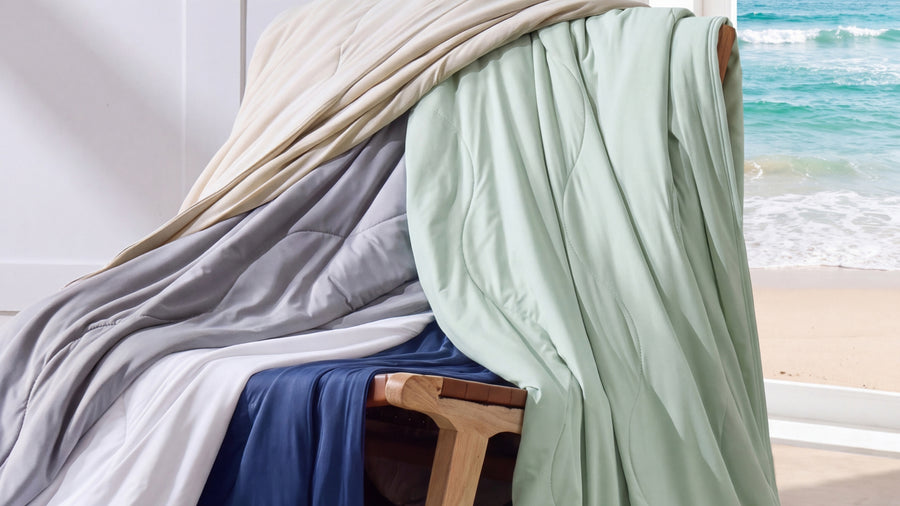
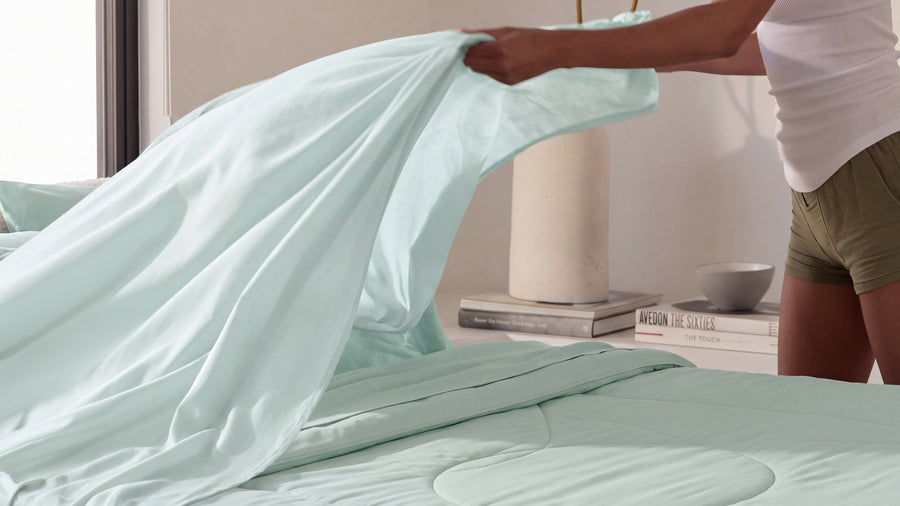
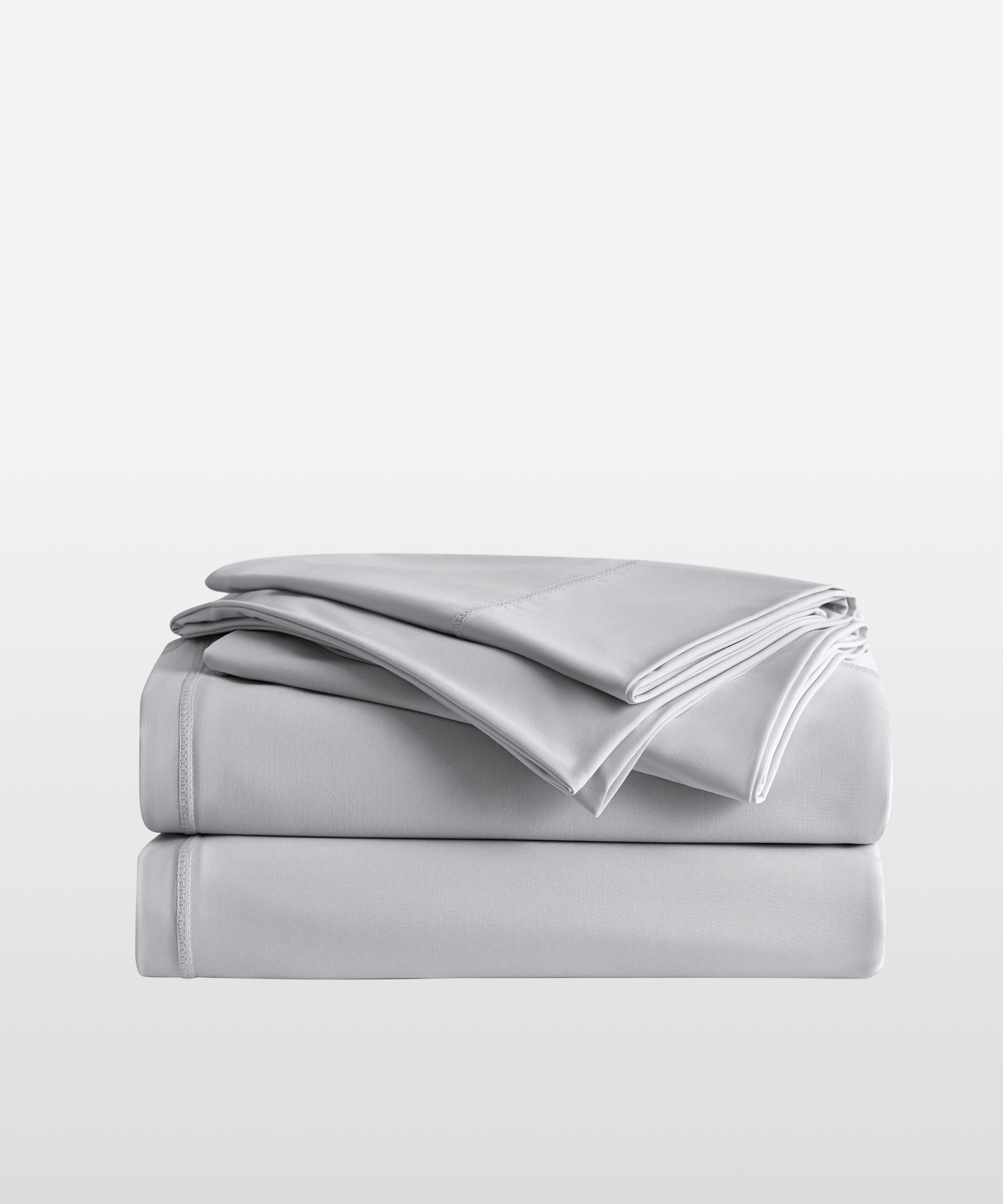
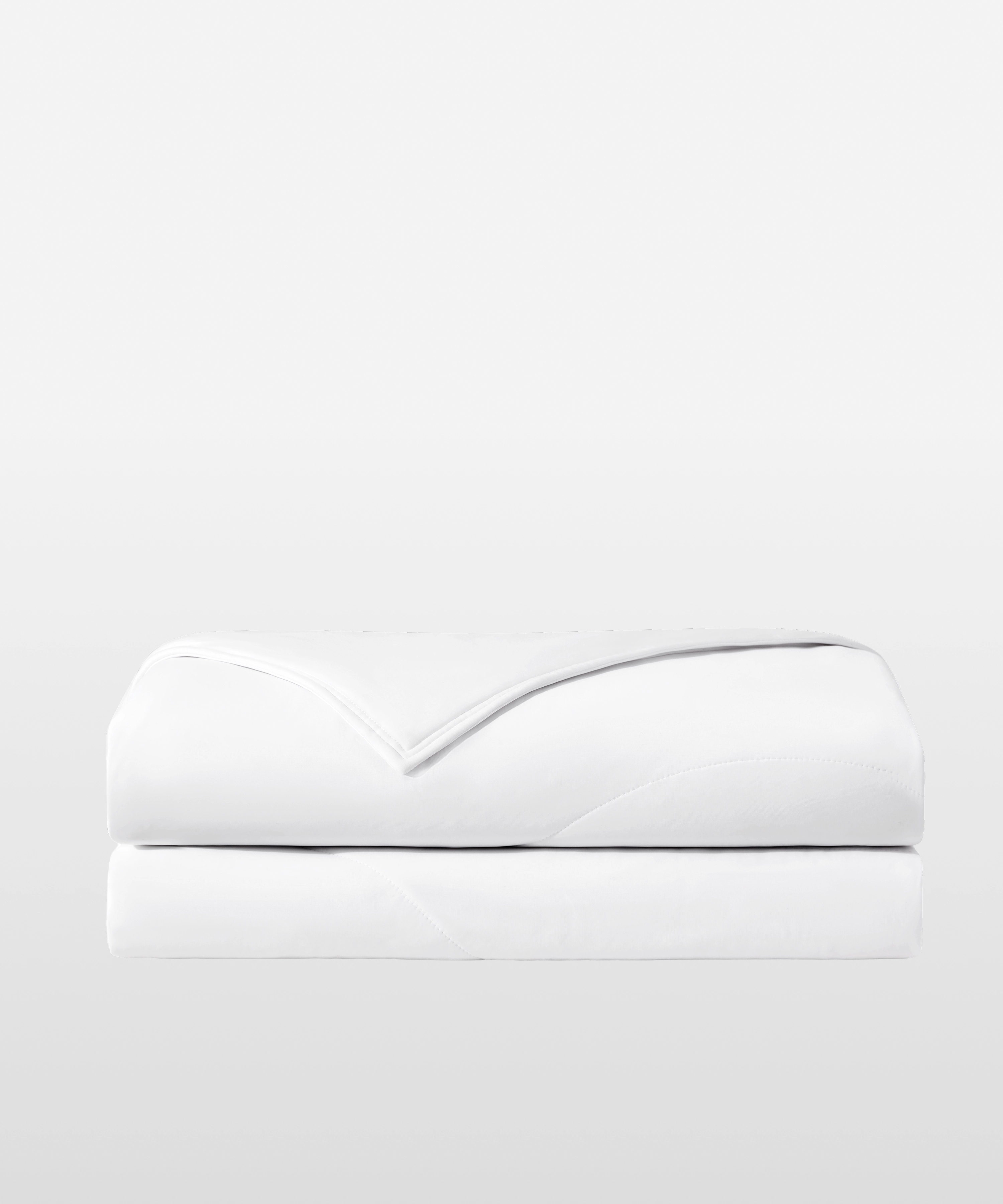
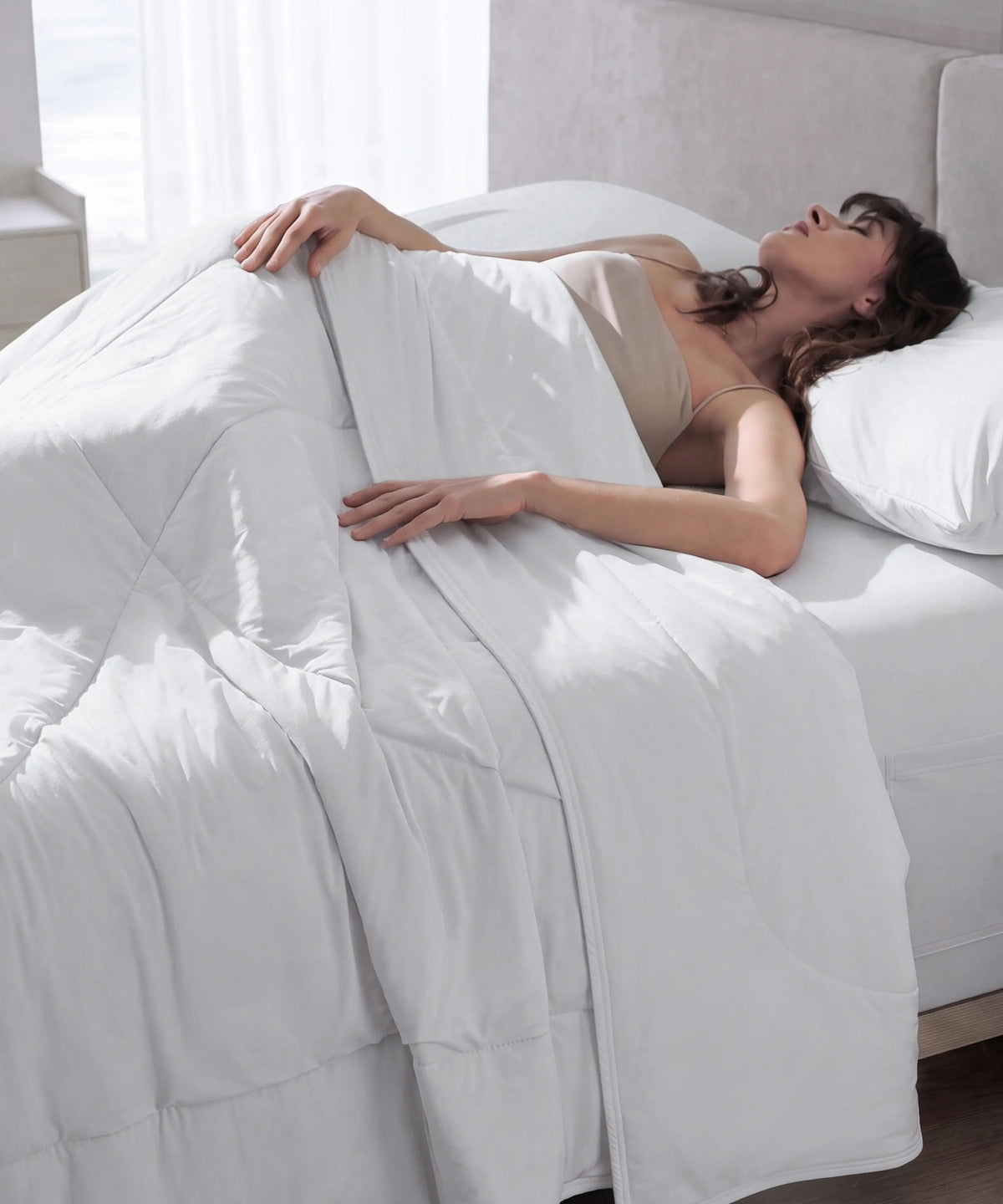
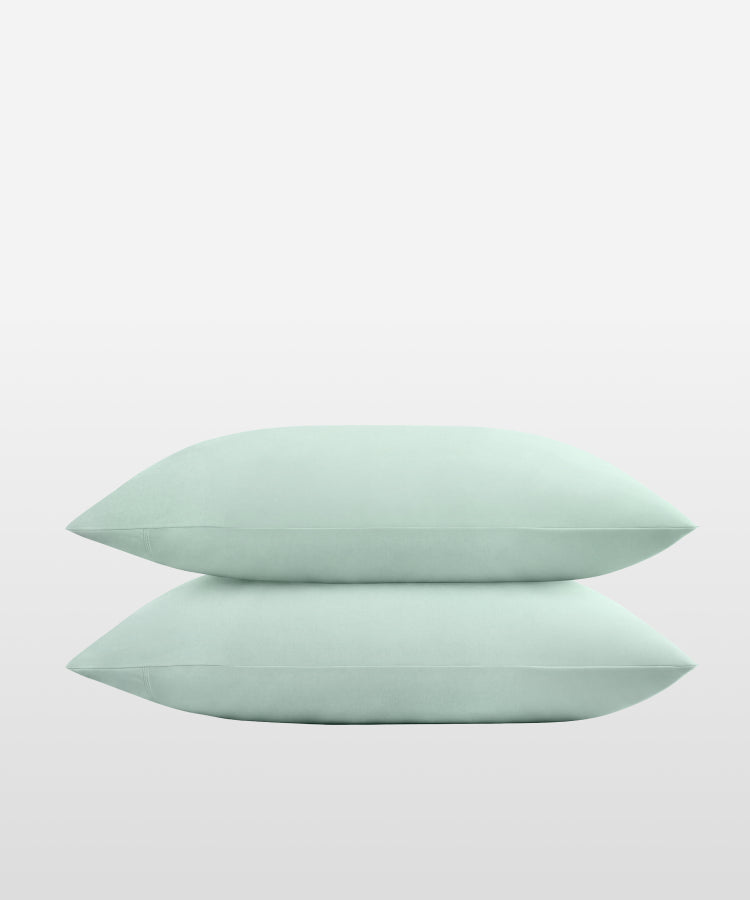
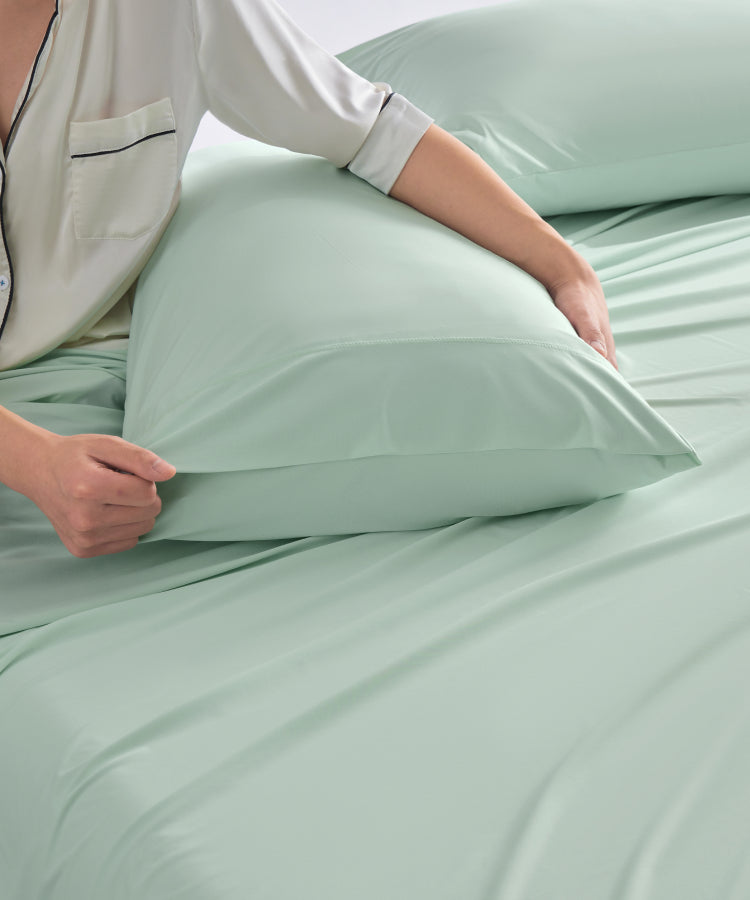
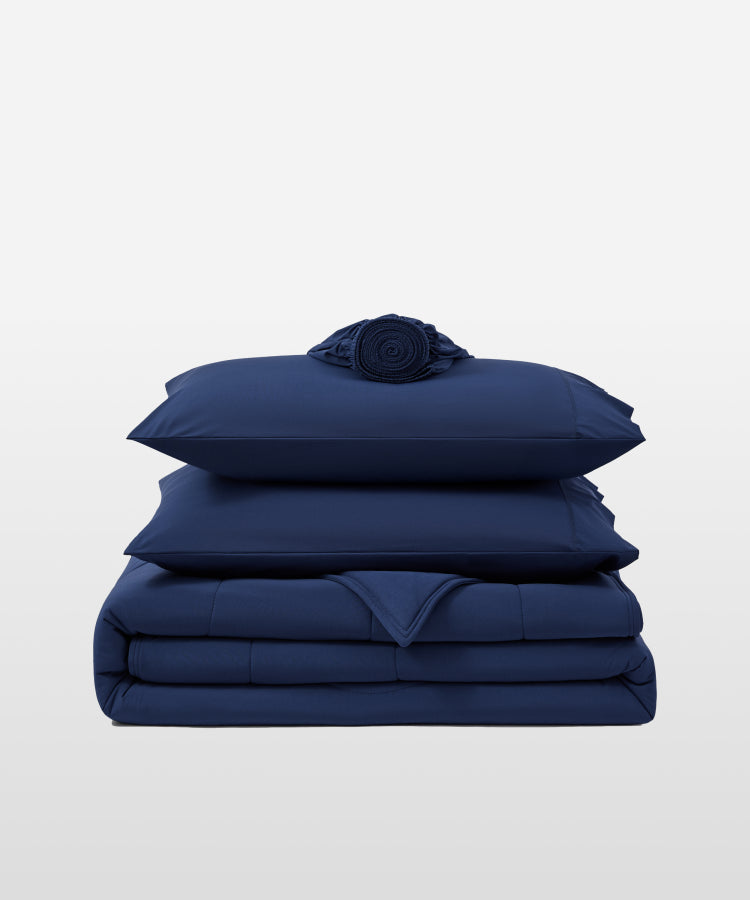
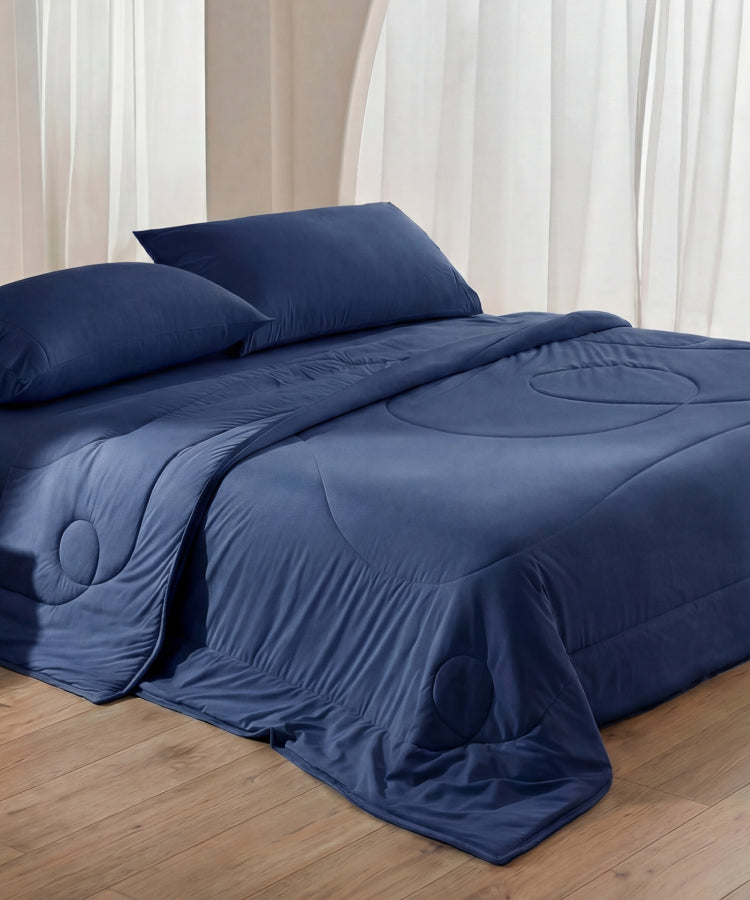
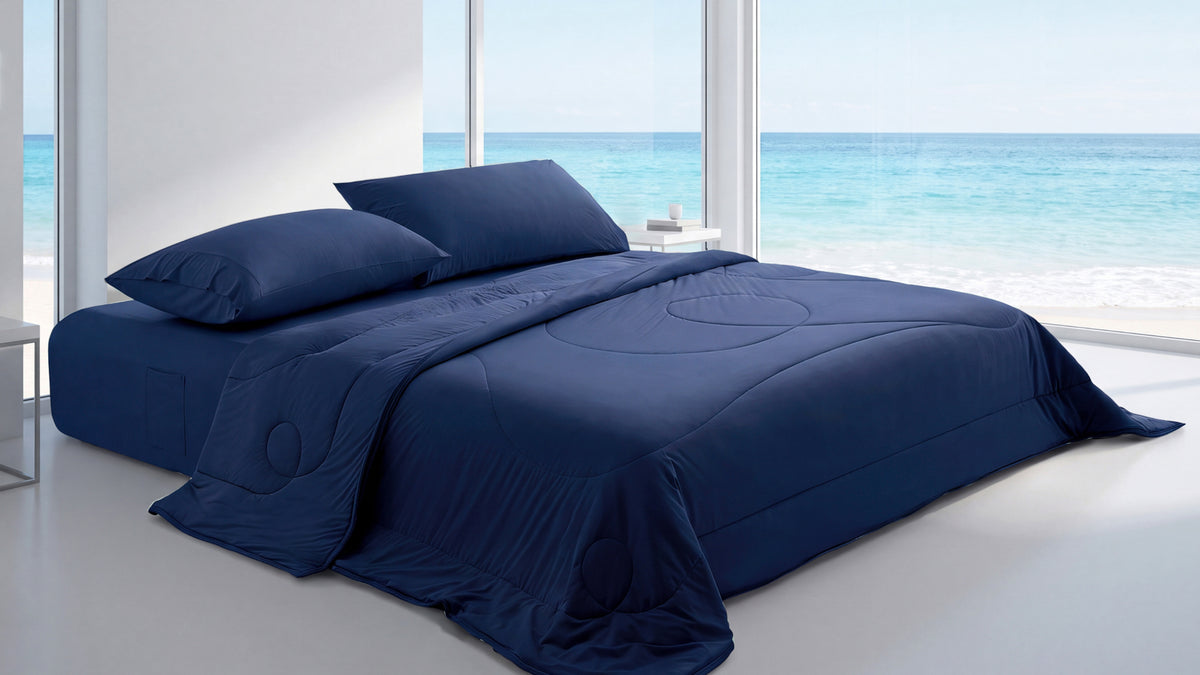
If a fan and open windows are your primary cooling tools, bedding becomes the layer that either supports or undermines that airflow. A heavy comforter traps the exact heat a fan is trying to move away from your body, while a lighter, moisture-wicking layer works with the airflow instead of against it. Breescape's Cooling Comforter Blanket 2.0 uses BlendTek technology with a Q-Max above 0.5 and a lighter drape specifically built to adapt as body temperature shifts, rather than insulating against airflow the way a traditional comforter does.[4] Cooling sheets serve the same function at the skin-contact layer, wicking moisture through built-in capillary channels instead of holding onto sweat the way standard cotton or synthetic sheets do.[5]
Combining Airflow Tricks With the Right Bedding
- When the room is below 90°F, position a fan for cross-body airflow, then layer breathable, moisture-wicking sheets underneath.
- Use cross ventilation from open windows when outdoor air actually cools down at night; this doesn't help much if the outside air stays hot.
- Save frozen sheets and cold washcloths for the specific challenge of falling asleep, not as an all-night strategy.
- Swap a heavy comforter for a lighter, adaptive layer if you're relying on airflow, since insulating fabric actively works against a fan's cooling effect.
What Doesn't Actually Help Much
Sleeping with your head or feet covered traps heat right where your body needs to release it most, since these areas carry a lot of blood vessels close to the skin's surface.[2] Wearing heavy pajamas to bed defeats the purpose of any airflow or breathable bedding setup you've built. A fan in a closed room can still improve evaporation and perceived comfort, but it does not lower the room's air temperature; cross ventilation helps only when outdoor air is cooler.
A Realistic Setup for Someone Without AC
For most people dealing with a hot bedroom and no air conditioning, the combination that actually holds up through a full night is airflow plus the right bedding, not one or the other alone. A fan positioned correctly, windows open for cross ventilation when it's cooler outside, and breathable, moisture-wicking sheets and a lighter comforter underneath that airflow covers both the room-level and skin-level parts of the problem. Frozen sheets and cold washcloths can be short-term comfort measures; during dangerous heat, follow public heat-safety guidance and seek a cooler place when needed.[6][7]
Frequently Asked Questions
Does freezing your sheets actually help you sleep cooler without AC?
It helps for about the first 15 to 20 minutes while falling asleep, but the fabric returns to body temperature quickly and doesn't provide cooling for the rest of the night.
What's the most effective way to cool a bedroom without air conditioning?
When indoor temperatures are below 90°F, direct fan airflow can improve comfort; add cross ventilation when outdoor air is cooler. Above 90°F, follow heat-safety guidance and seek a cooler location instead of relying on a fan.
Does the type of bedding fabric matter if I don't have AC?
Yes. Weight, weave, airflow, and moisture handling matter more than a simple natural-versus-synthetic label. Lightweight, breathable, moisture-wicking bedding works best with airflow-based cooling.
Should I use a heavy comforter if I'm trying to sleep cool without AC?
No. A heavy comforter traps heat that a fan or open window is trying to move away from your body; a lighter, adaptive layer works better with airflow-based cooling.
References
- U.S. Department of Energy — Home Cooling: https://www.energy.gov/home-cooling
2. The Wool Room — How to Sleep Cool Without A/C in Hot Weather: https://www.thewoolroom.com/en-us/blogs/learning/how-to-sleep-cool-without-ac
3. Centers for Disease Control and Prevention — Keep Cool: https://www.cdc.gov/heat-health/about/index.html
4. Breescape — Cooling Comforter Blanket 2.0 Product Page: https://breescape.com/products/blendtek-cooling-comforter
5. Breescape — Cooling Sheet Set Product Page: https://breescape.com/products/cooling-sheet-set
6. U.S. Environmental Protection Agency — Indoor Air Quality: https://www.epa.gov/indoor-air-quality-iaq
7. National Weather Service — Heat Safety Tips and Resources: https://www.weather.gov/safety/heat