


Most people wash their cooling comforter the same way they wash everything else. That is where the damage starts. The fibers that make a cooling comforter breathable and moisture-wicking are more sensitive to heat and agitation than standard bedding, and the wrong wash cycle can quietly undo their performance over time. A few simple adjustments to your laundry routine are all it takes to keep your cooling comforter working the way it should.
Why Washing Method Matters for Your Cooling Comforter
A cooling comforter is not just a regular blanket with a different label. Its performance comes from a specific combination of fiber structures, weave construction, and fill materials, all working together to move heat and moisture away from the body during sleep.
When you wash it incorrectly, three things tend to happen.
- First, high water temperatures cause fibers to contract and lose the open structure that allows airflow.
- Second, aggressive spin cycles create mechanical stress that breaks down fiber integrity over repeated washes.
- Third, harsh detergents strip the fiber surface of the properties that allow moisture to move through the fabric efficiently.
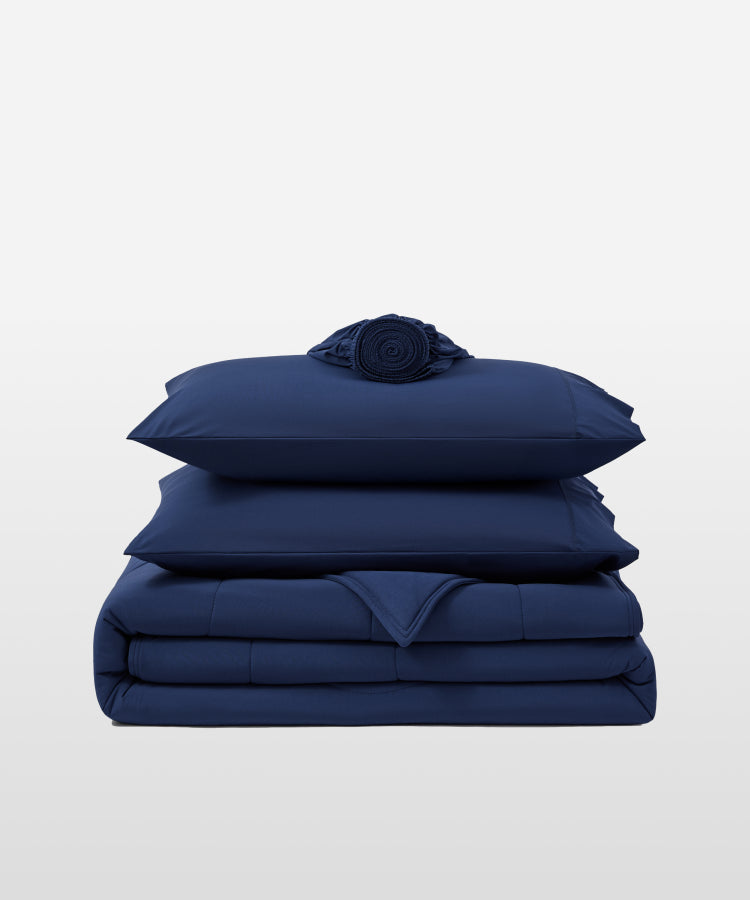
The result is a comforter that still looks fine on the outside but no longer performs the way it did on the first night. For a cooling bed comforter set, where the shell, fill, and lining each have different sensitivities, getting the wash right matters more than it does for conventional bedding.

How to Prepare Before Washing a Cooling Comforter Set
Before putting anything in the machine, a short preparation routine protects both the comforter and your washer.
Start by reading the care label. Every cooling comforter set should have washing instructions specific to its materials. If the label says dry clean only, follow that. Most quality cooling comforters are machine washable, but confirming this first avoids damage.
A few preparation steps worth taking:
- Check for any tears or loose seams before washing. Agitation in the machine can turn a small loose thread into a larger tear, and fill material can escape through weak seams during a wash cycle.
- Use a laundry bag if one is available. It reduces friction between the comforter and the drum walls and protects any surface texture or special fiber structures from direct mechanical stress.
- Choose the right machine size. A comforter needs room to move freely in the drum. Cramming it into a machine that is too small leads to uneven washing and concentrated agitation in certain areas.
- Pre-treat any stains gently using a mild detergent diluted with water, applied by hand. Avoid rubbing aggressively, which can damage the fiber surface at the stain site.
How to Wash a Cool Comforter Without Damage
With preparation done, the actual wash cycle is straightforward. The goal is to clean effectively while keeping mechanical and thermal stress as low as possible.
Water Temperature and Cycle Selection
Cold water is the standard for cooling comforters. Warm or hot water causes fibers to contract, which compresses the fill and reduces the loft and airflow that give the comforter its cooling properties. Select a gentle or delicate cycle, which limits spin speed and reduces the agitation that breaks down fiber structure over time.
Detergent Choice
Use a mild, liquid detergent without added enzymes, bleach, or optical brighteners. Enzyme-based detergents are effective at breaking down protein stains but can also degrade certain synthetic and natural fibers found in cooling fills. Fabric softener should be skipped entirely. It coats fibers with a lubricating layer that feels smooth temporarily but reduces breathability by blocking the micro-gaps in the fabric structure that allow airflow.
Use the recommended amount of detergent, or slightly less. Excess detergent leaves residue in the fill that is difficult to rinse out fully, which can affect both feel and performance.
How to Dry a Cooling Bed Comforter Set the Right Way
Drying is where most cooling comforter damage actually occurs. High heat from a dryer is the fastest way to degrade fiber performance, compress fill permanently, and cause shrinkage in the shell fabric.
Use a low heat setting and plan for a longer drying cycle. Cooling comforters, especially those with structured fills, take longer to dry thoroughly at lower temperatures. Stopping the cycle too early and folding a damp comforter leads to mildew growth inside the fill, which is difficult to remove and can permanently affect the fabric.
A few drying habits that help:
- Pause the cycle periodically to shake and redistribute the fill. Fill materials can bunch together during drying, and redistributing them midway ensures even drying and prevents permanently compressed sections.
- Add dryer balls if available. They help separate fill clusters and improve air circulation through the comforter without adding chemicals or heat.
- Air dry as a final step if possible. Once the dryer cycle is complete, laying the comforter flat or hanging it in a well-ventilated space for an hour allows any remaining moisture to escape and helps the fill return to its full loft.
- Never use high heat, even to speed things up. A single high-heat cycle can cause more long-term damage than months of correct washing.

Care and Storage Tips for Your Summer Comforter
Once the comforter is fully dry, a few ongoing habits keep it performing well between washes and during seasonal transitions.
Between washes:
- Air the comforter out regularly by hanging it in a shaded, ventilated space for a few hours. This releases any accumulated body heat or moisture from the fill without a full wash cycle.
- Spots clean small stains as they happen using mild detergent and cold water applied by hand. Addressing stains early prevents them from getting into the fill and reduces how often a full wash is needed.
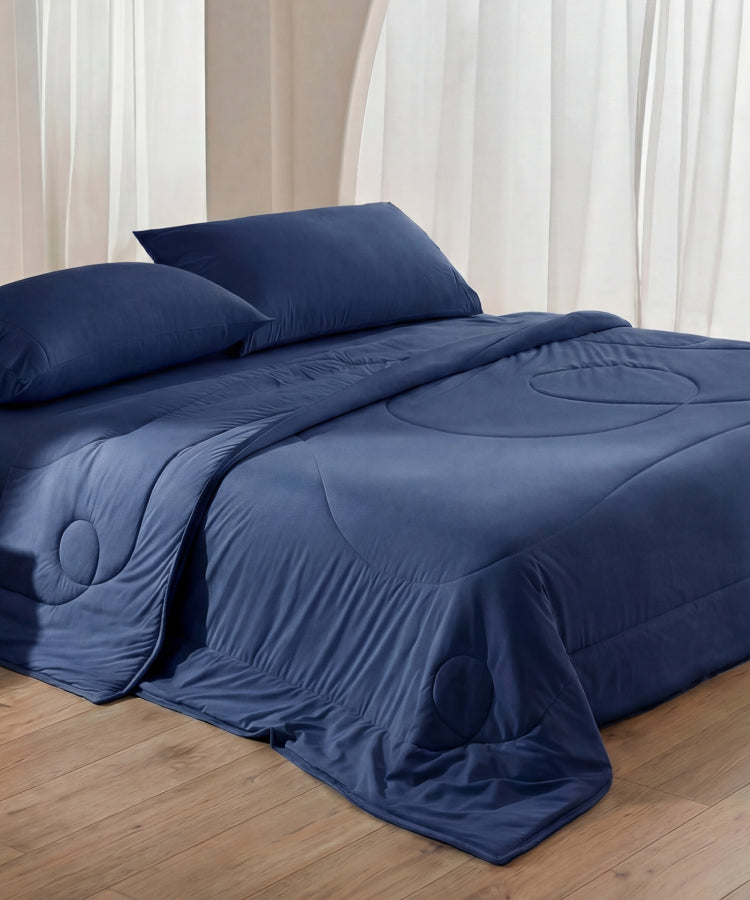
- Skip the duvet cover and use the comforter directly. It is designed for direct use, which allows the full breathability of the fabric to work as intended.
Seasonal storage:
- Make sure the comforter is completely dry before folding for storage. Even slight residual dampness inside the fill creates conditions for mildew and odor over time.
- Store in a breathable cotton bag or the original packaging rather than a sealed plastic bag. Plastic traps humidity and prevents the fill from breathing during storage.
- Avoid compressing the comforter under heavy items. Fill materials need space to maintain their loft, and a comforter compressed for months may take time to recover its original thickness and airflow once unpacked.
Wash It Right and It Will Last
A cooling comforter works because of how it is built, and it stays that way when you treat it right. Cold water, a gentle cycle, a mild detergent, and low-heat drying are the four habits that protect the fiber structure and fill performance wash after wash. Get those right consistently, and the cooling effect, the breathability, and the soft feel all hold up through every season. Find a comforter engineered to last, and give it the care that lets it do exactly that.
FAQs
Q1. Can You Wash a Cooling Comforter in a Regular Washing Machine?
Yes, most cooling comforters are machine washable, but always check the care label first to confirm. The key is using a machine large enough to give the comforter room to move freely in the drum. A cramped load leads to uneven cleaning and puts extra stress on the fabric and fill. If your home machine is too small for a queen or king size, a commercial washer at a laundromat is a practical alternative.
Q2. How Often Should You Wash a Cooling Comforter?
Washing every one to two months is reasonable for most people under normal use. If you sleep directly against the comforter, experience frequent night sweats, or share the bed with pets, washing more often makes sense. Spot cleaning small stains between washes also helps extend the time between full wash cycles.
Q3. Will Washing a Cooling Comforter Ruin the Cooling Effect?
Not if you follow the right care steps. The cooling properties of a well-made comforter come from its fiber structure and fill construction, not from any coating or chemical treatment that wears off. Cold water, a gentle cycle, and low-heat drying preserve those fiber properties over repeated washes. The most common cause of reduced cooling performance after washing is heat damage from hot water or high dryer settings.
Q4. Why Does My Comforter Feel Lumpy After Washing?
Lumps form when the fill material bunches together inside the comforter during the wash or dry cycle. This is normal and can be fixed by pausing the dryer periodically to shake and redistribute the fill, or by adding dryer balls to help break up clusters. If the comforter still feels uneven after drying, laying it flat and manually pressing and redistributing the fill by hand usually helps restore it to its original shape.